

Introduction
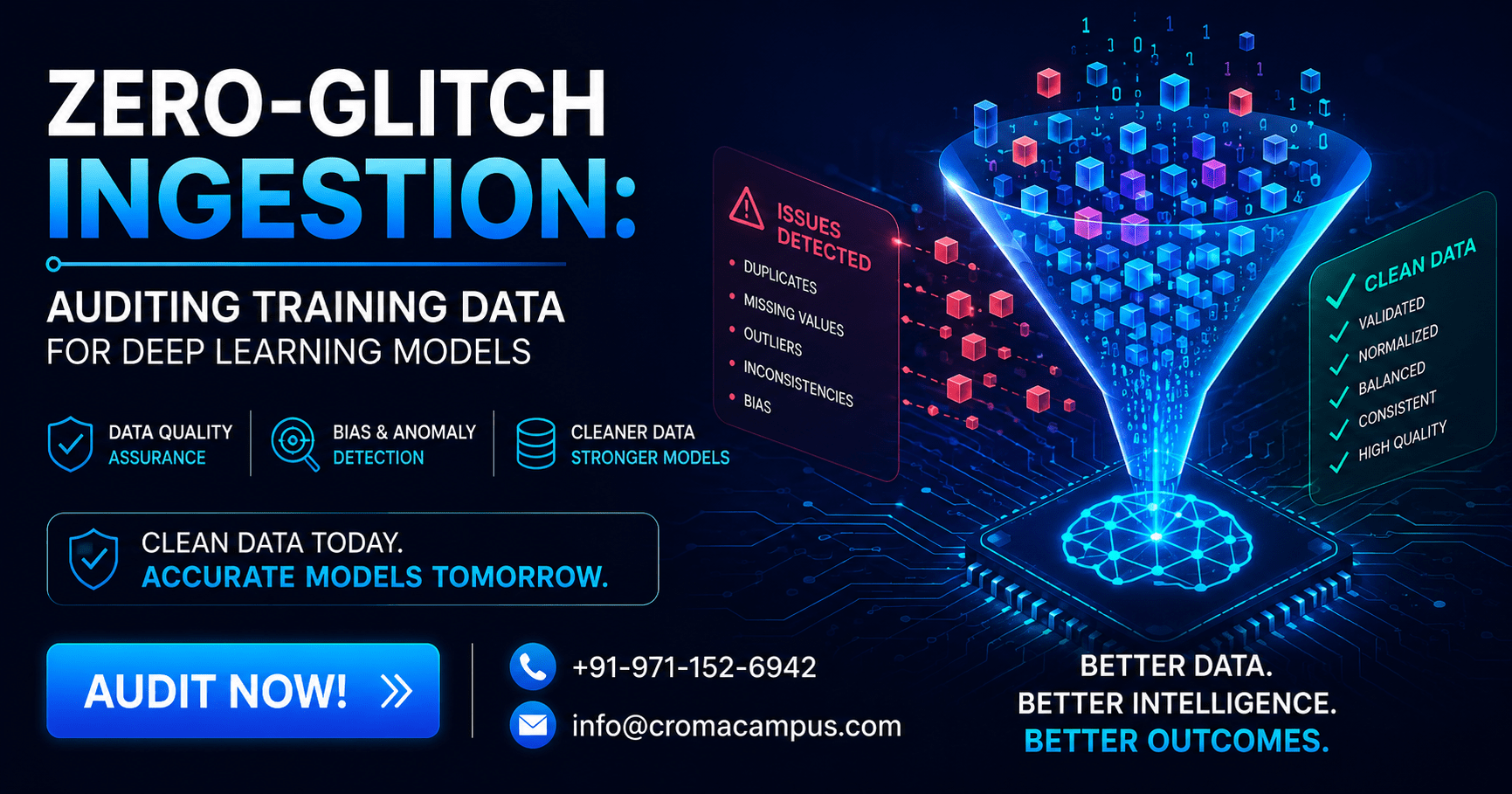
In many projects, teams spend months improving model architecture while ignoring the data feeding the model. Then strange prediction errors start appearing. I have seen image classifiers confuse simple objects and forecasting models miss obvious trends. The root cause was often not the algorithm. It was poor training data. Before any deep learning model enters production, data auditing should be treated as a serious engineering task rather than a final checklist item. A Deep Learning Course helps learners understand how to audit, clean, and validate training data for building reliable deep learning models.
Why Data Problems Create Bigger Issues Than Model Problems
Deep learning models learn patterns from examples. If those examples contain mistakes, duplicates, missing values, or incorrect labels, the model learns those flaws. One thing that often surprises beginners is that a highly advanced model cannot fix bad data. It simply becomes very good at learning the wrong information.
Consider a retail company training a demand forecasting model. If holiday sales records are incomplete, the model may underestimate future inventory requirements. This generates stock shortages and lost revenue.
Common data issues include:
|
Data Issue |
Business Impact |
|
Missing records |
Learning remains Incomplete |
|
Wrong labels |
Predictions may be inaccurate |
|
Duplicate entries |
Results become biased |
|
Outdated data |
Real-world performance degrades |
The First Audit: Checking Data Quality
The first step is not model training. It is understanding what exists inside the dataset.
A basic audit usually examines:
- Missing values
- Duplicate records
- Invalid entries
- Data consistency
- Label accuracy
For example, in a manufacturing quality-control project, I once found product images stored under incorrect categories. The model accuracy looked acceptable during testing. Real production results were disappointing. Once the labels are corrected, performance boosts significantly. Small mistakes can create large downstream problems.
Deep Learning Training in Delhi covers real-world techniques for auditing datasets and creating zero-glitch data pipelines for advanced deep learning projects. This course can be a great option for those planning for a career in the city.
Looking Beyond Accuracy
Many teams focus only on data volume. More data is useful. Clean data is even more valuable. A useful audit often includes distribution analysis. Distribution means understanding how data is spread across categories.
|
Audit Check |
What It Reveals |
|
Class balance |
Categories that are Over-represented |
|
Feature distribution |
Patterns that are Unusual |
|
Time coverage |
Missing periods |
|
Source validation |
Errors in Collection |
Detecting Hidden Bias
Bias is not always obvious. A recruitment screening model might receive historical records that favour certain candidate groups. The model can inherit those patterns without anyone noticing.
During data audits, teams should examine representation across demographics, locations, product categories, or customer segments. The goal is not just technical performance. The goal is reliable performance.
Deep Learning Training in Noida teaches professionals how to identify bias, labelling errors, and data inconsistencies before model deployment.
Building a Repeatable Audit Process
The best organizations treat data auditing as an ongoing process. Data pipelines change. Business systems change. Customer behaviour changes.
Many successful teams maintain automated checks that flag unusual records before they enter training environments. Data quality dashboards are becoming common because manual reviews alone do not scale. A repeatable process usually includes validation rules, anomaly detection, version tracking, and periodic sampling reviews.
Conclusion
Deep learning projects rarely fail because the neural network is too simple. More often, problems start much earlier in the pipeline. The right auditing enables professionals to detect bias, errors, inconsistencies, gaps, etc. before they turn into costly business issues. One can join the Deep Learning Course & Machine Learning Course for ample hands-on training as per the latest industry trends. The right Deep Learning system enables organizations to focus on zero-glitch ingestion. This makes models more reliable. Fuethermore, deployment risks reduce and teams spend less time troubleshooting unexpected behaviour.
