

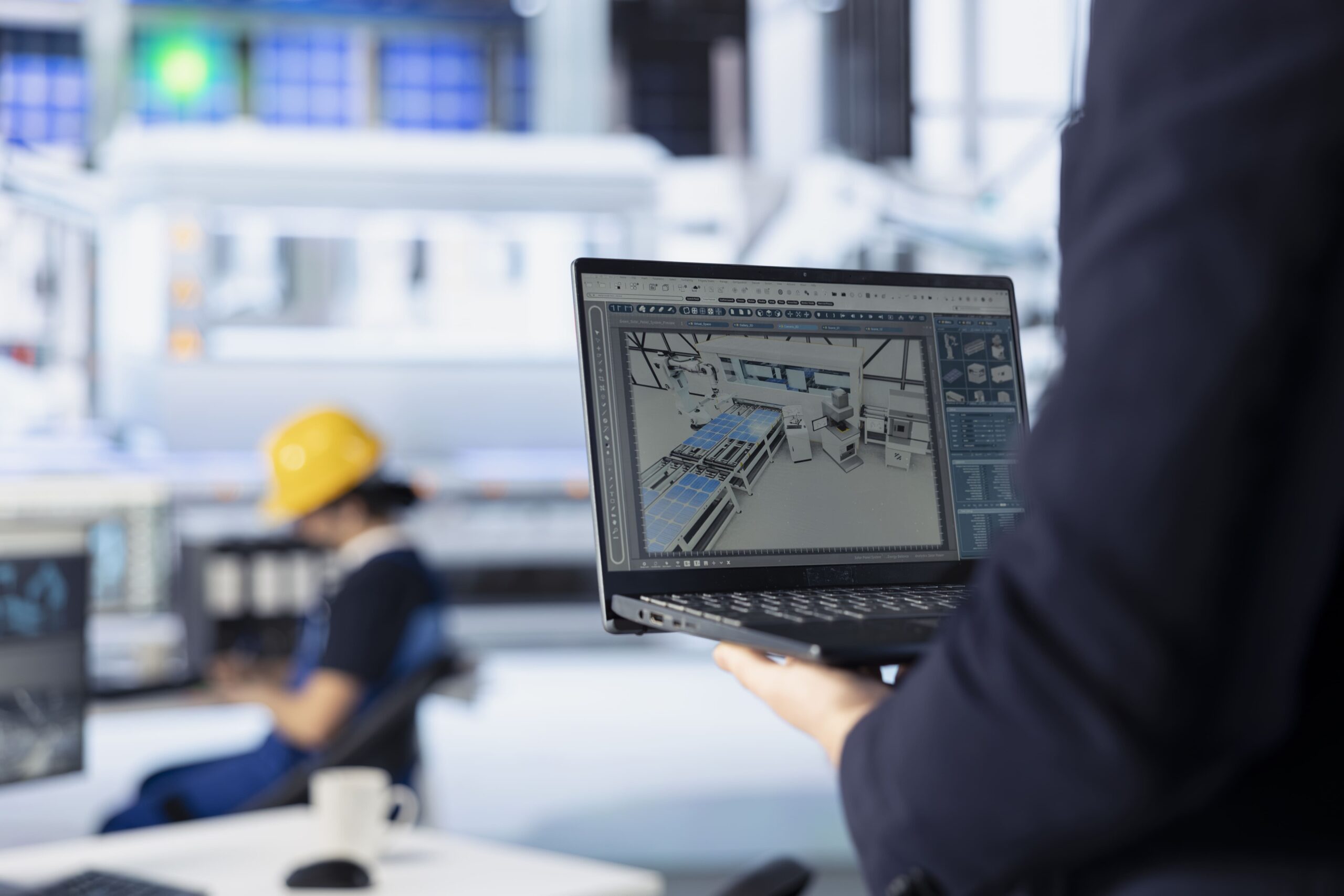
In modern construction, two project types consistently demand the highest level of precision: hospitals and industrial buildings. Both are complex environments where mechanical, electrical, and plumbing (MEP) systems must function flawlessly to support critical operations. Conventional 2D drafting methods often fall short in visualizing the dense network of equipment, conduits, pipes, and utilities that run through these structures. This is why MEP contractors increasingly depend on Building Information Modeling (BIM) to plan, coordinate, and execute projects with accuracy and confidence.
From advanced HVAC systems and medical gas pipelines in healthcare facilities to heavy-duty ventilation, electrical distribution, and process piping in industrial plants, BIM serves as the backbone of efficient project delivery. It enables contractors to detect issues early, collaborate seamlessly, and produce construction-ready documentation that meets international standards.
Below are the top reasons why BIM for MEP has become indispensable for contractors working in hospitals and industrial projects.
1. High System Density Requires Accurate 3D Visualization
Hospitals and industrial plants are among the most system-heavy environments in construction. In hospitals, MEP spaces accommodate HVAC units, chillers, air-handling units, water supply, drainage, fire protection systems, nurse call wiring, and medical gas pipelines — all routed within tight ceiling spaces. In industrial facilities, MEP components share space with manufacturing equipment, control systems, exhaust lines, cable trays, and process piping.
BIM helps contractors visualize these systems in a coordinated 3D environment. Every duct, pipe, conduit, and hanger is modeled with exact dimensions and elevations. This allows project teams to plan routes with millimeter-level clarity long before work begins onsite.
2. Clash Detection Prevents Costly Rework and Delays
One of the biggest advantages of MEP BIM services for contractors is proactive clash detection. Using tools like Navisworks, BIM teams can identify:
- HVAC ducts crossing structural beams
- Electrical conduits conflicting with plumbing pipes
- Fire protection lines overlapping cable trays
- Shafts too small for the required services
- Equipment clearance issues
In hospitals, where medical equipment must operate without interruption, even a minor clash can stall operations or compromise safety. In industrial buildings, unresolved conflicts can cause shutdowns or affect machinery workflows.
Detecting these issues in the BIM model ensures that contractors eliminate rework, reduce cost overruns, and maintain construction schedules.
3. BIM Supports Strict Compliance With Healthcare & Industrial Standards
Hospitals are governed by stringent codes — including standards for ventilation, infection control, pressure differentials, and emergency electrical systems. Similarly, industrial buildings follow regulations related to process safety, hazardous materials, fire protection, and equipment access.
MEP BIM models ensure contractors meet these requirements by:
- Embedding manufacturer specifications
- Maintaining correct equipment spacing and clearances
- Verifying slopes, flow directions, and load demands
- Ensuring compliance with NFPA, ASHRAE, IPC, NEC, and other global standards
With BIM, contractors can validate compliance digitally, reducing the risk of inspection failures during construction.
4. Improved Collaboration Among Multidisciplinary Teams
Hospitals and industrial facilities involve collaboration between architects, engineers, MEP contractors, equipment vendors, and facility managers. Traditional communication methods often lead to misalignment and unclear responsibilities.
BIM solves this gap by enabling a single, shared model where:
- All disciplines contribute their designs
- Model updates are visible in real-time
- Version control issues are eliminated
- Coordination meetings become more efficient
- Decisions are backed by visual references
This collaborative workflow ensures that no system is designed in isolation. Every MEP element is planned with respect to architectural layouts and structural constraints.
5. Accurate MEP Shop Drawings and Spool Drawings for Installation
Hospitals and industrial buildings require precise installation due to limited space and critical operations. BIM enables contractors to generate fabrication-ready drawings, including:
- HVAC duct shop drawings
- Plumbing shop drawings
- Electrical layout drawings
- Prefabrication spool drawings
- Hanger and support drawings
- Bill of materials and quantity take-offs
These drawings are extracted directly from the coordinated BIM model, ensuring high accuracy and reducing field-level interpretation errors. This is especially important in industrial plants, where workflow disruptions due to installation errors can affect production capacity.
6. BIM Enables Prefabrication and Modular Installation
Both hospitals and industrial facilities benefit greatly from prefabrication. BIM enables MEP contractors to:
- Create precise component assemblies
- Prefabricate duct and pipe sections
- Improve material utilization
- Reduce onsite labor requirements
- Speed up installation timelines
In healthcare environments, prefabrication supports faster construction, which is essential for meeting occupancy deadlines. In industrial buildings, it helps maintain predictable installation schedules while minimizing disruptions to existing operations.
7. Lifecycle Benefits for Facility Management and Maintenance
Unlike conventional projects, hospitals and industrial buildings have long-term operational demands. Equipment must be regularly inspected, upgraded, or replaced. BIM provides contractors with digital models that integrate with facility management tools, offering benefits such as:
- Quick identification of equipment locations
- Access to maintenance history
- Simplified troubleshooting
- Asset tracking with QR or RFID tagging
- Real-time operational insights through digital twin integration
Facility managers gain a reliable reference model long after construction is complete, reducing maintenance effort and enhancing building performance.
8. Better Cost Control and Predictable Project Planning
MEP contractors working on hospital and industrial projects face high stakes — delays or redesigns can significantly increase project costs. BIM helps reduce financial risk by:
- Improving material estimation accuracy
- Reducing change orders
- Preventing design errors
- Shortening project timelines
- Streamlining procurement and logistics
Contractors gain clearer visibility into project requirements, helping them allocate labor, equipment, and materials more efficiently.
Conclusion
Hospitals and industrial buildings demand an exceptional level of accuracy, coordination, and technical expertise from MEP contractors. BIM supports these requirements by offering a centralized digital environment where systems are modeled, coordinated, and validated before installation. From clash detection and compliance verification to fabrication drawings and lifecycle efficiency, BIM transforms the way MEP contractors plan and deliver complex projects.
As construction continues to evolve, BIM will remain a critical tool for ensuring high-quality, cost-effective, and zero error MEP execution across healthcare and industrial sectors.
