

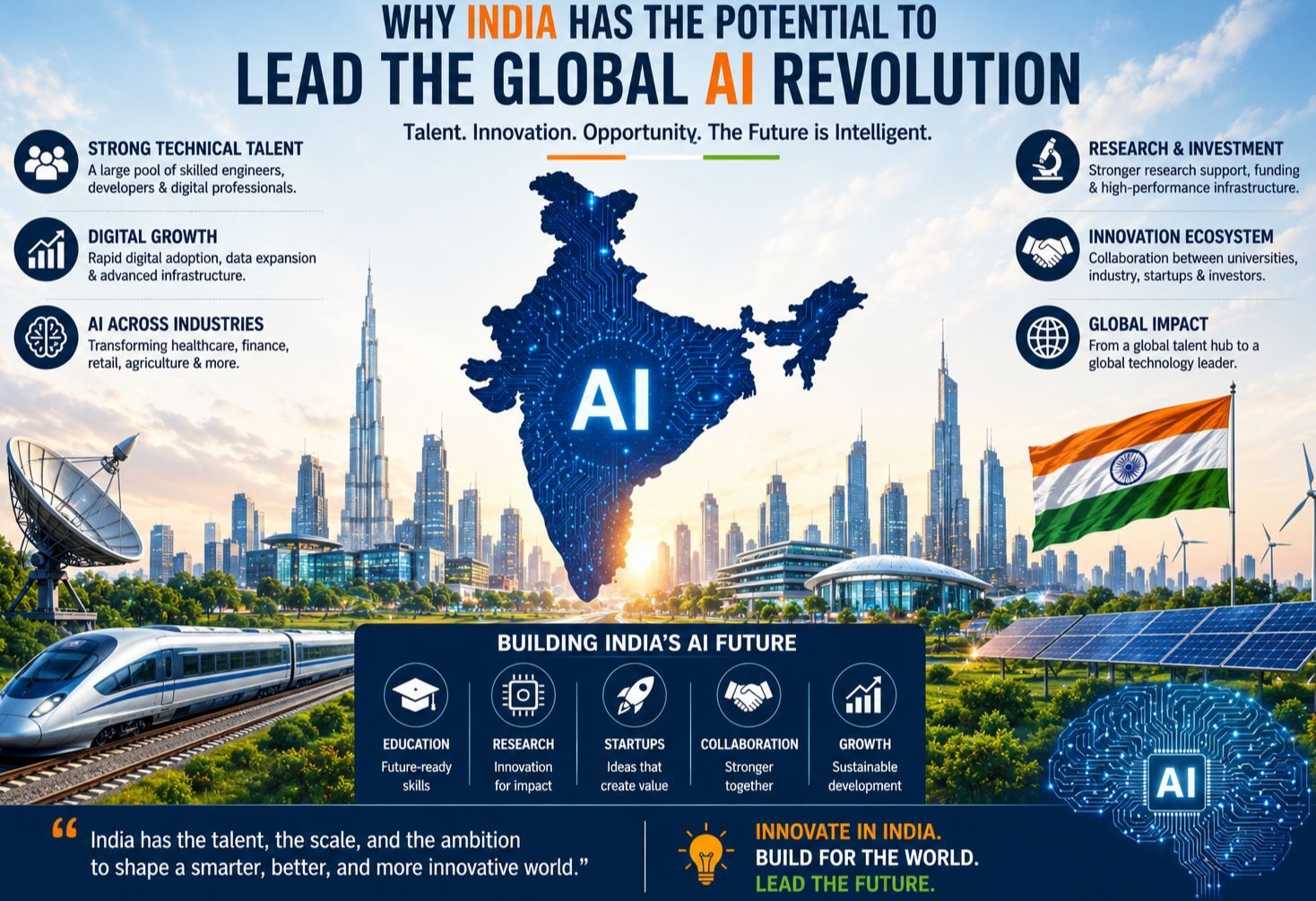
India is moving into a new phase of technological growth. Artificial intelligence is changing the way businesses operate, how governments provide services, and how people interact with technology in daily life. Around the world, countries are investing heavily in AI because they understand its long-term impact on economic growth, innovation, and global competition. India is also becoming an important part of this transformation. With its large pool of engineers, developers, and digital professionals, the country already has many of the strengths needed to become a major force in the AI industry.
At the same time, India faces one serious challenge that could slow its progress. Many highly skilled professionals continue to move abroad in search of better research opportunities, higher salaries, and stronger career growth. This ongoing movement of talent affects India’s ability to build a stronger innovation ecosystem at home. When talented people leave, the country loses future researchers, startup founders, and technology leaders who could contribute to local growth and long-term development.
India’s Technical Talent Gives It a Strong Advantage
India has built a strong reputation in the global technology industry over the last few decades. Indian professionals work in leading international companies, research institutions, and fast-growing startups across the world. Their achievements show the strength of India’s education system and the ability of Indian talent to compete internationally.
Every year, thousands of students complete degrees in engineering, computer science, mathematics, and information technology. Many of them develop advanced technical skills and practical experience that allow them to work on complex digital systems. This gives India a major advantage in the AI era because artificial intelligence depends heavily on skilled people who can design, build, and improve intelligent systems.
The country does not lack talent. Instead, the bigger issue is retention. India must create better opportunities, stronger research support, and more attractive career paths so skilled professionals can see a successful future within the country.
Artificial Intelligence Is Reshaping Every Industry
Artificial intelligence is no longer limited to large technology companies or research labs. Businesses across different industries now use AI to improve operations, reduce costs, and increase efficiency. AI systems help companies analyze data, automate repetitive tasks, improve customer service, and make faster decisions.
Healthcare organizations use AI to support diagnosis and medical research. Banks use AI tools to detect fraud and manage financial risks. Retail companies use intelligent systems to understand customer behavior and improve online shopping experiences. In agriculture, AI tools help farmers monitor crops, predict weather conditions, and improve productivity.
Because AI can improve so many sectors, countries that become leaders in artificial intelligence may also strengthen their economies and global influence. This is why the current moment is so important for India.
India’s Digital Growth Creates the Right Environment
India’s digital expansion over the last decade has created a strong foundation for AI development. Smartphone usage has increased significantly, internet access has reached millions of people, and digital payment systems have become part of everyday life. Online education, e-commerce, and digital banking continue to grow rapidly across cities and smaller towns.
This widespread digital activity creates large amounts of real-world data and increases demand for smarter technology solutions. Businesses want faster and more efficient systems, while consumers expect better digital experiences. These changing expectations create ideal conditions for AI innovation.
India is also investing in homegrown technology systems and advanced computing infrastructure. This shift is important because countries that build their own digital technologies often gain greater control over innovation and future growth.
Why Skilled Professionals Continue to Leave
Although India has strong potential, many professionals still choose to build their careers abroad. One major reason is access to better research facilities and advanced infrastructure. International universities and global AI labs often provide larger research budgets, stronger technical resources, and more opportunities to work on cutting-edge projects.
Higher salaries and faster career growth also attract skilled professionals to international markets. In many countries, researchers and developers receive strong financial support and direct access to experienced mentors and investors.
Another challenge is the gap between universities and industry in India. In some global technology hubs, research institutions and private companies work closely together, allowing ideas to move quickly from research to commercial products. India has improved in this area, but stronger collaboration is still needed to support innovation at a larger scale.
Strong Investment and Research Support Are Essential
If India wants to become a global AI leader, long-term investment in research and innovation will be necessary. Universities and research institutions need better funding, stronger technical infrastructure, and access to advanced computing systems. AI development requires continuous experimentation, large data systems, and high-performance computing power.
Startups working in AI and deep tech also need patient investment and mentorship. Many advanced technology companies require years of development before reaching large-scale success. Without proper support, promising ideas often struggle to survive in competitive markets.
Government support, private investment, and industry collaboration must work together to build a stronger environment for innovation.
India Must Build a Long-Term Innovation Ecosystem
India’s future in artificial intelligence depends on more than talent alone. The country must create an ecosystem where researchers, startups, universities, investors, and businesses can work together effectively.
Educational institutions should collaborate more closely with private companies so students can gain practical experience while studying. Research programs should encourage innovation that solves real-world problems. Startup founders should receive easier access to funding, mentorship, and business networks.
India can also benefit from stronger connections with professionals working abroad. Many experienced Indian experts may still contribute through mentoring, investment, partnerships, and collaborative research initiatives.
Creating a successful AI ecosystem requires long-term planning and consistent support across multiple sectors.
Final Thoughts
India already possesses many of the qualities needed to become a global leader in artificial intelligence. The country has a large technical workforce, growing digital infrastructure, ambitious entrepreneurs, and increasing interest in advanced technologies. These strengths provide a strong foundation for future growth.
The next step is creating an environment where talented people can build meaningful careers and innovative companies within India. Better research opportunities, stronger industry collaboration, improved infrastructure, and long-term investment can help reduce brain drain and support local innovation.
If India continues to strengthen its technology ecosystem and support its skilled professionals, it can move beyond being only a source of global tech talent. It can become a country that develops world-class AI systems and plays a leading role in the future of global innovation.
