

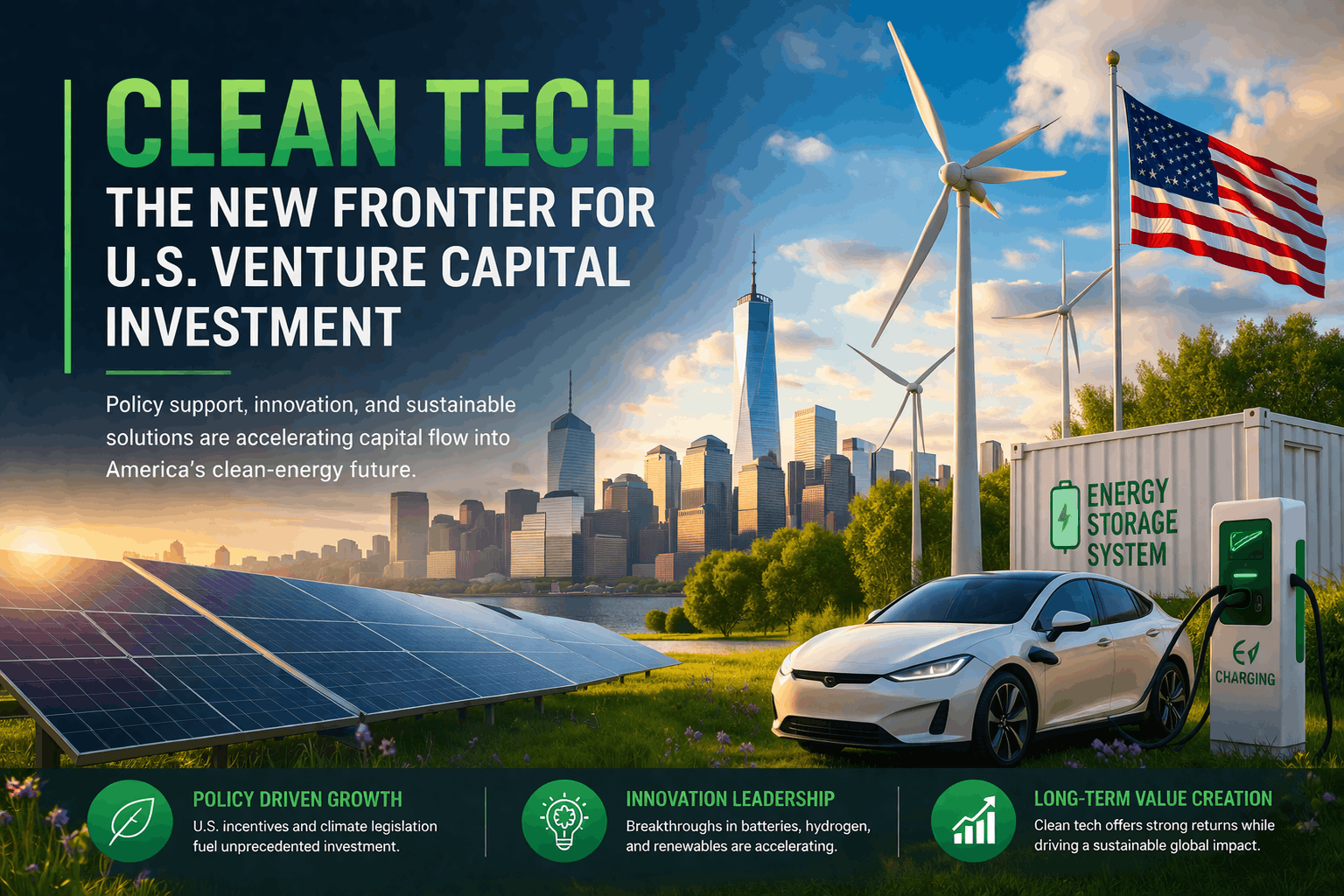
The global investment landscape is experiencing a significant transformation as clean technology continues to gain traction among venture capital firms. As climate concerns intensify and governments push for sustainable solutions, investors are increasingly turning toward clean technology as a promising avenue for long‑term growth. In the United States, this trend is becoming particularly evident, with venture capital firms showing growing interest in startups that focus on sustainability, energy efficiency, and climate innovation.
Clean technology is no longer viewed as a niche or experimental sector. Instead, it is emerging as a mainstream investment opportunity that offers both financial returns and long‑term environmental benefits. This shift reflects a broader change in investor mindset, where sustainability and profitability are no longer seen as competing priorities but as complementary drivers of innovation and growth.
The Rising Demand for Sustainable Innovation
The demand for sustainable solutions has grown rapidly in recent years. Businesses, governments, and consumers are increasingly prioritizing environmental responsibility. Companies across industries are setting ambitious sustainability goals, including reducing carbon emissions, improving energy efficiency, and transitioning to renewable energy sources.
This growing demand has created a fertile ground for clean technology startups. Entrepreneurs are developing innovative solutions in areas such as renewable energy, electric mobility, carbon reduction technologies, and smart infrastructure. These innovations are attracting attention from venture capital firms that are seeking opportunities aligned with future market trends.
The United States, in particular, offers a dynamic ecosystem for clean tech innovation. With access to advanced research institutions, experienced entrepreneurs, and strong funding networks, the country provides an ideal environment for startups to scale quickly. As a result, venture capital firms are increasingly focusing on U.S.-based clean technology companies.
Policy Support Strengthening the Investment Environment
Government initiatives have played a crucial role in accelerating clean technology investments. Policies that encourage renewable energy development, support electric vehicle adoption, and promote sustainable infrastructure have significantly boosted investor confidence. These initiatives provide a stable framework that encourages venture capital firms to commit resources to early-stage companies.
Financial incentives, grants, and funding programs have further enhanced the investment landscape. These measures help reduce risk for investors while enabling startups to develop and commercialize innovative technologies. As a result, clean technology companies are gaining momentum and attracting increased venture capital attention.
In addition, regulatory clarity allows investors to make long‑term decisions with greater confidence. When policies support sustainability initiatives, venture capital firms are more willing to invest in technologies that require time to mature and scale.
Technological Advancements Driving Growth
Technological innovation is a key factor behind the growing interest in clean technology. Advances in battery storage, artificial intelligence, and renewable energy systems are transforming the energy landscape. These technologies are improving efficiency, reducing costs, and enabling scalable solutions.
Electric vehicles represent one of the fastest-growing segments within clean technology. As infrastructure improves and battery technology advances, electric mobility is becoming more accessible to consumers and businesses. Venture capital firms are actively investing in startups that support electric mobility, including charging infrastructure, battery development, and software solutions.
Energy storage solutions are also gaining importance. Renewable energy sources such as solar and wind require reliable storage systems to ensure consistent power supply. Innovations in battery technology are addressing this challenge, making clean energy more practical and attractive for widespread adoption.
Another promising area is hydrogen technology. Green hydrogen is gaining attention as a potential solution for decarbonizing industries that are difficult to electrify. As research progresses, venture capital firms are exploring opportunities in hydrogen production, storage, and distribution.
Changing Global Investment Trends
The global venture capital environment has undergone notable changes in recent years. Economic uncertainty and shifting market dynamics have encouraged investors to diversify their portfolios. Clean technology has emerged as a resilient sector capable of delivering long-term growth despite market fluctuations.
Investors are increasingly focusing on regions that offer strong innovation ecosystems and supportive policies. The United States continues to stand out as a leading destination for clean technology investment due to its robust startup culture and access to capital.
Furthermore, collaboration between corporations and startups is strengthening the clean technology ecosystem. Large companies are partnering with innovative startups to accelerate sustainability initiatives. These partnerships create additional opportunities for venture capital firms to support growth and innovation.
Challenges in Clean Technology Investment
Despite its strong potential, clean technology investment comes with certain challenges. Many clean tech projects require significant capital investment and longer development timelines. Unlike software startups, hardware-based clean technology companies often need extensive testing and infrastructure development.
Regulatory complexity can also impact project timelines. Compliance requirements and permitting processes may slow down commercialization efforts. Investors must carefully evaluate these factors when making investment decisions.
Supply chain disruptions and raw material availability can also affect clean technology development. Many technologies rely on specialized components that may face shortages or price fluctuations. Managing these risks requires strategic planning and collaboration.
However, these challenges are often balanced by the long-term opportunities that clean technology offers. Investors who take a patient and strategic approach can benefit from the sector’s growth potential.
Long-Term Opportunities for Venture Capital
The long-term outlook for clean technology remains highly optimistic. As sustainability becomes a global priority, demand for innovative solutions will continue to rise. Governments and corporations are committing to net-zero targets, creating sustained demand for clean technology solutions.
Venture capital firms are recognizing that clean technology aligns with long-term investment strategies. These investments not only offer financial returns but also contribute to environmental progress. This dual benefit makes clean technology an attractive option for forward-thinking investors.
Additionally, improvements in technology are reducing costs and improving performance. Renewable energy solutions are becoming more competitive, further strengthening the case for clean technology investment.
The Future of Clean Technology Investment
Clean technology is poised to play a critical role in shaping the future of global innovation. As venture capital firms continue to explore new opportunities, the United States is expected to remain a key hub for clean technology development.
Collaboration between investors, policymakers, and entrepreneurs will be essential to unlocking the full potential of clean technology. By supporting innovation and scaling promising startups, venture capital firms can drive meaningful progress in sustainability.
The growing focus on clean technology reflects a broader transformation in the investment landscape. Sustainability is no longer optional—it is becoming a fundamental component of future growth strategies.
Conclusion
Clean technology is rapidly emerging as one of the most promising areas for venture capital investment in the United States. Supported by policy initiatives, technological advancements, and increasing demand for sustainable solutions, the sector offers significant opportunities for growth.
While challenges remain, the long-term potential of clean technology continues to attract investors seeking both financial returns and environmental impact. As the global economy transitions toward sustainability, clean technology is expected to remain at the forefront of innovation.
The shift toward clean technology investment marks an important milestone in venture capital. With continued momentum and strategic investment, clean technology will likely shape the future of industries, economies, and global sustainability efforts.
