

Introduction
The cement market is a fundamental pillar of the global construction and infrastructure industry. As one of the most widely used building materials in the world, cement plays a critical role in shaping urban landscapes, enabling infrastructure development, and supporting economic growth.
From residential housing and commercial buildings to roads, bridges, and industrial facilities, cement is essential for construction activities across sectors. With increasing urbanization, population growth, and government investments in infrastructure projects, the demand for cement continues to rise globally.
In recent years, the industry has also been undergoing transformation, with a growing focus on sustainability, energy efficiency, and low-carbon production technologies.
Market Overview and Definition
The cement market encompasses the production, distribution, and sale of cement products used in construction. Cement is a binding material that, when mixed with water, sand, and aggregates, forms concrete—the backbone of modern infrastructure.
Common types of cement include:
- Ordinary Portland Cement (OPC)
- Portland Pozzolana Cement (PPC)
- Portland Slag Cement (PSC)
- White Cement
- Blended Cement
The market serves a wide range of applications, including residential construction, commercial buildings, infrastructure development, and industrial projects.
Cement is typically produced from raw materials such as limestone, clay, and gypsum, which are processed through high-temperature kilns to create clinker, the key component of cement.
Evolution of the Cement Market
The cement industry has evolved significantly over the years, driven by advancements in construction technologies and increasing global demand.
Historically, cement production was limited and labor-intensive. However, with the industrial revolution and the development of modern manufacturing techniques, large-scale production became possible.
In recent decades, the focus has shifted toward improving efficiency, reducing environmental impact, and developing innovative cement products. The introduction of blended cement and alternative materials has helped reduce carbon emissions while maintaining performance.
Today, the industry is embracing digitalization, automation, and sustainable practices to meet future demands.
Market Dynamics
Key Drivers
Rapid Urbanization
Urban populations are expanding rapidly, especially in emerging economies. This growth is driving demand for housing, commercial spaces, and infrastructure, all of which require cement.
Infrastructure Development
Governments worldwide are investing heavily in infrastructure projects such as highways, railways, airports, and smart cities. These projects significantly contribute to cement consumption.
Rising Construction Activities
The increase in residential and commercial construction is a major factor driving the cement market. Growing real estate development further boosts demand.
Industrialization
Expanding industrial sectors require large-scale construction projects, including factories, warehouses, and logistics hubs, which depend heavily on cement.
Market Challenges
Environmental Concerns
Cement production is energy-intensive and contributes significantly to carbon emissions. Environmental regulations are becoming stricter, pushing companies to adopt sustainable practices.
Fluctuating Raw Material Costs
Prices of raw materials such as limestone, coal, and energy sources can impact production costs and profitability.
High Energy Consumption
Cement manufacturing requires high-temperature processes, leading to substantial energy usage and operational costs.
Market Trends and Innovation Landscape
Green and Sustainable Cement
Sustainability is becoming a key focus in the cement industry. Manufacturers are developing low-carbon cement and using alternative fuels and raw materials to reduce environmental impact.
Blended Cement Growth
Blended cement, which incorporates materials such as fly ash and slag, is gaining popularity due to its lower carbon footprint and improved durability.
Digitalization and Automation
The adoption of digital technologies in cement manufacturing is improving efficiency, reducing downtime, and optimizing production processes.
Smart Construction Materials
Innovations in construction materials, including high-performance cement and self-healing concrete, are shaping the future of the industry.
Market Segmentation
By Type
- Ordinary Portland Cement (OPC)
- Portland Pozzolana Cement (PPC)
- Portland Slag Cement (PSC)
- White Cement
- Others
By Application
- Residential construction
- Commercial construction
- Infrastructure projects
- Industrial construction
Infrastructure projects represent a significant share due to large-scale development initiatives.
By End User
- Contractors
- Builders
- Government agencies
- Industrial users
Regional Analysis
Asia-Pacific
Asia-Pacific dominates the global cement market due to rapid urbanization, population growth, and large-scale infrastructure development in countries such as China and India.
North America
North America is a mature market with steady demand driven by infrastructure maintenance and residential construction.
Europe
Europe focuses on sustainable cement production and energy-efficient manufacturing processes due to strict environmental regulations.
Latin America and Middle East & Africa
These regions are experiencing growth due to increasing investments in infrastructure and urban development.
Competitive Landscape
The cement market is highly competitive, with several global and regional players operating in the industry.
Key companies include:
- LafargeHolcim
- Heidelberg Materials
- CEMEX
- UltraTech Cement
- China National Building Material
Companies compete based on production capacity, pricing strategies, product quality, and sustainability initiatives.
Strategic expansions, mergers, and acquisitions are common as companies aim to strengthen their market presence.
Future Outlook
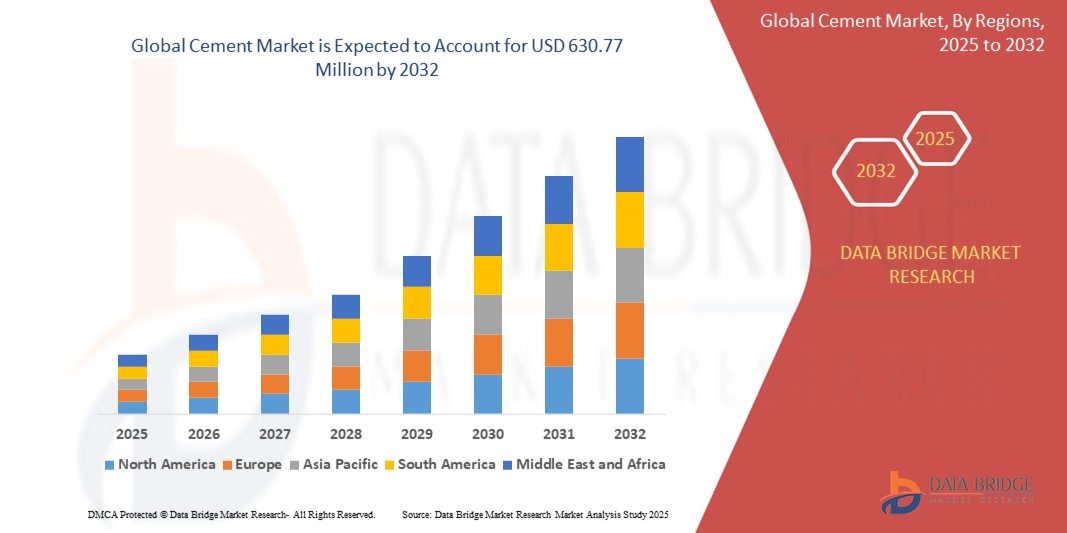
The cement market is expected to grow steadily in the coming years, supported by ongoing infrastructure development and rising construction demand.
Key future trends include:
- Increased adoption of green cement
- Use of alternative fuels and raw materials
- Integration of digital technologies
- Expansion in emerging markets
Sustainability and innovation will play a crucial role in shaping the future of the industry.
Source: https://www.databridgemarketresearch.com/reports/global-cement-market
Conclusion
The cement market remains a critical component of global economic development and infrastructure growth. As demand for construction materials continues to rise, the industry is evolving to meet new challenges and opportunities.
With a growing emphasis on sustainability, technological innovation, and efficient production processes, the cement industry is entering a new phase of transformation. Companies that adapt to these changes will be well-positioned to thrive in the future.
