

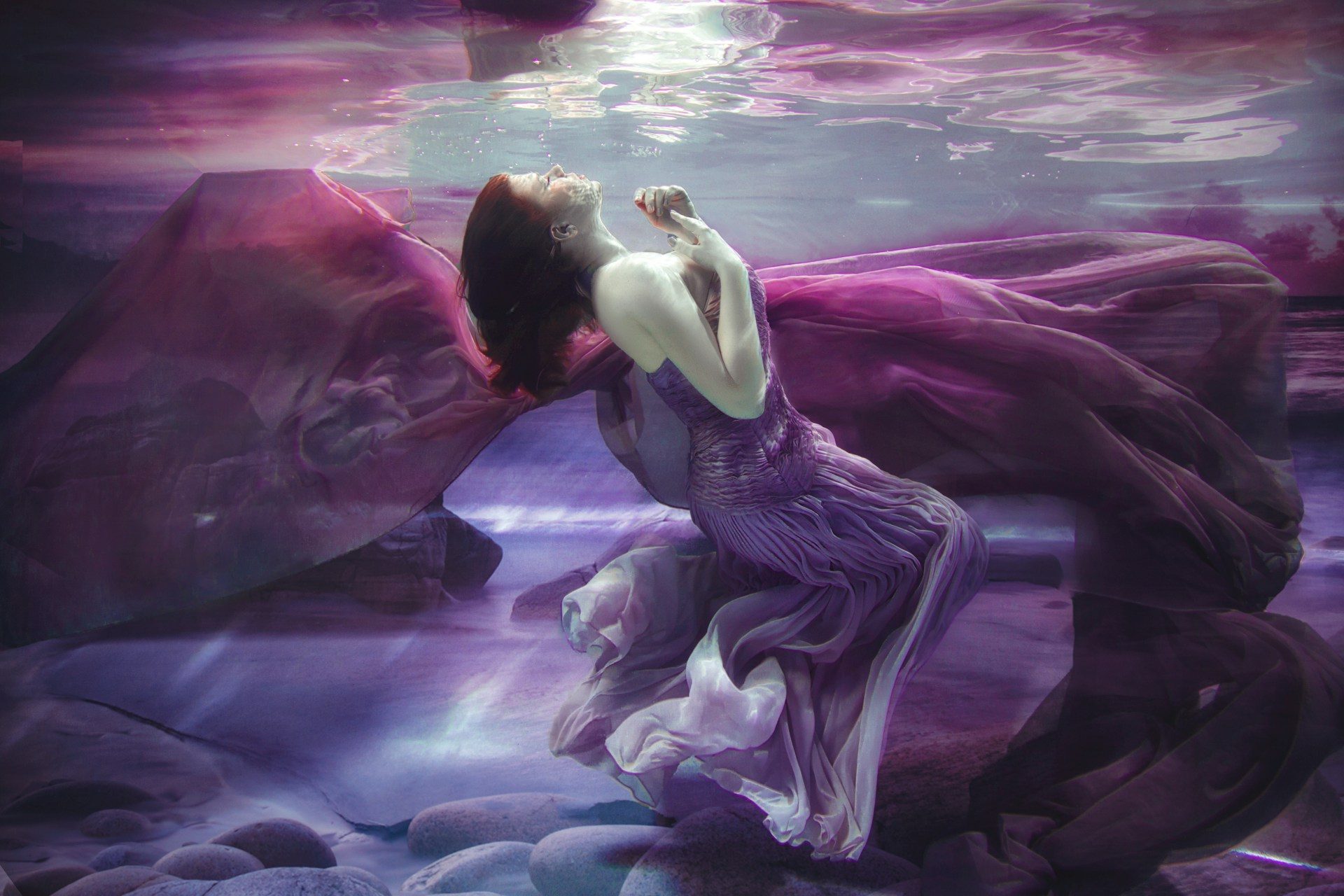
Romantic surrealism is not a single formal school but rather a powerful artistic tendency that merges two rich traditions: Romanticism’s emotional depth and Surrealism’s exploration of dreams, fantasy, and the unconscious mind. Romanticism, which flourished in the late 18th and early 19th centuries, emphasized passion, nature, imagination, and individual experience. Surrealism, emerging in the early 20th century, sought to unlock hidden truths through dream imagery, unexpected symbolism, and psychological mystery. Romantic surrealism arises when surrealist artists create work that feels poetic, intimate, nostalgic, or emotionally transcendent rather than purely shocking or experimental. Many artists associated with surrealism produced romantic visions of love, desire, longing, myth, and inner emotional landscapes, leaving a lasting impact on modern art.
One of the most famous romantic surrealism artists is Salvador Dalí. Dalí created highly detailed dream worlds where time, reality, and emotion melt together. His works often include symbolic themes of love, desire, memory, and imagination. Paintings like The Persistence of Memory show how surrealism can express deep romantic feelings about time, longing, and human fragility. Dalí’s contribution was his ability to paint unreal dreamscapes with realistic detail, making romantic surrealism visually unforgettable.
Another major romantic surrealist artists is René Magritte, known for his quiet, poetic approach to mystery. Unlike Dalí’s dramatic dreamscapes, Magritte’s paintings are calm and philosophical, often depicting ordinary objects placed in unusual contexts. His contribution was in creating surrealism that feels romantic through its subtle sense of wonder and longing. Works like The Lovers, where two figures kiss with cloth covering their faces, evoke intimacy mixed with distance and mystery. Magritte explored love, identity, and hidden truths, presenting romance as something both beautiful and unknowable. His visual language has deeply influenced modern advertising, film, and conceptual art.
Max Ernst played a foundational role in surrealism and contributed greatly to its romantic and mythical dimension. Ernst’s works often feel like enchanted forests, dream narratives, or ancient legends. He experimented with collage, frottage, and imaginative symbolism, creating worlds where nature becomes magical and emotionally charged. His paintings evoke romantic fascination with the unknown, combining love, myth, and subconscious fear. Ernst’s ability to merge fantasy with poetic emotion helped shape surrealism as a movement that could be deeply personal and imaginative rather than purely intellectual.
One cannot discuss romantic surrealism artists without highlighting Leonora Carrington, whose art and writing brought feminine mythology, mysticism, and emotional depth into surrealism. Carrington’s contribution lies in her unique blend of dream imagery with Celtic legends, alchemy, and personal symbolism. Her paintings often depict mysterious women, animals, and magical rituals, presenting romance not just as love between people but as spiritual transformation. She challenged male-dominated surrealist narratives by creating worlds where women are powerful, imaginative beings rather than passive muses. Her work has become central to feminist interpretations of surrealism.
Similarly, Remedios Varo is celebrated for her delicate, romantic surrealist artists imagery filled with mystical journeys and inner exploration. Varo’s paintings resemble illustrated dream stories, where characters travel through cosmic landscapes or perform magical acts. Her contribution was her ability to create surrealism that feels tender, introspective, and emotionally uplifting. Many of her works explore themes of love, solitude, destiny, and spiritual searching, offering romantic surrealism as a path of self-discovery. Her detailed, luminous style continues to inspire artists and storytellers worldwide.
Paul Delvaux, though often associated with Belgian surrealism, contributed strongly to romantic surrealism through his haunting, dreamlike scenes of classical architecture and mysterious nude figures. Delvaux’s paintings often feel like romantic dreams frozen in time, filled with silence and longing. His women appear like mythological beings wandering through surreal cityscapes, creating a mood of erotic melancholy. His contribution was in blending classical romantic imagery with surreal psychological tension, producing works that feel like poetic fantasies rather than chaotic dreams.
Another artist with romantic surrealist influence is Giorgio de Chirico, whose metaphysical paintings deeply inspired the surrealists. De Chirico’s empty plazas, long shadows, and mysterious statues evoke nostalgia, loneliness, and romantic melancholy. Though he predates surrealism, his contribution was establishing an atmosphere of dreamlike mystery that surrealists later adopted. His work shows romance not through love scenes but through emotional yearning and metaphysical wonder, influencing artists like Magritte and Dalí.
Frida Kahlo, while not officially a Romantic surrealism artists, is often associated with romantic surrealism because of her emotionally intense symbolic self-portraits. Kahlo’s contribution lies in transforming personal pain, love, and identity into surreal visual poetry. Her works explore romantic themes such as heartbreak, devotion, and longing, often mixed with dreamlike symbolism drawn from Mexican culture. André Breton called her a surrealist, but Kahlo insisted she painted her reality, not dreams. Still, her fusion of emotional romance with symbolic imagery makes her an important figure in romantic surrealist discussions.
André Breton, though primarily a writer and theorist, contributed to romantic surrealism by shaping surrealism’s philosophical foundation. Breton believed in love as one of the most powerful surreal forces, calling it “mad love” (l’amour fou). His writings celebrated passion, desire, and poetic transformation as ways to escape rational limitations. Breton’s contribution was making romance central to surrealist ideology, encouraging artists to explore love as a gateway to the unconscious and the marvelous.
A key romantic surrealist photographer is Man Ray, who brought surrealism into modern visual culture through experimental photography. His contribution lies in creating romantic surreal images using light, shadow, and unusual compositions. His rayographs and portraits often evoke sensuality, mystery, and poetic intimacy. Man Ray’s work shows how romantic surrealism could exist beyond painting, influencing fashion photography, cinema, and avant-garde art.
Dorothea Tanning is another major figure whose surrealism is deeply romantic, psychological, and emotionally charged. Her paintings often depict dreamlike interiors filled with longing, transformation, and erotic tension. Tanning’s contribution was exploring romantic surrealism through feminine experience, memory, and desire. Her works blur the line between dream and reality, creating emotional narratives that feel haunting yet intimate. She expanded surrealism into deeply personal psychological territory.
Jean Arp, though more abstract, contributed to the softer, lyrical side of surrealism. His biomorphic forms suggest natural growth, harmony, and poetic romance. His contribution was showing that surrealism could be romantic through abstraction, not only through dream imagery. His sculptures and collages feel organic, playful, and emotionally gentle, offering a different romantic language within surrealism.
Romantic surrealism artists also appears strongly in the work of Marc Chagall, whose floating lovers, vibrant colors, and dreamlike village scenes embody romance and fantasy. While Chagall is not strictly a surrealist, his contribution to romantic surrealism is immense. His paintings celebrate love as magical and transcendent, with couples flying through skies or surrounded by symbolic animals and flowers. Chagall’s art represents the most tender and lyrical side of surrealist imagination, deeply influencing modern romantic visual culture.
In cinema and literature, romantic surrealism has also flourished, inspired by these artists’ dreamlike visions. Surrealist romance shaped film directors, poets, and contemporary creators who continue exploring love through symbolic fantasy. Romantic surrealism remains powerful because it speaks to universal emotions—love, longing, mystery, desire—while freeing them from realism. It allows romance to become a dream, a myth, and a psychological journey.
In conclusion, romantic surrealism artists such as Salvador Dalí, René Magritte, Marc Chagall, Max Ernst, Leonora Carrington, Remedios Varo, Frida Kahlo, Man Ray, Paul Delvaux, and Giorgio de Chirico contributed greatly to art by blending dream imagery with love, emotion, fantasy, and poetic mystery. Their works continue to inspire because they show that romance and imagination can transform reality into something magical and unforgettable.
