

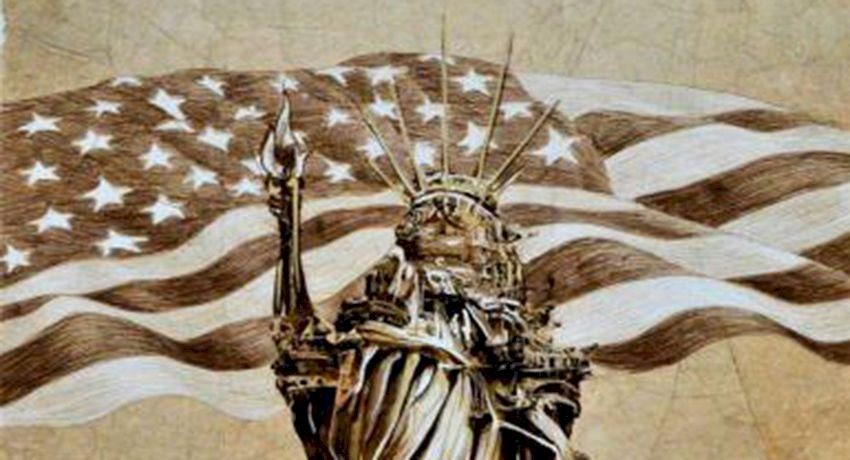
Surreal American art and culture refers to the unique way surrealism was interpreted, transformed, and expanded within the United States. While surrealism began in Europe in the early twentieth century as a literary and artistic movement led by André Breton, its migration to America during the 1930s and 1940s gave it new meanings and directions. In the American context, surrealism blended with popular culture, psychology, consumerism, cinema, advertising, and mass media, creating a distinct version that was often more playful, ironic, and culturally hybrid than its European counterpart. American surrealism did not simply copy European ideas but adapted them to reflect American social realities, technological development, and cultural imagination.
Surrealism as a movement was originally rooted in the desire to unlock the unconscious mind, inspired by the theories of Sigmund Freud. European surrealists believed that dreams, fantasies, and irrational thoughts revealed deeper truths about human existence. When surrealism arrived in the United States, it entered a society shaped by industrial growth, mass consumption, Hollywood, and modern advertising. These factors influenced how American artists and writers approached surrealist ideas. Instead of focusing only on inner psychological landscapes, American surrealism often explored the strange contradictions of modern life, the artificiality of consumer culture, and the dream-like quality of media-driven reality.
The arrival of European surrealist artists in the United States during World War II played a major role in shaping surreal American art. Many leading surrealists, including Salvador Dalí, Max Ernst, André Masson, Yves Tanguy, and Marcel Duchamp, fled Europe and settled temporarily or permanently in cities such as New York. Their presence had a strong impact on American artists, galleries, and art institutions. Through exhibitions, lectures, and personal interactions, they introduced surrealist techniques such as automatism, collage, frottage, and dream imagery. American artists absorbed these ideas but also transformed them to suit their own cultural environment.
One of the most important ways surrealism influenced American art was through its impact on Abstract Expressionism. Artists such as Jackson Pollock, Arshile Gorky, and Willem de Kooning were deeply influenced by surrealist concepts, especially automatism and the idea of expressing the unconscious directly through spontaneous gestures. Pollock’s drip paintings, for example, can be understood as a form of surrealist automatism adapted into a uniquely American style. While Abstract Expressionism is often seen as separate from surrealism, its emphasis on emotion, instinct, and psychological depth clearly reflects surrealist foundations.
American surrealism also developed its own visual language that reflected American landscapes, urban spaces, and popular imagery. Artists such as Dorothea Tanning, Joseph Cornell, and Kay Sage created works that combined dream-like atmospheres with recognizable American settings. Joseph Cornell’s box assemblages are especially important in this context. His small, poetic constructions filled with found objects, maps, toys, and photographs created miniature worlds that feel both nostalgic and mysterious. These works reflect an American version of surrealism that is quieter, more intimate, and deeply connected to memory and everyday life.
In addition to fine art, surrealism had a strong influence on American popular culture. Hollywood cinema became one of the most important spaces where surreal ideas were explored. Filmmakers used dream sequences, distorted realities, and symbolic imagery to create emotional and psychological effects. Directors such as Alfred Hitchcock, although not strictly surrealists, used surreal techniques to explore fear, desire, and the subconscious. Later filmmakers, including David Lynch, created films that are deeply surreal in structure and content, presenting fragmented narratives, unsettling imagery, and dream-like logic that challenge traditional storytelling.
Advertising and commercial design in the United States also absorbed surrealist ideas. Surreal imagery became a powerful tool for capturing attention and creating emotional responses. Advertisements often used strange juxtapositions, exaggerated forms, and fantasy-like scenes to make products appear magical or transformative. This commercial use of surrealism reflects a key difference between European and American surrealism. In Europe, surrealism was often connected to political and revolutionary ideas. In America, it became more closely tied to consumer culture and visual spectacle, sometimes losing its radical political edge while gaining broader cultural visibility.
American literature was also influenced by surrealist thinking. Writers experimented with fragmented narratives, dream logic, and unconventional imagery. While there was no single unified surrealist literary movement in the United States, many poets and novelists explored themes related to the unconscious, fantasy, and altered states of perception. The Beat Generation, for example, incorporated surreal and hallucinatory elements into their writing. Authors such as William S. Burroughs used cut-up techniques and non-linear storytelling that echo surrealist experimentation. These literary practices helped expand the influence of surrealism beyond visual art into broader cultural expression.
Surreal American culture also developed through photography. Photographers such as Man Ray, who worked in both Europe and the United States, played a major role in shaping surreal photographic practices. Techniques such as solarization, double exposure, and unusual compositions created images that feel dream-like and uncanny. In America, surreal photography often explored the strangeness hidden within ordinary scenes. Photographers transformed everyday objects and settings into something unsettling or mysterious, revealing how surrealism could exist within the familiar world.
The relationship between surrealism and American identity is complex. On one hand, surrealism offered a way to escape the rational, material-driven culture of modern America. It allowed artists and thinkers to explore fantasy, emotion, and imagination as alternatives to strict logic and productivity. On the other hand, American culture itself is often surreal in its contradictions. The coexistence of extreme wealth and poverty, the dominance of media images, and the blending of reality and entertainment all create conditions that feel inherently surreal. As a result, American surrealism often reflects not only inner dreams but also the strange nature of American social reality.
During the postwar period, surrealism gradually became part of the broader cultural landscape rather than a distinct movement. Its ideas and visual styles were absorbed into other artistic trends, including Pop Art, conceptual art, and postmodernism. Pop artists such as Andy Warhol and Claes Oldenburg used exaggerated, ironic imagery that can be seen as a form of surreal commentary on consumer culture. Although Pop Art is different from traditional surrealism, both movements share an interest in transforming ordinary objects into something strange, symbolic, or dream-like.
In contemporary American culture, surrealism continues to play an important role. Digital media, virtual reality, and internet culture have created new forms of surreal experience. Memes, digital art, and experimental videos often rely on absurd humor, unexpected combinations, and distorted realities. These forms can be seen as modern expressions of surrealist principles adapted to the digital age. The internet itself often feels surreal, with rapid shifts between serious news, fantasy content, and artificial intelligence-generated images, blurring the boundaries between reality and imagination.
Contemporary American artists continue to explore surreal themes in new ways. Many artists use surreal imagery to address social and political issues, including identity, race, gender, and environmental concerns. By combining realistic elements with fantasy and symbolism, they create powerful visual metaphors that encourage viewers to think critically about society. This socially engaged surrealism reflects a return to some of the political and critical ambitions of early European surrealism, adapted to American contexts.
Surreal American culture is also strongly connected to music and performance. Musicians and performers have used surreal aesthetics in album art, stage design, and music videos. Artists such as Frank Zappa, Talking Heads, and more recently experimental and alternative musicians, have incorporated absurd, dream-like, and theatrical elements into their work. Music videos in particular have become a major platform for surreal storytelling, combining sound, image, and narrative in ways that challenge traditional realism.
Another important aspect of surreal American culture is its connection to psychology and therapy culture. In the United States, ideas about self-expression, dreams, and personal identity are deeply embedded in popular understanding of mental health. Surreal imagery is often used to represent inner emotional states, trauma, and psychological complexity. This reflects the continued influence of Freud and psychoanalysis, even as these theories are reinterpreted through modern psychology and self-help culture.
The commercialization of surrealism in America has both positive and negative effects. On the positive side, it has made surreal ideas widely accessible and visually influential. On the negative side, it can reduce surrealism to a style or aesthetic rather than a deeper philosophical or critical approach. When surreal imagery is used only for decoration or marketing, it may lose its original purpose of challenging rational thinking and social norms. However, even in commercial contexts, surreal visuals can still provoke curiosity, emotional responses, and imaginative thinking.
Education and museums in the United States have also played a key role in shaping understanding of surrealism. Major museums such as the Museum of Modern Art (MoMA) and the Metropolitan Museum of Art have held important surrealist exhibitions. These institutions have helped present surrealism as a major historical movement while also highlighting the unique contributions of American artists. Academic research and art history programs continue to study surrealism’s influence on American culture, ensuring that its legacy is critically examined and preserved.
In conclusion, surreal American art and culture represent a complex and evolving adaptation of European surrealism within the unique social, economic, and cultural conditions of the United States. From fine art and literature to film, advertising, digital media, and popular culture, surrealism has deeply shaped how Americans imagine reality, fantasy, and the unconscious. Rather than remaining a fixed movement, surrealism in America has become a flexible cultural language that continues to transform and respond to changing times. Its enduring presence shows that the desire to explore dreams, imagination, and the hidden dimensions of human experience remains a powerful force in American cultural life.
