

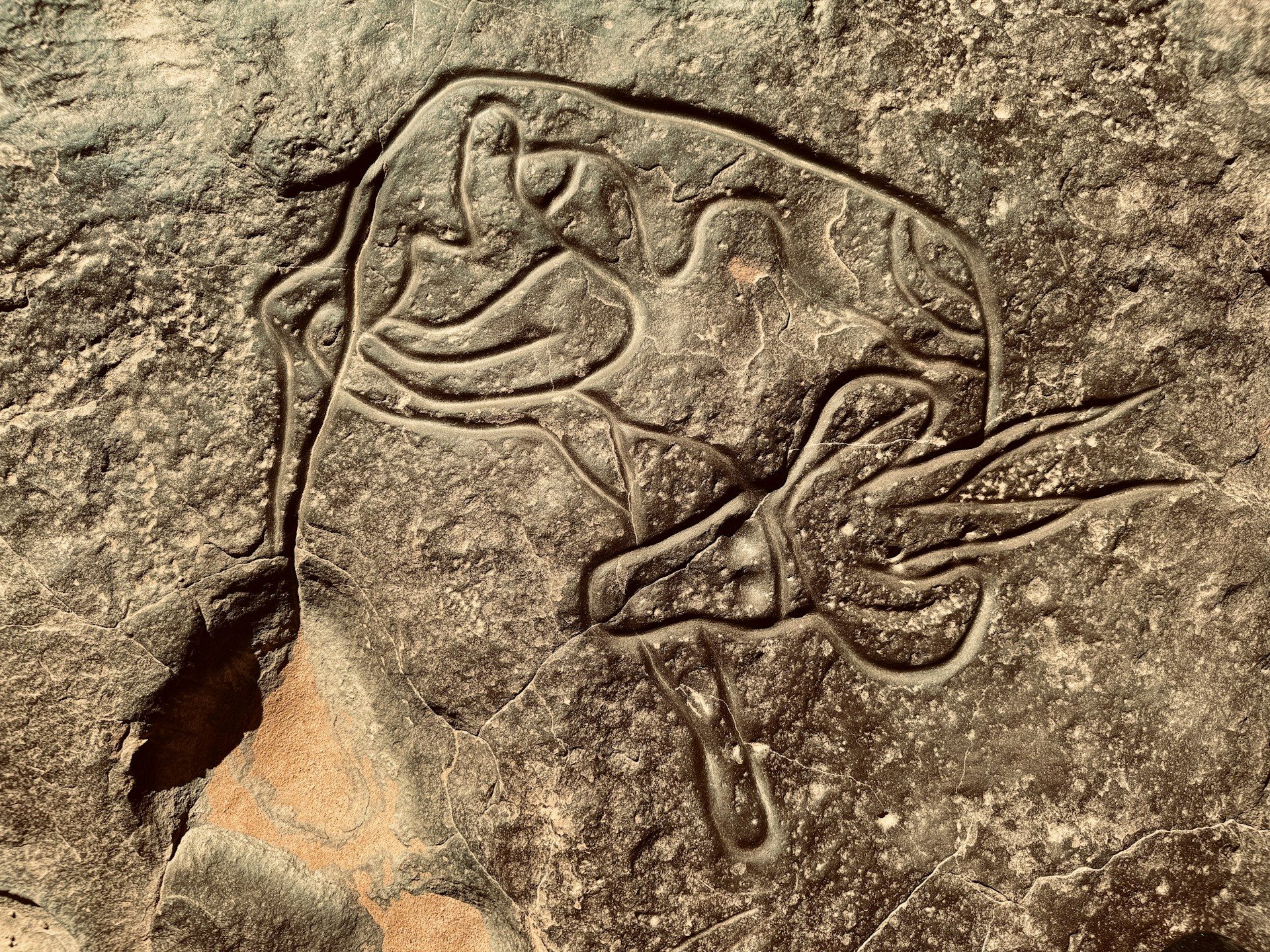
Paleolithic art refers to the earliest form of artistic expression created by humans during the Paleolithic Age, also known as the Old Stone Age. This period lasted from about 2.5 million years ago until around 10,000 BCE, when humans began developing agriculture and settled lifestyles. Paleolithic art is extremely significant because it provides evidence of the intellectual, spiritual, and cultural development of early humans. Even though people of this era lived as hunters and gatherers, constantly moving in search of food and shelter, they still found time to create meaningful art. These artistic works reflect not only their daily lives but also their beliefs, imagination, and relationship with nature.
The origins of Paleolithic art show that early humans were not merely concerned with survival but also possessed creativity and symbolic thinking. Paleolithic art emerged long before written language, making it one of the earliest ways humans communicated ideas, emotions, and experiences. Art from this period was often connected to rituals, hunting magic, or spiritual practices. The materials used were simple and natural, including stone, bones, ivory, charcoal, ochre, clay, and natural pigments. Despite these limited resources, Paleolithic artists produced remarkable works that still amaze archaeologists and historians today.
Paleolithic art is mainly found in Europe, especially in France and Spain, but examples have also been discovered in Africa, Asia, and other regions. The most famous Paleolithic artworks include the cave paintings of Lascaux in France, Altamira in Spain, and Chauvet Cave in southern France. These artworks demonstrate that prehistoric humans had a deep understanding of animals, movement, and natural forms. Many of the images show animals such as bison, horses, deer, mammoths, and lions, often painted with great skill and realism.
One of the most striking features of Paleolithic art is its focus on animals rather than humans. Since animals were central to survival as sources of food, clothing, and tools, they naturally became major subjects in artistic representation. Paleolithic humans depended heavily on hunting, and their art may have served as a way to ensure successful hunts or to honor the spirits of animals. Some researchers believe that cave paintings were part of ritual ceremonies performed by shamans or spiritual leaders. Others think they were used for storytelling, education, or marking important places.
Paleolithic art can be broadly divided into two major categories: parietal art and portable art. These categories help scholars understand the types, purposes, and settings of prehistoric artworks. Each category includes different forms and styles that reveal the diversity of artistic expression during the Paleolithic era.
Parietal Art (Cave Art)
Parietal art refers to artworks created on fixed surfaces such as cave walls, ceilings, and rock shelters. This is the most well-known type of Paleolithic art. Cave paintings and engravings are examples of parietal art, and they often appear deep inside caves, far from natural light. This suggests that the creation of these artworks required planning, the use of torches or lamps, and possibly special rituals. The fact that many paintings were placed in hidden areas indicates that they may have held sacred or ceremonial importance rather than being simple decoration.
Cave paintings are among the most extraordinary achievements of Paleolithic humans. These paintings were created using natural pigments like red and yellow ochre, charcoal, and manganese oxide. Artists applied colors with their fingers, brushes made of animal hair, or by blowing pigment through hollow bones. The images often depict animals in motion, showing an advanced understanding of anatomy and movement. Some caves contain hundreds of paintings, suggesting that these spaces were used repeatedly over generations.
Engravings are another form of parietal art. Instead of painting, Paleolithic artists carved or scratched figures into rock surfaces using sharp stone tools. These engravings include animals, abstract symbols, and geometric patterns. Sometimes engravings were combined with paintings, creating layered compositions. The combination of different techniques shows that Paleolithic art was complex and evolving.
One interesting element of cave art is the presence of hand stencils. These were created by placing a hand against the cave wall and blowing pigment around it, leaving a negative impression. Handprints may have served as signatures, identity marks, or ritual symbols. They represent one of the most direct and personal connections between modern humans and prehistoric individuals.
Portable Art
Portable art refers to small, movable objects decorated or carved by Paleolithic humans. Unlike cave paintings, portable art could be carried from place to place, which was important for nomadic hunter-gatherer societies. Portable art includes figurines, carved bones, decorated tools, beads, pendants, and engraved stones. These objects show that Paleolithic art was not limited to caves but was also part of everyday life.
One of the most famous examples of portable art is the Venus figurines. These are small carvings of female figures with exaggerated features such as large breasts, hips, and stomachs. The Venus of Willendorf, discovered in Austria, is one of the best-known examples. Scholars believe these figurines may have symbolized fertility, motherhood, or goddess worship. They may also have represented ideals of beauty or served as protective charms.
Portable art also includes animal carvings made from ivory, bone, or antler. Some of these carvings are highly detailed, showing animals such as horses, reindeer, and mammoths. These objects may have been used in rituals, as decorations, or as storytelling tools. Portable art demonstrates that Paleolithic humans valued artistic expression in both sacred and daily contexts.
Decorated tools are another form of portable art. Early humans often engraved patterns or animal figures onto weapons, spear throwers, and bone tools. This suggests that art was integrated into practical objects, perhaps to bring good luck, display status, or express identity. Jewelry such as necklaces made from shells, animal teeth, and stones also shows an early interest in personal ornamentation and symbolism.
Types of Paleolithic Art
Paleolithic art can also be classified based on its form and subject matter. The major types include representational art, abstract art, and symbolic art.
Representational art refers to realistic depictions of animals and occasionally humans. Most Paleolithic paintings and carvings fall into this category. The realism of these works suggests careful observation of nature. Animals were often drawn with accurate proportions, movement, and detail. This indicates that Paleolithic artists were highly skilled and had a deep connection with the natural world.
Abstract art includes geometric patterns, dots, zigzags, spirals, and lines. These shapes appear frequently in caves alongside animal paintings. Although their exact meaning remains unknown, they may have served as signs, maps, counting systems, or spiritual symbols. Abstract designs show that Paleolithic humans were capable of complex symbolic thought beyond simple representation.
Symbolic art refers to artworks with deeper cultural or spiritual meanings. Venus figurines, handprints, and mysterious signs are often considered symbolic. These artworks suggest that Paleolithic humans had belief systems, rituals, and possibly early forms of religion. Symbolic art played an important role in expressing ideas that could not be spoken or written.
Importance of Paleolithic Art
Paleolithic art is extremely important because it provides insight into the lives and minds of early humans. It shows that creativity and imagination have been part of human nature since prehistoric times. Through these artworks, we learn about the animals that existed during the Ice Age, the environments Paleolithic people lived in, and the cultural practices they followed.
Paleolithic art also represents the beginning of visual communication. Before writing systems developed, art served as a way to record experiences, share stories, and express beliefs. The survival of these artworks for thousands of years proves their lasting cultural value.
Moreover, Paleolithic art highlights the spiritual dimension of early human societies. The placement of paintings deep inside caves, the repeated depiction of certain animals, and the presence of symbolic signs suggest that art was closely linked with ritual life. It was not merely decorative but deeply meaningful.
Conclusion
In conclusion, Paleolithic art is the earliest known form of human artistic expression, dating back to the Old Stone Age. It reflects the creativity, intelligence, and symbolic thinking of prehistoric humans. Paleolithic art includes two main categories: parietal art, such as cave paintings and engravings, and portable art, such as figurines, carvings, and decorated tools. The types of Paleolithic art range from realistic animal representations to abstract symbols and spiritual imagery. These artworks provide valuable evidence about early human life, culture, and belief systems. Paleolithic art remains one of the greatest achievements of prehistoric humanity and continues to inspire curiosity and admiration today.
