

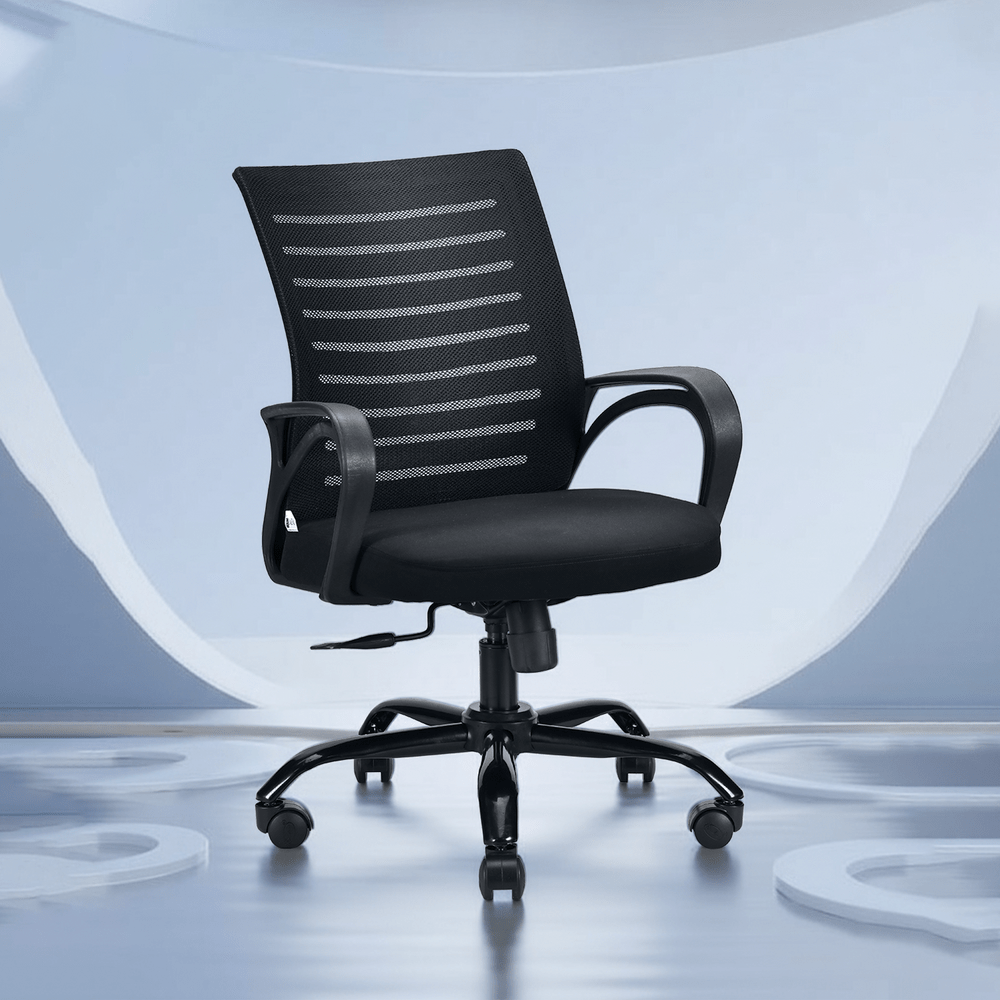
In the modern professional landscape, the average office worker spends roughly 8 to 10 hours a day seated. If your chair isn’t working for you, it’s working against you. Enter the ergonomic office chair, a piece of furniture engineered specifically to support the human body, encourage natural posture, and reduce the physical toll of a sedentary lifestyle.
Unlike a standard office chair, an ergonomic model is “user-centric.” It is designed with multiple adjustable parts that allow it to fit the unique dimensions of your body, rather than forcing your body to conform to the chair.
The Anatomy of Support: Key Features
To be truly ergonomic, a chair must offer more than just a “comfortable” seat. It needs specific points of adjustment to maintain the natural $S$-curve of your spine.
- Adjustable Lumbar Support: This is the most critical feature. It supports the lower back (lumbar region), preventing the slouching that leads to disc compression.
- Seat Depth and Height: A proper seat height allows your feet to rest flat on the floor with knees at a 90-degree angle. Seat depth adjustment ensures there is a small gap (about 2–3 inches) between the back of your knees and the edge of the seat to maintain circulation.
- 4D Armrests: These move up/down, left/right, and pivot. They support your forearms so your shoulders can remain relaxed, preventing “tech neck” and tension headaches.
- Dynamic Reclining: Ergonomic chairs allow for a “synchro-tilt” where the backrest and seat move together, encouraging micro-movements throughout the day.
Why It Is Vital for Office Work
Investing in an ergonomic chair isn’t just a “luxury” upgrade for your home office; it is a fundamental health intervention.
1. Pain Prevention and Posture Correction
Sitting in a non-ergonomic chair often leads to “turtling”—leaning forward toward the screen. This puts immense pressure on the cervical spine. An ergonomic chair realigns the head, shoulders, and hips, significantly reducing chronic back and neck pain.
2. Increased Blood Circulation
Standard chairs often have sharp edges that “cut off” circulation at the back of the thighs. Ergonomic chairs feature a “waterfall” seat design (a sloped front edge) that keeps blood flowing freely to your lower limbs, reducing the risk of swelling and deep vein thrombosis (DVT).
3. Enhanced Productivity and Focus
Physical discomfort is a massive cognitive distraction. When your body is straining to stay upright or throbbing from a cramped hip, your “deep work” suffers. By eliminating physical stressors, ergonomic chairs allow for longer periods of mental clarity and sustained output.
4. Long-Term Health Savings
While the upfront cost of a high-quality ergonomic chair (like a Herman Miller or Steelcase) can be high, it pales in comparison to the cost of physical therapy, chiropractic adjustments, or surgery resulting from years of poor repetitive posture.
How to Set Up Your Ergonomic Throne
Even the best chair is useless if misconfigured. Follow the 90-90-90 Rule:
- Elbows: Bent at 90 degrees at your desk.
- Hips: Bent at 90 degrees against the backrest.
- Knees: Bent at 90 degrees with feet flat.
Final Thoughts
An ergonomic chair is the foundation of a healthy workspace. It’s an acknowledgment that while our work has moved into the digital realm, our bodies are still biological machines that require proper alignment to function at their best.
