

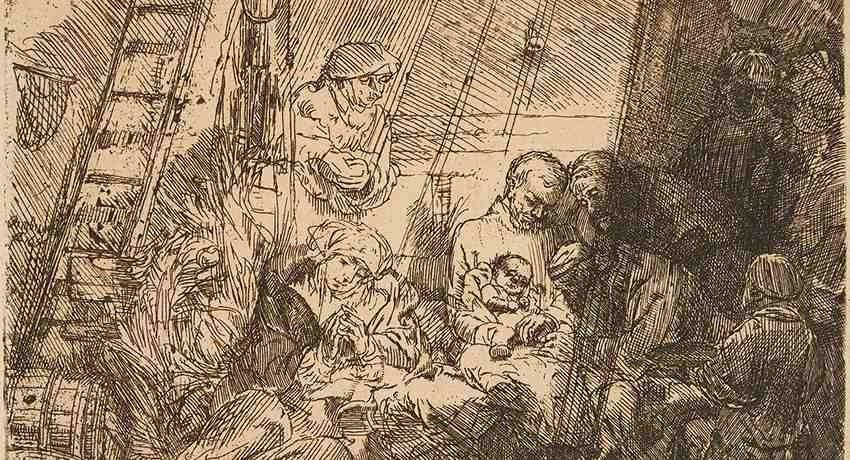
Rembrandt etchings occupy a singular position in the history of Western art, standing at the intersection of technical mastery, psychological depth, and enduring cultural value. Created primarily during the seventeenth century by Rembrandt Harmenszoon van Rijn, these works are not merely reproductive prints but original artworks conceived specifically for the etching medium. Rembrandt transformed printmaking from a craft often associated with replication into a powerful artistic language capable of subtlety, experimentation, and profound emotional expression. Understanding what Rembrandt etchings are, and why they are so highly valued today, requires an exploration of their historical context, artistic qualities, production methods, themes, rarity, condition, and the dynamics of the art market.
Rembrandt Harmenszoon van Rijn was born in Leiden in 1606 and rose to become one of the most celebrated artists of the Dutch Golden Age. While he is widely known for his paintings and drawings, etching played a central role in his artistic output. Over the course of his career, Rembrandt produced approximately 300 etchings, many of which exist in multiple states due to his habit of reworking copper plates over time. These etchings were not secondary to his paintings; rather, they were a laboratory for innovation, allowing him to test ideas about light, shadow, composition, and human expression in ways that painting did not always permit.
Etching, as a printmaking technique, involves coating a metal plate—usually copper—with a waxy ground, drawing through the ground with a needle to expose the metal, and then immersing the plate in acid so that the exposed lines are bitten into the surface. Ink is then applied to the plate, wiped so that ink remains only in the etched lines, and transferred onto paper using a printing press. Rembrandt mastered this process and extended it by combining etching with drypoint and engraving. Drypoint involves scratching directly into the plate with a sharp tool, creating burrs that hold ink and produce rich, velvety lines. This combination allowed Rembrandt to achieve remarkable tonal variation and depth.
One of the defining characteristics of Rembrandt’s etchings is their expressive use of line and chiaroscuro. Unlike many of his contemporaries, who aimed for clean, uniform lines, Rembrandt embraced irregularity. His lines vary in thickness, density, and direction, creating dynamic surfaces that seem alive with movement. Light and shadow are used not only to model form but to convey mood and psychological tension. In works such as “The Three Crosses” or “Christ Healing the Sick,” light becomes a narrative force, guiding the viewer’s eye and intensifying emotional impact.
The subject matter of Rembrandt’s etchings is remarkably diverse. He depicted biblical scenes, portraits, self-portraits, landscapes, genre scenes, and studies of everyday life. His biblical etchings are particularly notable for their humanization of sacred narratives. Rather than idealized figures, Rembrandt portrayed biblical characters as deeply human, marked by doubt, suffering, compassion, and resilience. This approach resonated strongly with viewers in the Protestant Dutch Republic and continues to appeal to modern audiences who value psychological realism.
Portraiture and self-portraiture form another important category within Rembrandt’s etched works. Rembrandt produced more etched self-portraits than any artist before him, using his own face as a vehicle for exploring emotion, aging, identity, and artistic persona. These self-portraits are not exercises in vanity but studies in human complexity. They reveal a keen observational eye and a willingness to confront vulnerability, making them among the most compelling images in the history of printmaking.
Rembrandt’s landscapes, though fewer in number, are equally significant. They depict the Dutch countryside with a sense of atmosphere and spatial depth that was revolutionary for printmaking. Using layered lines and selective detail, Rembrandt suggested vast spaces, shifting weather, and the quiet rhythms of rural life. These works influenced generations of landscape artists and demonstrated that etching could rival painting in its ability to evoke environment and mood.
An important concept in understanding Rembrandt etchings is the idea of “states.” Because Rembrandt frequently altered his plates—adding lines, deepening shadows, or removing elements—prints pulled from the same plate at different times can look markedly different. Each version is referred to as a different state. Early states are often prized for their freshness and subtlety, while later states may show heavier reworking and wear. The existence of multiple states adds complexity to attribution, valuation, and scholarly study, but it also highlights Rembrandt’s experimental approach and his refusal to treat prints as fixed or final.
The worth of Rembrandt etchings is influenced by several interrelated factors, including rarity, condition, impression quality, state, provenance, and market demand. Unlike modern prints produced in large, controlled editions, Rembrandt’s etchings were printed over many years, often by different hands, using varying papers and inks. As a result, surviving impressions vary greatly in quality. A strong, well-inked impression printed on high-quality paper can be exponentially more valuable than a weak or damaged one.
Condition plays a critical role in determining value. Factors such as paper quality, foxing, tears, stains, trimming, and restoration all affect worth. Many Rembrandt etchings were printed on fine seventeenth-century papers, including Japanese paper (imported and highly prized) and laid European paper with distinctive watermarks. Impressions on Japanese paper are particularly rare and valuable due to their rich tonal effects and historical significance.
Provenance, or the documented history of ownership, also contributes to an etching’s worth. Prints that can be traced to prominent collectors, historic collections, or early ownership are often valued more highly. Provenance not only enhances monetary value but also provides assurance of authenticity and historical importance. Museums, scholars, and serious collectors place great emphasis on well-documented provenance.
Market demand for Rembrandt etchings has remained consistently strong for centuries. Collectors began acquiring his prints during his lifetime, and their popularity only increased after his death. Today, Rembrandt etchings are held in major museum collections worldwide, including the British Museum, the Rijksmuseum, the Metropolitan Museum of Art, and the Louvre. This institutional validation reinforces their cultural and financial value.
In terms of monetary worth, Rembrandt etchings can range widely in price. Less rare impressions, particularly later states or those in moderate condition, may sell for several thousand to tens of thousands of dollars. More desirable works—early states, exceptional impressions, or iconic images such as “The Three Crosses,” “Christ Healing the Sick,” or rare self-portraits—can command prices in the hundreds of thousands of dollars. In exceptional cases, prices can exceed one million dollars at major auctions.
It is important to distinguish between original Rembrandt etchings and later reproductions or posthumous impressions. Some plates continued to be printed after Rembrandt’s death, and in later centuries, reproductive prints were made after his works. Authentic Rembrandt etchings are those printed from plates created by Rembrandt himself, preferably during his lifetime or shortly thereafter. Expert authentication, often involving watermark analysis, stylistic examination, and comparison with catalogues raisonnés such as those by Adam Bartsch or Christopher White, is essential.
The scholarly study of Rembrandt etchings has played a significant role in sustaining their value. Art historians have devoted immense effort to cataloguing, analyzing, and contextualizing these works. This scholarship not only deepens appreciation but also stabilizes the market by providing authoritative frameworks for attribution and evaluation. Collectors benefit from this rigorous academic foundation, which reduces uncertainty and enhances confidence.
Beyond monetary considerations, the worth of Rembrandt etchings lies in their artistic and cultural significance. They represent a turning point in the history of printmaking, demonstrating that prints could be as expressive, innovative, and intellectually rich as paintings. Rembrandt’s willingness to embrace imperfection, experiment with technique, and prioritize emotional truth over polished finish continues to influence artists today.
Rembrandt etchings also possess educational value. They offer insight into seventeenth-century Dutch society, religious thought, and artistic practice. Through them, viewers encounter beggars, merchants, scholars, landscapes, and biblical figures rendered with empathy and immediacy. These works serve as visual documents of their time while transcending it through universal themes of suffering, hope, faith, and humanity.
For collectors, owning a Rembrandt etching is often described as owning a direct connection to the artist’s hand and mind. Unlike paintings, which are typically inaccessible due to their rarity and high cost, etchings provide a more attainable means of engaging with Rembrandt’s genius. Each impression carries the marks of his process—the etched line, the wiped ink, the pressure of the press—creating a sense of intimacy that is rare in art.
Museums and private collectors alike value Rembrandt etchings not only for their beauty but for their durability as cultural assets. While art markets fluctuate, works by artists of Rembrandt’s stature have shown long-term resilience. Their value is supported by historical importance, institutional demand, and an enduring audience of admirers across cultures and generations.
In conclusion, Rembrandt etchings are original works of art that exemplify the highest achievements of printmaking. They are distinguished by technical innovation, expressive power, and profound human insight. Their worth is determined by a complex interplay of artistic quality, rarity, condition, state, provenance, and market demand. While their monetary value can be substantial, their true significance lies in their ability to connect viewers across time with the mind and spirit of one of history’s greatest artists. Through these etched lines on paper, Rembrandt’s vision continues to live, offering an enduring testament to the power of art.
