

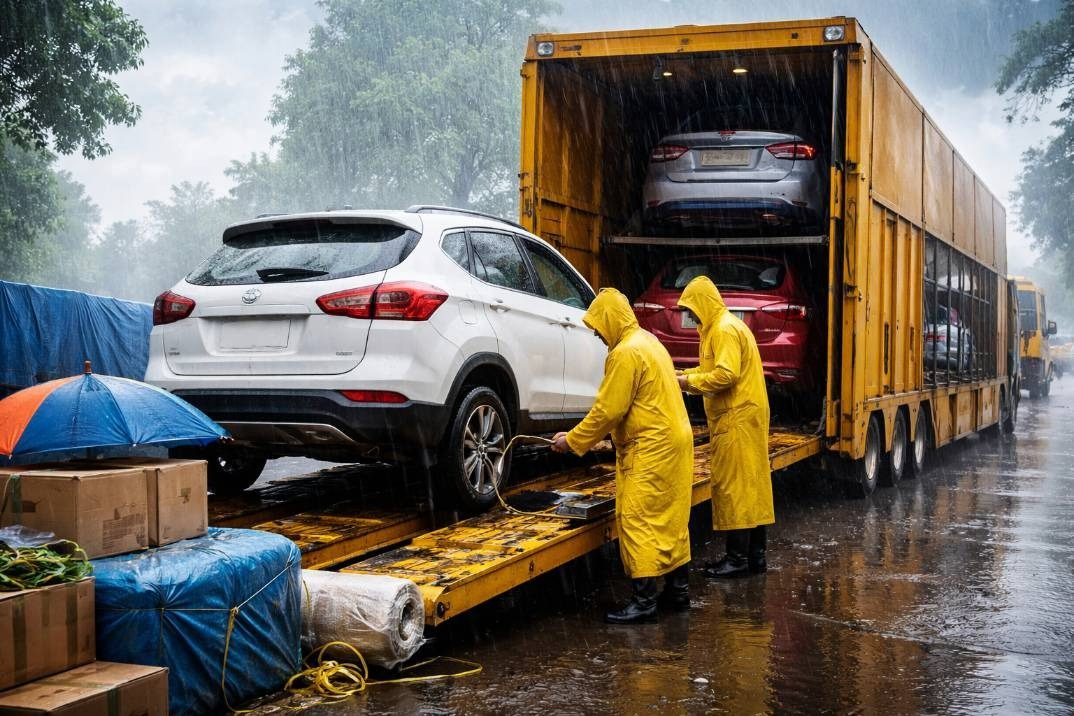
India’s monsoon season transforms vehicle relocation from a straightforward task into a challenge requiring meticulous planning and specialized protection measures. For anyone aged 25-60 relocating their car or bike during the June-September monsoon period, understanding proper protection techniques can prevent water damage, rust formation, and mechanical issues that cost thousands in repairs. Whether you’re using a vehicle shifting service for a job transfer or personal relocation, this comprehensive monsoon protection checklist ensures your vehicle arrives in pristine condition despite heavy rainfall and humid conditions.
Vehicle Shifting Service: Essential Tarpaulin Protection Standards
Tarpaulin selection represents your first line of defense against monsoon weather when using a vehicle shifting service in India. Not all tarpaulins provide equal protection—the material quality, thickness, and securing method determine whether your vehicle stays dry during transit through states like Kerala, Maharashtra, West Bengal, or coastal Karnataka experiencing heavy rainfall.
Premium vehicle shifting service providers use heavy-duty polyethylene or canvas tarpaulins with minimum 200 GSM (grams per square meter) thickness. These industrial-grade covers resist tearing from highway winds and prevent water seepage even during prolonged exposure to rain. Cheaper tarpaulins below 150 GSM develop micro-tears and allow moisture penetration, defeating their protective purpose entirely.
Before your vehicle gets loaded, inspect the tarpaulin personally. Look for existing tears, weak spots, or patches that indicate previous damage. A quality vehicle shifting service in India replaces tarpaulins regularly, not just patches them repeatedly. The tarpaulin should extend beyond your vehicle’s dimensions by at least 1-2 feet on all sides, creating adequate overhang that water can’t penetrate from underneath or sides during movement.
Proper tarpaulin securing involves multiple tie-down points, not just corner fastenings. Request that the service provider secures the tarpaulin at 8-10 points around your vehicle’s perimeter, using rust-resistant metal hooks or heavy-duty rope. The tarpaulin should be taut but not stretched so tight that highway vibrations cause tearing. Loose tarpaulins flap violently during transit, allowing rain entry and potentially damaging your vehicle’s paint through constant friction.
Wooden Block Placement for Vehicle Shifting Service Protection
Wooden blocks serve a dual purpose during monsoon season vehicle shifting service operations—they elevate your vehicle to prevent water accumulation and provide stable anchoring points for chains and ropes. Professional car shifting services understand that improper wooden block placement causes more damage than protection, making your supervision during loading crucial.
The blocks should be positioned under designated jacking points—typically near wheel wells and chassis reinforcement areas marked in your vehicle’s manual. Never allow workers to place blocks under random undercarriage points, as this stresses components not designed to bear concentrated weight during multi-day transport. Each block should measure at least 4-6 inches in height to ensure adequate clearance from carrier bed water accumulation during heavy monsoon downpours.
Quality matters significantly with wooden blocks. Seasoned hardwood blocks like teak or sal resist moisture absorption better than softwood varieties. Fresh or unseasoned wood absorbs rainwater, swells, and shifts during transit, compromising vehicle stability. The vehicle shifting service in India you choose should use blocks without sharp edges, splinters, or protruding nails that could puncture your vehicle’s undercarriage during movement or sudden braking.
Request rubber padding between wooden blocks and your vehicle’s contact points. This cushioning absorbs road vibrations and prevents metal-on-wood friction that damages protective undercoating. Some premium vehicle shifting service providers use specialized plastic blocks with built-in rubber layers, offering superior protection but at slightly higher costs justified during monsoon relocations.
Chain Securing Techniques for Vehicle Shifting Service in India
Chain securing represents the most critical monsoon protection element, as inadequate securing allows your vehicle to shift during transit, causing collision damage with carrier walls or other vehicles. The vehicle shifting service in India market uses various securing methods, but chain-based systems provide maximum stability during monsoon season when wet roads increase carrier sway and sudden braking incidents.
Optimal chain securing follows the four-point method with diagonal chains creating an X-pattern when viewed from above. This configuration prevents forward, backward, and lateral movement regardless of how the carrier navigates monsoon-slick highways. Each chain should connect from your vehicle’s designated towing hooks or chassis mounting points to the carrier bed’s reinforced anchor loops.
Critical chain securing specifications include:
- Chain grade: Minimum Grade 70 transport chains with 3/8-inch thickness for cars; Grade 80 for heavier SUVs and luxury vehicles
- Tension balance: All four chains should have equal tension—uneven tightening causes structural stress on your vehicle’s frame
- Protective wrapping: Chains must have cloth or rubber sleeves where they contact your vehicle’s body, preventing paint scratches and metal corrosion
- Securing hardware: Use ratchet tensioners rather than simple hooks, allowing precise tension adjustment during multi-day journeys
- Regular checking: Professional vehicle shifting service providers should verify chain tension at every rest stop, as monsoon humidity causes metal contraction and loosening
Never accept wire rope or fabric straps as primary securing during monsoon season. While suitable for short-distance dry weather transport, these materials absorb moisture, lose tensile strength, and snap under stress. Chains maintain integrity regardless of water exposure, making them mandatory for monsoon vehicle shifting service operations.
Pre-Loading Vehicle Preparation for Vehicle Shifting Service
Before handing your vehicle to any vehicle shifting service in India during monsoon season, complete essential pre-loading preparations that complement the provider’s protection measures. Thoroughly wash and dry your vehicle, then document its condition with timestamped photographs from multiple angles. This visual record proves invaluable if water damage disputes arise after delivery.
Apply a protective wax coating to your vehicle’s exterior—this creates a hydrophobic layer that repels rainwater during any tarpaulin gaps or moisture exposure. Clean and treat rubber seals around doors, windows, and trunk with silicone protectant, as monsoon humidity accelerates rubber deterioration. Check that all windows close completely with no gaps where water could seep inside during heavy downpours.
Remove all accessories from your vehicle’s exterior including roof carriers, bike racks, or decorative elements. These items catch wind and rain, potentially causing damage or creating water channels that direct moisture toward vulnerable areas. Disconnect the battery if the vehicle shifting service recommends it for extended transit periods, preventing electrical issues from humidity exposure.
Verifying Monsoon Protection Standards with Vehicle Shifting Service Providers
When booking car shifting services during India’s monsoon season, specifically ask about their monsoon protection protocols. Reputable providers should confidently explain their tarpaulin specifications, wooden block quality, and chain securing procedures without hesitation. Request to see the actual equipment they’ll use—not just promises of “proper protection.”
Check whether the vehicle shifting service in India offers enclosed carrier options during monsoon season. While more expensive, enclosed transport eliminates most weather-related risks by placing your vehicle inside a covered container truck. For premium cars, vintage vehicles, or recently purchased models, the additional investment of ₹3,000-₹5,000 justifies the complete monsoon protection provided.
Confirm insurance coverage specifically addresses monsoon-related damage. Standard transit insurance might exclude water damage, rust formation, or mechanical issues from humidity exposure. Ensure the policy clearly covers these monsoon-specific risks, with claim procedures that don’t require proving negligence—monsoon damage often results from unforeseen circumstances rather than obvious provider errors.
Finally, request GPS tracking access to monitor your vehicle’s journey. During monsoon season, carriers sometimes alter routes to avoid flooded areas or severe weather zones. Real-time tracking lets you verify your vehicle isn’t stranded in high-risk flooding areas for extended periods, allowing proactive communication with the service provider if concerns arise.
