

Introduction
The transportation analytics market is experiencing rapid growth as governments, logistics providers, and transportation operators increasingly rely on data to improve efficiency, safety, and decision-making. Transportation analytics uses advanced data analysis tools to collect, process, and interpret information generated across transportation networks. This includes data from vehicles, traffic systems, sensors, GPS devices, and digital platforms.
As urbanization increases and mobility systems become more complex, transportation stakeholders face challenges such as congestion, rising fuel costs, delivery delays, and environmental concerns. Transportation analytics helps address these issues by enabling predictive insights, real-time monitoring, and optimized planning. The growing focus on smart cities, digital infrastructure, and intelligent transportation systems is further accelerating market growth.
Market Overview
Transportation analytics refers to the application of data analytics, artificial intelligence, and machine learning to transportation-related data. These solutions help organizations analyze traffic patterns, optimize routes, manage fleets, reduce operational costs, and improve passenger experience.
The market includes software platforms, analytical tools, and professional services designed to support roadways, railways, air transport, maritime logistics, and public transportation systems. Cloud-based transportation analytics solutions are gaining strong adoption due to scalability, flexibility, and lower infrastructure costs. However, on-premise systems remain important for organizations that require high data security and control.
Globally, the transportation analytics market is expanding across developed and emerging economies. Governments are investing in intelligent transport infrastructure, while private enterprises are adopting analytics to enhance supply chain visibility and efficiency.
Key Market Drivers
One of the primary drivers of the transportation analytics market is the increasing need for efficient traffic management. Urban congestion leads to economic losses, fuel wastage, and environmental pollution. Transportation analytics enables authorities to monitor traffic flow, predict congestion, and implement smart traffic control measures.
The rapid growth of logistics and e-commerce is another major factor. Companies require real-time insights to manage deliveries, reduce transit time, and optimize fleet operations. Transportation analytics provides visibility across the supply chain, improving reliability and customer satisfaction.
Rising fuel costs and sustainability goals also contribute to market growth. Transportation analytics helps organizations reduce fuel consumption through route optimization and predictive maintenance. These benefits align with environmental regulations and carbon reduction targets.
Technological advancements such as artificial intelligence, big data analytics, and the Internet of Things further enhance transportation analytics capabilities. These technologies allow systems to process large volumes of data and generate actionable insights with high accuracy.
Market Segmentation
The transportation analytics market can be segmented by component, deployment model, application, mode of transportation, and end user.
By component, the market includes software and services. Software solutions dominate due to widespread adoption of analytics platforms for traffic monitoring, fleet management, and predictive analysis. Services such as consulting, system integration, and support are growing as organizations seek customized solutions.
By deployment model, the market is divided into cloud-based and on-premise solutions. Cloud-based analytics is gaining popularity because it offers scalability, cost efficiency, and remote access. On-premise solutions remain relevant for sensitive applications and regulatory compliance.
By application, transportation analytics supports traffic management, fleet optimization, supply chain planning, safety and risk management, and predictive maintenance. Traffic and fleet analytics represent major segments due to their direct impact on cost reduction and service efficiency.
By mode of transportation, the market covers roadways, railways, airways, and maritime transport. Road transportation holds the largest share due to high vehicle volumes and urban traffic challenges.
By end user, the market serves government agencies, logistics companies, transportation service providers, and enterprises. Governments and public transport authorities are key adopters due to smart city initiatives.
Role of Transportation Analytics in Smart Cities
Smart city development plays a crucial role in driving the transportation analytics market. Cities aim to improve mobility, reduce congestion, and enhance public safety. Transportation analytics supports these goals by enabling intelligent traffic signals, real-time public transport updates, and integrated mobility platforms.
Analytics-driven solutions help city planners analyze travel patterns and infrastructure usage. This data supports better urban planning and resource allocation. As smart city projects expand globally, demand for transportation analytics solutions continues to grow.
Logistics and Fleet Management Applications
In logistics and fleet management, transportation analytics delivers significant operational benefits. Fleet operators use analytics to track vehicle performance, monitor driver behavior, and schedule maintenance proactively. Predictive analytics reduces breakdowns and extends vehicle life.
Route optimization tools analyze traffic, weather, and delivery schedules to determine the most efficient paths. This reduces fuel consumption, delivery delays, and operational costs. Logistics companies increasingly rely on transportation analytics to gain a competitive edge in a fast-paced market.
Public Transportation and Passenger Experience
Public transportation agencies use transportation analytics to improve service reliability and passenger satisfaction. Analytics platforms track ridership trends, peak travel times, and service performance. This information supports optimized scheduling and capacity planning.
Real-time data enables accurate arrival predictions and service alerts, enhancing passenger experience. Transportation analytics also helps reduce overcrowding and improve safety through data-driven monitoring and response systems.
Technological Trends Shaping the Market
Artificial intelligence and machine learning are transforming transportation analytics by enabling predictive and prescriptive insights. These technologies allow systems to learn from historical data and adapt to changing conditions.
The integration of the Internet of Things is another key trend. Sensors, cameras, and connected devices generate continuous data streams that enhance real-time monitoring and analysis. Edge analytics is gaining attention as it allows data processing closer to the source, reducing latency.
Advanced visualization tools and dashboards improve decision-making by presenting complex data in easy-to-understand formats. These innovations make transportation analytics more accessible to non-technical users.
Regional Market Insights
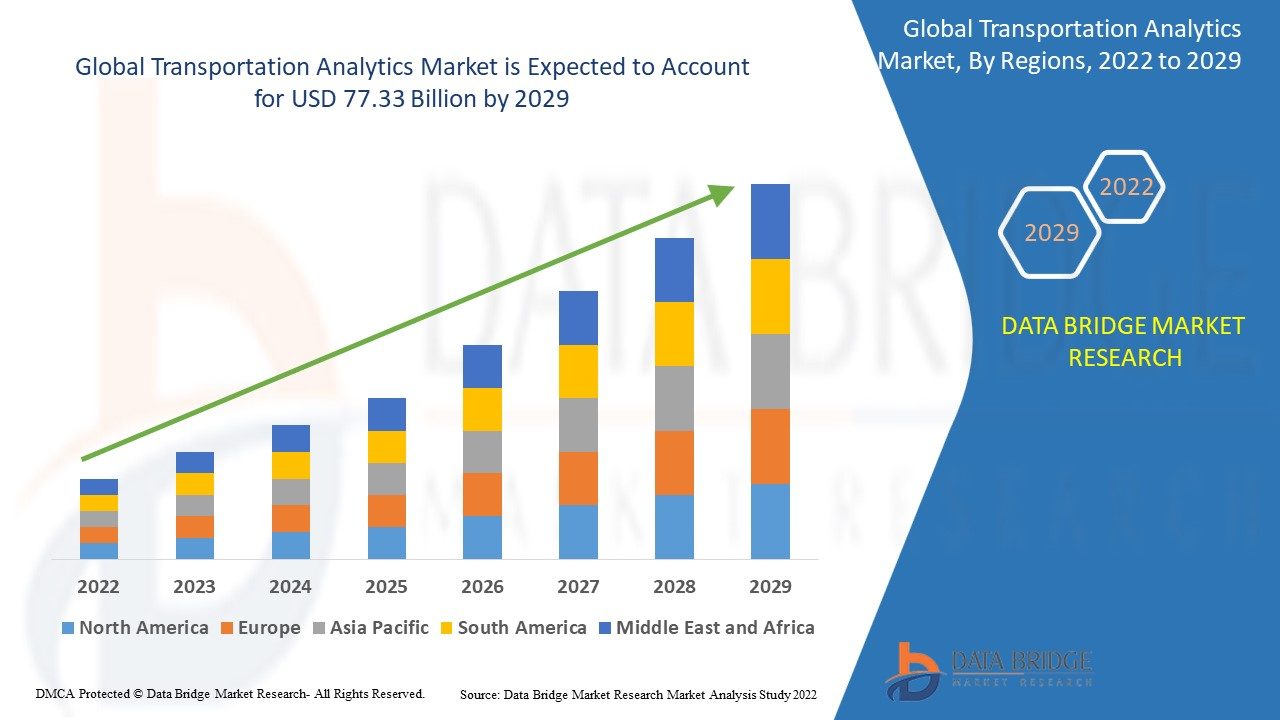
North America holds a significant share of the transportation analytics market due to early adoption of digital technologies and strong investments in smart transportation systems. Government initiatives and private sector innovation drive continued growth.
Europe focuses on sustainable mobility and regulatory compliance. Transportation analytics supports emission reduction goals and efficient public transport systems.
Asia Pacific represents the fastest-growing region. Rapid urbanization, population growth, and expanding infrastructure investments drive demand for analytics solutions. Countries in this region actively adopt intelligent transportation systems to manage increasing mobility needs.
Other regions are also showing steady growth as transportation networks modernize and digital adoption increases.
Competitive Landscape
The transportation analytics market features a mix of global technology providers and specialized analytics firms. Competition focuses on innovation, scalability, and integration capabilities. Companies invest heavily in research and development to enhance analytics accuracy and functionality.
Strategic partnerships between technology providers, transportation operators, and governments are common. These collaborations help deliver comprehensive solutions and expand market reach.
Smaller players often focus on niche applications, offering tailored solutions for specific transportation challenges. This diversity strengthens the overall market ecosystem.
Challenges in the Transportation Analytics Market
Despite strong growth, the market faces several challenges. Data privacy and security remain critical concerns, especially as analytics systems handle sensitive location and operational data. Organizations must comply with data protection regulations.
Integration with legacy systems can be complex and costly. Many transportation operators rely on outdated infrastructure that requires upgrades to support advanced analytics.
The shortage of skilled professionals in data analytics and artificial intelligence can slow implementation. Training and workforce development are essential to address this gap.
High initial investment costs may also limit adoption among smaller organizations, although cloud-based solutions are helping reduce barriers.
Future Outlook
The future of the transportation analytics market appears highly promising. Continued advancements in artificial intelligence, connectivity, and data processing will expand analytics capabilities. Transportation systems will become more predictive, adaptive, and efficient.
The rise of autonomous vehicles, shared mobility, and electric transportation will generate new data streams, further increasing demand for analytics. Sustainability goals and smart infrastructure investments will continue to support market expansion.
As transportation becomes more complex and data-driven, transportation analytics will play a vital role in shaping safer, smarter, and more efficient mobility systems.
Source: https://www.databridgemarketresearch.com/reports/global-transportation-analytics-market
Conclusion
The transportation analytics market is transforming the way transportation systems operate and evolve. By turning data into actionable insights, transportation analytics improves efficiency, safety, and sustainability across public and private sectors.
While challenges related to data security, integration, and skills remain, ongoing innovation and investment are driving steady growth. As cities, logistics providers, and governments embrace digital mobility solutions, transportation analytics will remain a cornerstone of modern transportation planning and operations.
