

Technology has always shaped how humans communicate. From cave paintings to printed media, from television to smartphones, every era introduced new ways to share information visually. Today, we are entering another major shift in communication — one that feels almost futuristic. Floating images, animated objects in mid-air, and lifelike projections are no longer confined to science fiction. They are now real business tools, powered by the 3D hologram projector.
Organizations across industries are beginning to realize that communication is no longer just about delivering information. It is about creating impact, emotion, and memory. People remember experiences far more than they remember text or static visuals. A presentation slide may be forgotten within hours, but a floating 3D object that appears in front of an audience remains memorable for years.
This is why 3D hologram projectors are gaining popularity in events, education, and advertising. They combine technology and storytelling, helping businesses communicate complex ideas in a simple and engaging way.
In this article, we will explore how this technology works in real-world settings and why it is rapidly becoming a powerful communication medium.
What Is a 3D Hologram Projector?
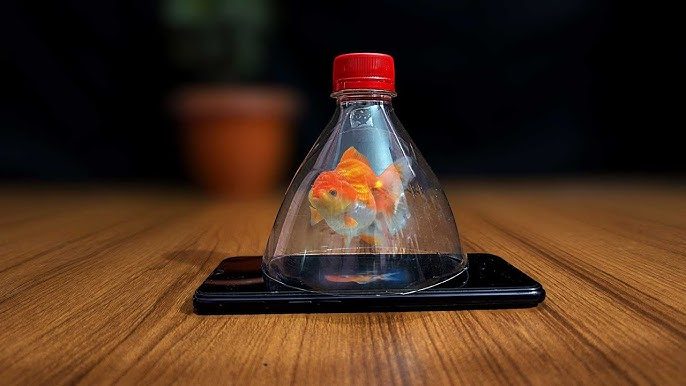
A 3D hologram projector is a device that creates the illusion of a three-dimensional object floating in open space. Unlike traditional projectors that require a screen or wall, hologram projectors display visuals in mid-air using light patterns and high-speed rotation or transparent projection surfaces.
Many modern commercial systems use LED fan blades rotating at extremely high speeds. The blades are invisible to the human eye, but they emit programmed light patterns. Because of persistence of vision, the brain interprets these patterns as a stable 3D image. The result appears as a moving object suspended in the air — a product rotating, a person speaking, or an animated graphic interacting with the environment.
The effect is not just visually appealing. It is psychologically powerful. Humans naturally focus on objects that appear unusual or physically impossible. This makes holographic visuals ideal for communication and marketing.
Why Visual Communication Matters More Than Ever
Modern audiences are overloaded with information. Every day, people encounter thousands of messages — social media posts, advertisements, emails, and notifications. As a result, attention spans have shortened dramatically.
Traditional communication methods face three main problems:
-
People ignore static visuals
-
Text-heavy presentations feel boring
-
Standard videos blend into background noise
To capture attention, communication must now be immersive.
A 3D hologram projector changes how information is delivered. Instead of simply showing content, it creates a moment. It turns passive viewers into active observers. When audiences see a floating model or animation, they instinctively pause, observe, and engage.
This is exactly what businesses need in crowded communication environments.
Practical Use in Business Events and Exhibitions
Making Booths Stand Out at Trade Shows
Trade shows are highly competitive environments. Hundreds of companies compete for the same visitors’ attention. Most booths rely on banners, brochures, and TV screens — all of which look similar.
A holographic display instantly differentiates a booth.
A company can present its product rotating in mid-air, display its logo as a floating animation, or demonstrate machinery operations without transporting heavy equipment. Visitors often stop simply to understand how the display works, creating a natural opportunity for conversation.
This increased foot traffic leads to higher lead generation and brand recognition.
Product Launch Presentations
Product launches require excitement. Companies invest heavily in lighting, stage design, and presentations to impress audiences and media.
3D hologram projectors elevate product launches by allowing businesses to introduce products dramatically. Instead of bringing a product onto stage traditionally, a holographic version can appear first — assembling itself piece by piece in the air before the real product is revealed.
This storytelling approach builds anticipation and creates a memorable experience for attendees and viewers.
Corporate Conferences and Meetings
Business presentations often struggle with engagement. Slides full of graphs and text rarely hold attention.
Holographic visuals can display:
-
Data charts as 3D models
-
Architectural designs as spatial walkthroughs
-
Industrial processes as animated systems
This helps executives and stakeholders understand concepts faster. Complex information becomes clear because people can visualize it instead of imagining it. hologram projector for home
Transforming Education and Training
Education is one of the most promising applications of holographic technology. Many subjects are difficult to learn through textbooks alone because they rely on spatial understanding.
Science and Medical Education
Subjects like biology, chemistry, and medicine benefit greatly from 3D visualization.
With a 3D hologram projector, students can see:
-
A beating human heart
-
DNA structure rotating in space
-
Chemical molecules interacting
-
Surgical procedures demonstrated safely
Instead of memorizing diagrams, students observe realistic representations. This improves comprehension and retention.
Medical training, in particular, gains major advantages. Trainees can study anatomy layer by layer without needing physical specimens. They can repeat demonstrations multiple times without risk.
Engineering and Technical Training
Technical education requires understanding machines and systems. Traditional teaching relies on drawings, models, or expensive equipment.
Holographic displays allow instructors to show machinery internally. Students can observe moving components, assembly processes, and mechanical relationships.
This reduces equipment costs while improving learning outcomes. Employees can also be trained safely before working with real machines.
Remote Learning Enhancement
Online education often lacks engagement. Students lose focus during long video lectures.
By integrating holographic visuals into classrooms or training centers, institutions can make lessons interactive again. Teachers can demonstrate concepts visually rather than verbally, increasing participation and interest.
Learning becomes an experience instead of a task.
Advertising and Marketing Applications
Advertising’s main goal is attention. Without attention, even the best message fails. A 3D hologram projector excels in this area because it naturally attracts viewers.
Retail Advertising
Stores can display products floating in windows, even when the store is closed. A rotating shoe, watch, or gadget visible from outside encourages passersby to stop and look.
Unlike printed posters, holographic ads can be changed instantly. Promotions, seasonal offers, and product announcements can be updated digitally without replacing materials.
Outdoor Advertising
Billboards are effective but predictable. People often ignore them during daily routines.
Holographic advertising breaks routine perception. When people see a floating advertisement in a mall or public space, they often record and share it on social media. This transforms physical advertising into viral digital marketing.
The same advertisement reaches both local viewers and online audiences simultaneously.
Brand Storytelling
Brands today must tell stories rather than just promote products.
Holographic technology enables storytelling visually. A beverage brand can show ingredients mixing in mid-air. A technology company can display internal device engineering. A tourism company can present landmarks in miniature 3D form.
Instead of describing features, businesses show them.
Benefits for Businesses
1. Higher Engagement
People interact longer with holographic displays than traditional advertising. Increased viewing time improves message retention.
2. Improved Understanding
Complex information becomes simple when visualized in 3D. Customers understand products faster.
3. Memorable Experiences
Holographic visuals create emotional reactions. Memorable experiences strengthen brand recall.
4. Cost Efficiency Over Time
While initial setup requires investment, content updates are inexpensive. One device can display unlimited campaigns.
5. Social Media Amplification
Visitors often record holographic displays and share them online, creating marketing exposure.
Integration with Modern Digital Systems
3D hologram projectors can connect with digital tools such as:
-
QR codes for instant purchases
-
Mobile apps for product details
-
Augmented reality filters
-
Interactive touch systems
This creates an omnichannel experience. Customers can view a product holographically, scan it, and buy it online immediately. Physical and digital marketing merge into one system.
Future Possibilities
The technology continues to evolve rapidly. In the near future, businesses may use:
-
AI-powered holographic assistants greeting customers
-
Real-time language translation holograms at international events
-
Virtual instructors teaching classrooms remotely
-
Interactive holographic catalogs controlled by gestures
Eventually, communication may move beyond screens entirely. Instead of watching devices, people will interact with projected digital objects in real space.
Challenges to Consider
Businesses adopting holographic displays should also plan carefully.
Important factors include:
-
Proper lighting conditions
-
High-quality 3D animation content
-
Strategic placement in high-traffic areas
-
Clear communication goals
The technology attracts attention, but meaningful content converts viewers into customers. Without planning, the display becomes a novelty instead of a communication tool.
Conclusion
Communication has always evolved alongside technology. Today, audiences demand more than information — they expect experience. Static visuals and traditional presentations are no longer enough to capture attention in a fast-moving digital world.
The 3D hologram projector represents a new stage in visual communication. It transforms events into performances, classrooms into interactive learning environments, and advertisements into memorable experiences.
Businesses that adopt immersive communication tools will gain a competitive advantage because they will not only inform their audience — they will engage them.
As organizations seek stronger connections with customers, students, and partners, holographic technology offers a powerful solution. What once seemed futuristic is now practical, accessible, and increasingly essential.
