

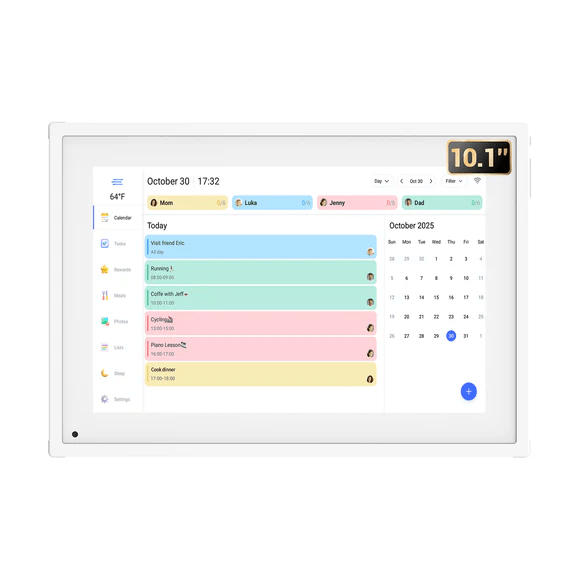
In an era where smartphones buzz with notifications and paper planners gather dust, digital calendars have revolutionized how we organize our lives. Go with BSIMB digital calendar now. These versatile tools have evolved far beyond simple date-keeping applications, now offering sophisticated features that sync across devices, integrate with productivity apps, and help us navigate increasingly complex schedules.
Understanding Digital Calendar Options
Digital calendars come in various forms, each designed to serve specific needs and environments. While mobile apps like Google Calendar and Apple Calendar dominate personal scheduling, other formats have emerged to address different use cases in homes and offices.
A digital wall calendar serves as a centralized hub for household or team coordination. Unlike traditional paper calendars tacked to the refrigerator, these connected displays mount on walls and provide real-time schedule updates for everyone who passes by. Families use them to coordinate soccer practices, dental appointments, and dinner plans, while small businesses deploy them in common areas to track meetings and deadlines. The always-visible nature of a digital wall calendar makes it particularly valuable for shared spaces where multiple people need quick access to scheduling information.
Meanwhile, a digital desk calendar occupies a more personal space in your workflow. These devices sit on work surfaces, providing at-a-glance schedule information without requiring you to unlock a phone or open a laptop. Many professionals appreciate how a digital desk calendar keeps upcoming appointments visible during work sessions, reducing the mental load of remembering what comes next. Some models integrate task lists, weather forecasts, and motivational quotes alongside calendar events, creating a comprehensive command center for daily productivity.
Key Features That Define Modern Digital Calendars
The best digital calendar solutions share several core capabilities that make them indispensable for contemporary time management. Cross-device synchronization ensures your schedule updates automatically whether you add an event from your phone, computer, or tablet. This seamless connectivity eliminates the frustration of conflicting information across platforms.
Smart scheduling features now leverage artificial intelligence to suggest meeting times, identify scheduling conflicts, and even automatically add events from emails. Many digital calendars also offer color-coding systems that let you visually distinguish between work commitments, personal appointments, and family events at a glance.
Integration capabilities extend digital calendars beyond simple date-keeping. They connect with video conferencing platforms, automatically generating meeting links for virtual gatherings. They sync with task management apps, displaying deadlines alongside appointments. Some even integrate with smart home systems, triggering reminders through speakers or adjusting room lighting for scheduled events.
Choosing Between Physical Digital Displays and Software
When selecting a digital calendar system, you’ll encounter two primary categories: physical devices and software applications. Each approach offers distinct advantages depending on your specific needs.
Physical displays like a digital wall calendar or digital desk calendar provide constant visibility without screen time. They don’t require unlocking a device or navigating through apps, making schedule information immediately accessible. These dedicated devices also reduce distractions since they serve a single purpose rather than competing for attention with notifications from other apps.
Software-based calendars, on the other hand, offer superior flexibility and feature richness. They typically cost less than dedicated hardware, leverage devices you already own, and receive frequent updates that add new capabilities. Apps like Microsoft Outlook, Google Calendar, and Fantastical provide sophisticated scheduling tools, extensive integration options, and powerful search functions that physical displays simply cannot match.
Maximizing Productivity With Digital Calendar Strategies
Owning a digital calendar is one thing; using it effectively is another. Successful time managers follow several best practices that transform calendars from passive record-keeping tools into active productivity systems.
Time blocking involves scheduling specific activities throughout your day, not just meetings and appointments. By allocating blocks for focused work, email processing, and breaks, you create a realistic framework for accomplishing tasks rather than hoping to squeeze them between commitments.
Buffer time between appointments prevents the common problem of back-to-back scheduling. Adding 10-15 minute buffers gives you time to travel between locations, prepare for meetings, or simply process what just happened before diving into the next commitment.
Regular review sessions, whether daily or weekly, help you stay ahead of your schedule rather than being surprised by it. Many people schedule 15 minutes each morning to review the day ahead and adjust as needed, while Sunday evening reviews provide a chance to prepare mentally for the week.
The Family Coordination Advantage
For households managing multiple schedules, a digital wall calendar becomes particularly valuable. Parents juggling children’s activities, work commitments, and household responsibilities benefit from a central reference point that everyone can see. Unlike personal phone calendars that remain siloed in individual pockets, a prominently displayed digital wall calendar creates shared awareness of family logistics.
Some families designate specific colors for each family member, making it immediately obvious who needs to be where at any given time. Others use their digital wall calendar to display meal plans, chore assignments, and upcoming events that require family-wide coordination. The key advantage lies in reducing the mental load of being the family’s schedule keeper, distributing information access to everyone who needs it.
Professional Applications and Office Integration
In professional environments, digital calendars have become essential infrastructure for collaboration. Teams use shared calendars to coordinate projects, book conference rooms, and schedule client meetings. The transparency of digital scheduling reduces the email ping-pong of finding mutually available times.
A digital desk calendar complements larger organizational calendar systems by providing personal schedule awareness at the individual workspace level. Professionals who spend significant time in meetings appreciate having their next appointment visible without checking their phone or computer, allowing them to remain present in current discussions while staying aware of time constraints.
Some offices install digital wall calendars in conference rooms, displaying current and upcoming bookings to prevent double-booking confusion. These displays integrate with room scheduling systems, showing real-time availability and allowing impromptu booking of freetime slots.
Privacy and Security Considerations
As digital calendars store increasingly sensitive information about our daily lives, security becomes paramount. Your calendar reveals when you’re home, when you’re traveling, your work patterns, and your personal relationships. Taking steps to protect this information prevents potential security risks.
Using strong, unique passwords for calendar accounts provides the foundation for security. Enabling two-factor authentication adds an additional protection layer that significantly reduces unauthorized access risks. Being selective about calendar sharing permissions ensures that only intended recipients can view your schedule details.
When using a digital wall calendar in a home with guests or service providers, consider what information remains visible. Some people maintain separate calendars for sensitive appointments or use generic event titles like “Personal Appointment” rather than specific medical or financial details.
Energy Efficiency and Environmental Impact
Digital calendars present an interesting environmental trade-off compared to paper alternatives. While they eliminate paper consumption, they do require electricity and eventually contribute to electronic waste. A digital desk calendar or digital wall calendar uses relatively modest power, typically comparable to a smartphone, but that energy consumption is continuous.
Many modern devices feature e-ink displays that consume power only when changing information, not while displaying static content. These technologies significantly reduce the energy footprint of always-on displays. Some digital calendar devices also incorporate solar charging or other sustainable power options.
From a broader perspective, the elimination of printed calendars, sticky notes, and paper planners that digital systems enable can result in net environmental benefits, particularly when considering the resources required for paper production and disposal.
Future Trends in Digital Calendar Technology
The evolution of digital calendars continues with emerging technologies promising even more integrated time management. Voice-activated scheduling allows calendar management, particularly useful when driving or cooking. Simply telling your device to “add dentist appointment Thursday at 3pm” creates the event without touching a screen.
Predictive scheduling uses artificial intelligence to analyze your patterns and suggest optimal times for different activities. These systems learn that you’re most productive for deep work in the morning and suggest scheduling important meetings accordingly. They identify when you typically take breaks and proactively block that time.
Augmented reality integration may eventually overlay calendar information onto your physical environment through smart glasses, displaying appointment reminders and navigation directions as you move through your day. While still emerging, these technologies hint at how digital calendars might become even more seamlessly integrated into our daily routines.
Making the Transition to Digital
For those accustomed to paper planning systems, transitioning to digital calendars requires adjustment but offers substantial long-term benefits. Start by running both systems in parallel for a few weeks, allowing yourself to build trust in the digital platform before abandoning paper entirely.
Take advantage of calendar templates and pre-built scheduling frameworks rather than creating everything from scratch. Many digital calendars offer templates for workout schedules, meal planning, work rotations, and other common needs.
Set up automated recurring events for regular commitments rather than manually entering them each time. Your weekly team meeting, monthly book club, and annual dental checkup can all be configured once and forgotten, appearing automatically on your schedule.
Digital calendars have fundamentally transformed how we conceptualize and manage time. Whether through a sophisticated app on your smartphone, a digital desk calendar providing at-a-glance schedule awareness, or a digital wall calendar coordinating an entire household, these tools offer unprecedented flexibility and power for organizing modern life. By understanding their capabilities, selecting the right format for your needs, and implementing effective strategies, you can harness digital calendars to reduce stress, improve productivity, and ensure that nothing important slips through the cracks of your busy schedule.
