

Introduction
The spray polyurethane foam market has emerged as one of the most dynamic segments in the global construction and insulation industry. Spray polyurethane foam, commonly referred to as SPF, is a versatile material formed by mixing isocyanate and polyol resin, which reacts quickly and expands upon application to create a strong, durable, and energy-efficient insulation barrier. It is primarily used for insulation, roofing, sealing gaps, and enhancing energy efficiency in buildings.
The demand for spray polyurethane foam has accelerated in recent years due to increasing construction activities, stricter energy efficiency regulations, and growing awareness of sustainable building materials. The material’s excellent thermal insulation, moisture resistance, and air sealing properties make it a preferred choice across residential, commercial, and industrial applications.
With the global shift toward green buildings, urbanization, and the need for cost-efficient energy solutions, the spray polyurethane foam market is projected to witness significant growth in the coming years.
Market Overview
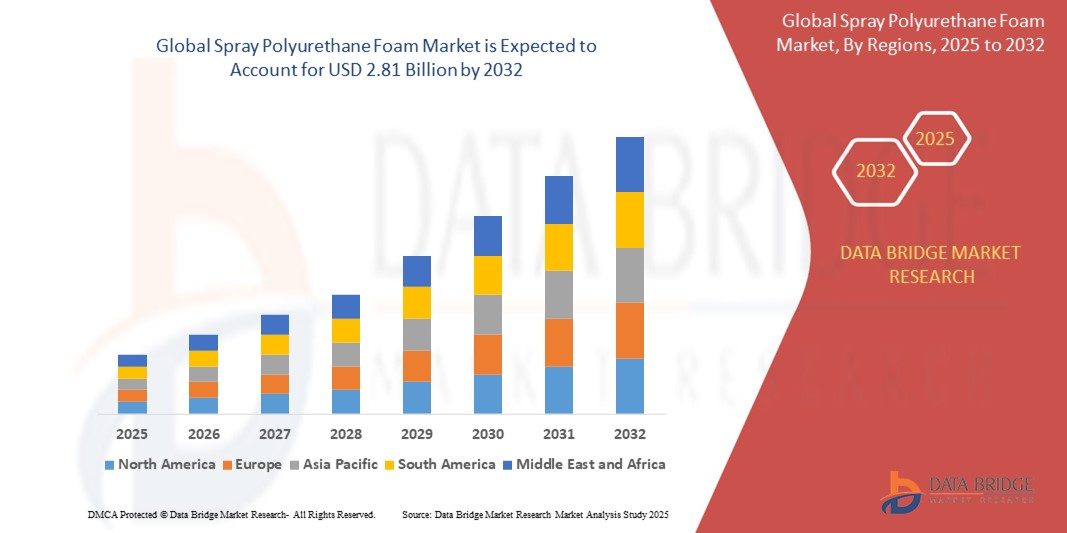
The spray polyurethane foam market is valued at several billion dollars and is expanding at a healthy CAGR. North America and Europe currently hold a significant share due to established construction industries and stringent energy conservation laws. Meanwhile, Asia-Pacific is witnessing rapid growth fueled by urbanization, infrastructure projects, and increasing adoption of sustainable building practices.
The use of SPF is not limited to insulation and roofing. Its applications extend to industrial equipment, transportation, cold storage, and packaging, which further enhances its market potential. Moreover, the versatility of SPF to adhere to diverse surfaces such as concrete, wood, metal, and glass makes it suitable across industries.
Key Market Drivers
1. Rising Demand for Energy-Efficient Buildings
Governments and regulatory bodies across the globe are emphasizing energy efficiency in new and existing buildings. Spray polyurethane foam offers superior insulation performance, reducing heating and cooling costs by up to 50 percent.
2. Growth in Construction and Infrastructure Development
The global construction industry is expanding rapidly, especially in emerging economies. With the growing demand for residential complexes, commercial spaces, and industrial facilities, SPF usage is expected to rise significantly.
3. Increasing Awareness of Green and Sustainable Materials
Environmental concerns are pushing the adoption of eco-friendly materials. Spray polyurethane foam not only reduces energy consumption but also contributes to reducing greenhouse gas emissions, aligning with sustainability goals.
4. Superior Performance Properties
SPF provides excellent air sealing, moisture resistance, and structural reinforcement, offering long-lasting solutions compared to traditional insulation materials.
5. Expanding Applications Beyond Construction
The use of SPF in transportation, appliances, marine, and packaging industries is creating new growth avenues. Its ability to reduce noise, vibration, and thermal loss makes it valuable across diverse applications.
Market Segmentation
By Product Type
-
Open-Cell Spray Polyurethane Foam – Lightweight, flexible, and suitable for soundproofing and insulation in residential buildings.
-
Closed-Cell Spray Polyurethane Foam – Dense, rigid, and provides high thermal resistance, making it ideal for roofing, industrial, and commercial applications.
By Application
-
Residential Construction – Insulation, soundproofing, wall cavities, and attics.
-
Commercial Construction – Roofing, wall insulation, sealing, and structural reinforcement.
-
Industrial Applications – Cold storage, equipment insulation, pipelines, and packaging.
-
Automotive and Transportation – Noise reduction, thermal management, and lightweight insulation.
By End-Use Industry
-
Building and Construction
-
Automotive
-
Industrial Manufacturing
-
Marine and Aerospace
-
Packaging and Appliances
By Region
-
North America – Leading due to strong construction sector and energy efficiency laws.
-
Europe – Driven by strict building codes and focus on sustainability.
-
Asia-Pacific – Fastest-growing region owing to infrastructure investments in China, India, and Southeast Asia.
-
Latin America – Increasing adoption in construction and industrial sectors.
-
Middle East & Africa – Growth supported by infrastructure expansion and energy efficiency programs.
Competitive Landscape
The spray polyurethane foam market is competitive, with global and regional players focusing on innovation, cost reduction, and eco-friendly formulations. Key players include:
-
BASF SE
-
Dow Inc.
-
Huntsman Corporation
-
Covestro AG
-
Carlisle Companies Inc.
-
Icynene-Lapolla
-
Demilec Inc.
-
CertainTeed Corporation
-
Johns Manville
-
Premium Spray Products
These companies are investing in R&D to develop next-generation spray foams with low environmental impact, better performance, and improved application efficiency. Strategic collaborations, acquisitions, and expansions are also shaping the market dynamics.
Challenges in the Spray Polyurethane Foam Market
-
High Installation Costs – Compared to traditional insulation materials, SPF installation can be more expensive.
-
Health and Safety Concerns – Exposure to raw chemicals during application poses health risks, necessitating strict safety protocols.
-
Environmental Regulations – The use of certain blowing agents in SPF production may have environmental impacts, requiring sustainable alternatives.
-
Limited Skilled Workforce – Application of SPF requires trained professionals, and lack of skilled labor may hinder adoption.
Future Trends
-
Bio-Based Polyurethane Foams
The market is moving toward bio-based and eco-friendly alternatives, reducing reliance on petrochemical sources and aligning with sustainability goals. -
Integration of Smart Building Technologies
SPF is increasingly being integrated into smart buildings for optimized energy management and real-time monitoring of insulation performance. -
Growing Use in Retrofitting Projects
With aging infrastructure, retrofitting existing buildings with SPF insulation is gaining popularity for improving energy efficiency. -
Advancements in Application Techniques
Innovations in spray equipment and methods are enhancing precision, reducing waste, and improving safety. -
Adoption in Emerging Markets
Rapid urbanization and industrialization in developing countries are creating vast opportunities for SPF adoption in residential and commercial construction.
Future Outlook
The spray polyurethane foam market is expected to continue its growth trajectory, supported by sustainability initiatives, energy conservation policies, and rising demand for cost-effective insulation. The material’s versatility and performance advantages will make it indispensable in modern construction and beyond.
By 2035, advancements in bio-based formulations, automation of application techniques, and integration with smart building systems will redefine the market. Manufacturers focusing on eco-friendly innovation and expanding into high-growth regions will be best positioned to capitalize on future opportunities.
Source: https://www.databridgemarketresearch.com/reports/global-spray-polyurethanes-foam-market
Conclusion
The spray polyurethane foam market is playing a critical role in shaping the future of energy-efficient construction and sustainable living. Its superior insulation, durability, and multi-industry applications are driving adoption globally. Despite challenges such as cost and regulatory concerns, technological advancements and rising awareness of energy conservation are paving the way for significant growth.
As industries transition toward green solutions and smart technologies, spray polyurethane foam will remain a vital material for achieving sustainability goals, reducing carbon emissions, and enhancing building performance.
