

Introduction
The Smart Kitchen Appliances Market includes connected, internet-enabled devices designed to enhance cooking convenience, energy efficiency, user experience, and home automation. Smart kitchen appliances — such as connected refrigerators, ovens, dishwashers, microwaves, coffee makers, and smart cooktops — integrate sensors, mobile apps, voice controls, and AI capabilities to simplify tasks and provide personalized cooking assistance. As consumer lifestyles evolve toward connected living, sustainability, and wellness, smart kitchen technology has become a mainstream fixture in modern households and commercial kitchens.
Market Size and Growth Projections
The smart kitchen appliances market has witnessed strong growth and is projected to expand at a healthy compound annual growth rate (CAGR) over the forecast period. Growth is supported by rising consumer demand for connected home ecosystems, increasing disposable incomes, and expanding adoption of IoT platforms, voice assistants (e.g., smart speakers), and mobile control interfaces. The surge in smart home initiatives, energy-saving incentives, and retail availability through online and offline channels further fuels market expansion.
Get More Details : https://www.databridgemarketresearch.com/reports/global-smart-kitchen-appliances-market
Key Growth Factors
-
Growing consumer preferences for connected and convenient kitchen solutions
-
Rising penetration of smartphones, Wi-Fi, and voice control systems
-
Expansion of IoT and smart home ecosystems
-
Energy efficiency and sustainability concerns
-
Enhanced safety, analytics, and remote control features
Market Segmentation
By Type / Service / Product
-
Smart Refrigerators
-
Smart Ovens and Ranges
-
Smart Dishwashers
-
Smart Microwaves
-
Smart Coffee Makers
-
Smart Cooktops and Hoods
-
Other Smart Kitchen Devices (scales, air fryers, etc.)
Smart refrigerators and smart ovens command significant market share due to strong functionality, interactive features, and growing incorporation into connected home platforms.
By Technology
-
Wi-Fi Enabled Appliances
-
Bluetooth-Enabled Appliances
-
Voice-Controlled Devices
-
AI-Enabled Smart Appliances
Wi-Fi and AI-enabled appliances lead due to seamless cloud connectivity, data-driven automation, and integration with home assistants.
By Application
-
Residential Kitchens
-
Commercial Kitchens
-
Smart Home Automation Systems
-
Hospitality & Foodservice Operations
Residential kitchens represent the largest application segment, driven by rapid smart home adoption and consumer interest in connected convenience.
By End User
-
Homeowners & Home Renters
-
Smart Home Integrators
-
Restaurants & Commercial Kitchens
-
Hospitality and Foodservice Providers
Homeowners and smart home integrators are key adopters, seeking convenience, customization, and integration with broader home ecosystems.
Regional Insights
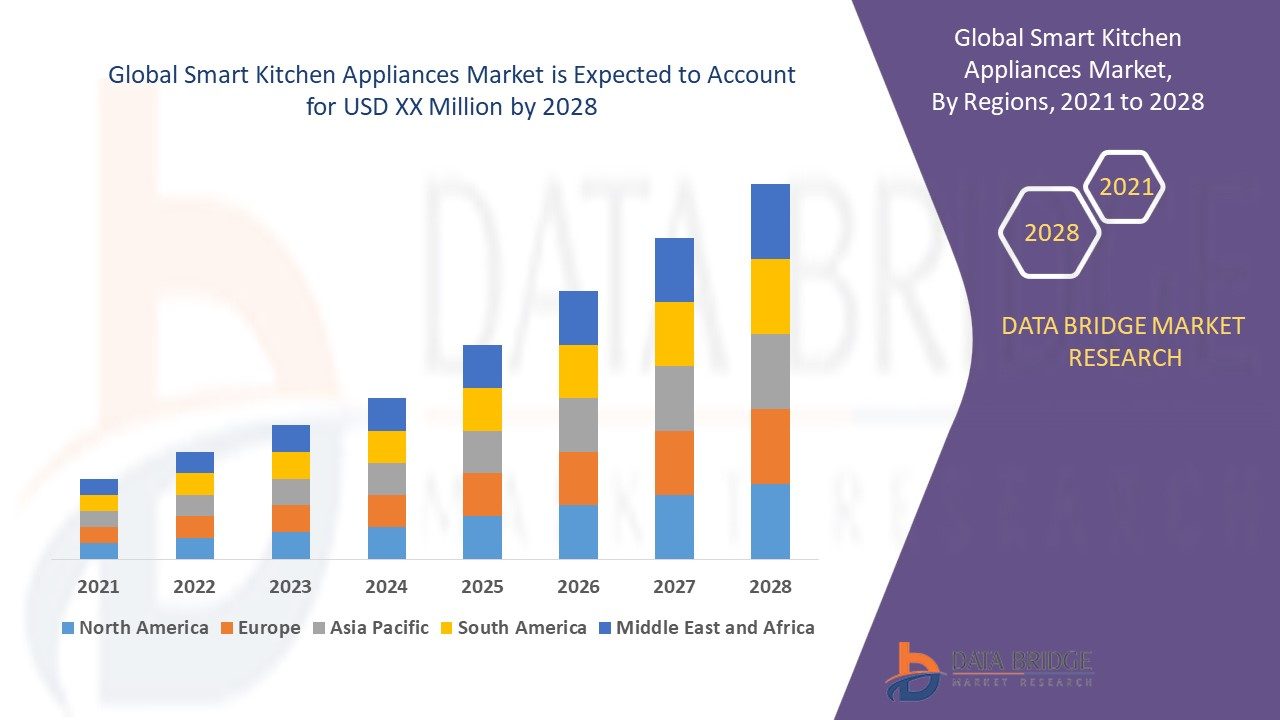
North America leads the smart kitchen appliances market with mature smart home adoption, technological readiness, and strong consumer purchasing power. Europe follows with increasing smart home penetration and sustainability regulations promoting energy-efficient appliances. The Asia-Pacific region is projected to grow rapidly due to rising urbanization, expanding middle-class populations, and increased availability of smart products through online and retail channels. Latin America and Middle East & Africa are witnessing emerging growth as digital infrastructure and connected living trends accelerate.
Key Market Drivers
The smart kitchen appliances market is primarily driven by consumer demand for convenience, connectivity, and personalization. Features such as remote monitoring and control, recipe guidance, energy usage analytics, and predictive maintenance alerts enhance daily kitchen experience and operational efficiency. Additionally, integration with smart speakers, home automation hubs, and AI assistants boosts adoption as part of broader connected living strategies. Sustainability initiatives encouraging energy-efficient appliances further stimulate market demand.
Market Challenges and Restraints
Despite strong momentum, the market faces challenges such as higher purchase costs compared to conventional appliances, privacy and cybersecurity concerns, and interoperability issues across platforms and ecosystems. Consumer hesitancy related to data sharing and perceived complexity of smart systems can also limit adoption. Additionally, disparities in internet connectivity across regions may affect consistent user experiences.
Competitive Landscape with Key Companies
-
Whirlpool Corporation
-
LG Electronics
-
Samsung Electronics
-
Electrolux AB
-
Bosch (BSH Hausgeräte GmbH)
-
GE Appliances (Haier Group)
-
Panasonic Corporation
-
Miele & Cie. KG
Market participants focus on connected platforms, energy-efficient technologies, intuitive interfaces, and service ecosystems to differentiate their offerings and expand global reach.
Technological Innovations
Technological advancements in the smart kitchen appliances market include AI-powered cooking assistants, automated recipe execution, deep learning algorithms for user personalization, and sensor-based performance optimization. Enhanced voice control, interoperability with home automation hubs, and cloud-based analytics enable seamless control and data insights. Innovations in predictive maintenance, safety alerts, and real-time energy management also strengthen user value propositions.
SWOT Analysis
| Strengths | Weaknesses |
|---|---|
| Enhances convenience and connectivity | Higher purchase price than traditional appliances |
| Supports energy efficiency and automation | Interoperability and compatibility challenges |
| Offers personalized and data-driven insights | Privacy and cybersecurity concerns |
| Opportunities | Threats |
|---|---|
| Expansion of smart home ecosystems | Rapid technology evolution may outpace user adoption |
| Growth in AI and predictive analytics features | Regulatory and compliance variations |
| Increased online and omnichannel sales | Economic downturns affecting discretionary spend |
Future Market Outlook
The future outlook for the smart kitchen appliances market is highly positive as consumers continue integrating connected technology into everyday life. Growth will be supported by expanding smart home platforms, AI-driven personalization, and demand for intuitive user experiences. Commercial adoption in hospitality and foodservice sectors may further broaden market reach. Continued focus on data security, interoperability standards, and affordable entry-level products will drive broader acceptance across demographics and regions.
Conclusion
The Smart Kitchen Appliances Market is poised for sustained growth as connectivity, automation, and digital intelligence become central to modern kitchen environments. With advances in AI, IoT, and home ecosystem integration, smart kitchen devices are transforming cooking, meal preparation, and household management. As manufacturers innovate and ecosystems mature, smart kitchen solutions will continue to redefine convenience, efficiency, and sustainability in connected living.
