

You have probably heard that oats are good for you. But the real story goes deeper than just fibre and calories. Inside every bowl of rolled oats lives a powerful soluble fibre called beta-glucan — and it may be one of the most effective foods you can eat to nourish your gut microbiome. Here is what science says about how it works, why it matters, and how to get the most out of your morning bowl.
What Exactly Is Beta-Glucan?
Beta-glucan is a type of soluble dietary fibre found naturally in the cell walls of oats, barley, mushrooms, and certain yeasts. In rolled oats specifically, beta-glucan makes up roughly 3 to 5 grams per 100 grams of dry oats — a meaningful amount that has attracted decades of scientific attention.
Unlike insoluble fibre that simply adds bulk, beta-glucan dissolves in water to form a thick, viscous gel in your digestive tract. This gel-like consistency is the foundation of almost all of its health benefits — and it all starts in your gut.
Your Gut Microbiome: A Quick Overview
Your gut is home to trillions of bacteria, fungi, and other microorganisms collectively known as the gut microbiome. Far from being passive passengers, these microbes influence digestion, immunity, mood, metabolism, and even skin health. The key to a healthy microbiome is diversity and a rich supply of the right foods — specifically, prebiotics.
Prebiotics are non-digestible food compounds that selectively feed beneficial gut bacteria. Beta-glucan from rolled oats is one of the most well-researched prebiotic fibres available. When you eat it, your body cannot digest it — but your gut bacteria can, and they thrive on it.
How Beta-Glucan Feeds Your Microbiome
When beta-glucan reaches your large intestine intact, it becomes food for beneficial bacteria like Lactobacillus and Bifidobacterium. The fermentation process that follows produces short-chain fatty acids (SCFAs) — primarily butyrate, acetate, and propionate. These SCFAs are not just metabolic byproducts. They are active compounds that:
- Strengthen the gut lining, reducing intestinal permeability (often called ‘leaky gut’)
- Regulate inflammation throughout the body
- Signal the brain via the gut-brain axis, influencing mood and appetite
- Support immune cell production and activity
Research published in nutrition and gastroenterology journals consistently shows that higher beta-glucan intake is associated with greater microbial diversity — a hallmark of a robust, resilient gut ecosystem.
The Gut-Wide Benefits You Will Actually Notice
A well-fed microbiome shows up in ways you can feel day to day. Regular consumption of rolled oats has been linked to:
- Reduced bloating and irregular digestion: Beta-glucan slows gastric emptying and smooths bowel movements, easing discomfort.
- Steadier blood sugar: The viscous gel slows glucose absorption, which also benefits gut bacteria that prefer a low-sugar environment.
- Stronger immunity: Nearly 70% of your immune system lives in your gut. A thriving microbiome means better defence against infections and inflammation.
- Improved mood and energy: SCFAs and a balanced microbiome support serotonin production — most of which is made in the gut, not the brain.
Rolled Oats vs. Other Oat Varieties for Gut Health
Not all oats are equal when it comes to beta-glucan activity. Rolled oats (also called old-fashioned oats) are oat groats that have been steamed and flattened. This minimal processing preserves the intact beta-glucan structure, making it highly available to gut bacteria.
Instant oats are more heavily processed and partially pre-gelatinised, which can reduce the viscosity of beta-glucan and blunt its prebiotic effect. Steel-cut oats have the highest intact structure but require longer cooking. For a practical daily balance of convenience and gut benefit, rolled oats are an excellent choice.
How to Eat Rolled Oats for Maximum Gut Benefit
A few simple habits can amplify the gut-health value of your oats:
- Soak overnight: Soaking increases the availability of soluble fibre and reduces phytic acid, making nutrients easier to absorb.
- Pair with fermented foods: Combining oats with yoghurt, kefir, or a spoon of apple cider vinegar delivers both prebiotics and probiotics for a synbiotic effect.
- Add seeds and nuts: Flaxseeds, chia seeds, and walnuts bring additional prebiotic fibre and omega-3s that further support gut lining integrity.
- Stay consistent: The microbiome responds to patterns. Daily consumption of rolled oats is more effective than occasional large servings.
The Bottom Line
Rolled oats are one of the most affordable and accessible gut-health foods available. The beta-glucan they contain does not just pass through your system — it actively feeds and diversifies the trillions of bacteria working to keep you healthy. Whether stirred into overnight oats, blended into a smoothie, or cooked into a warm porridge, a daily serving of rolled oats is one of the simplest investments you can make in your digestive health.
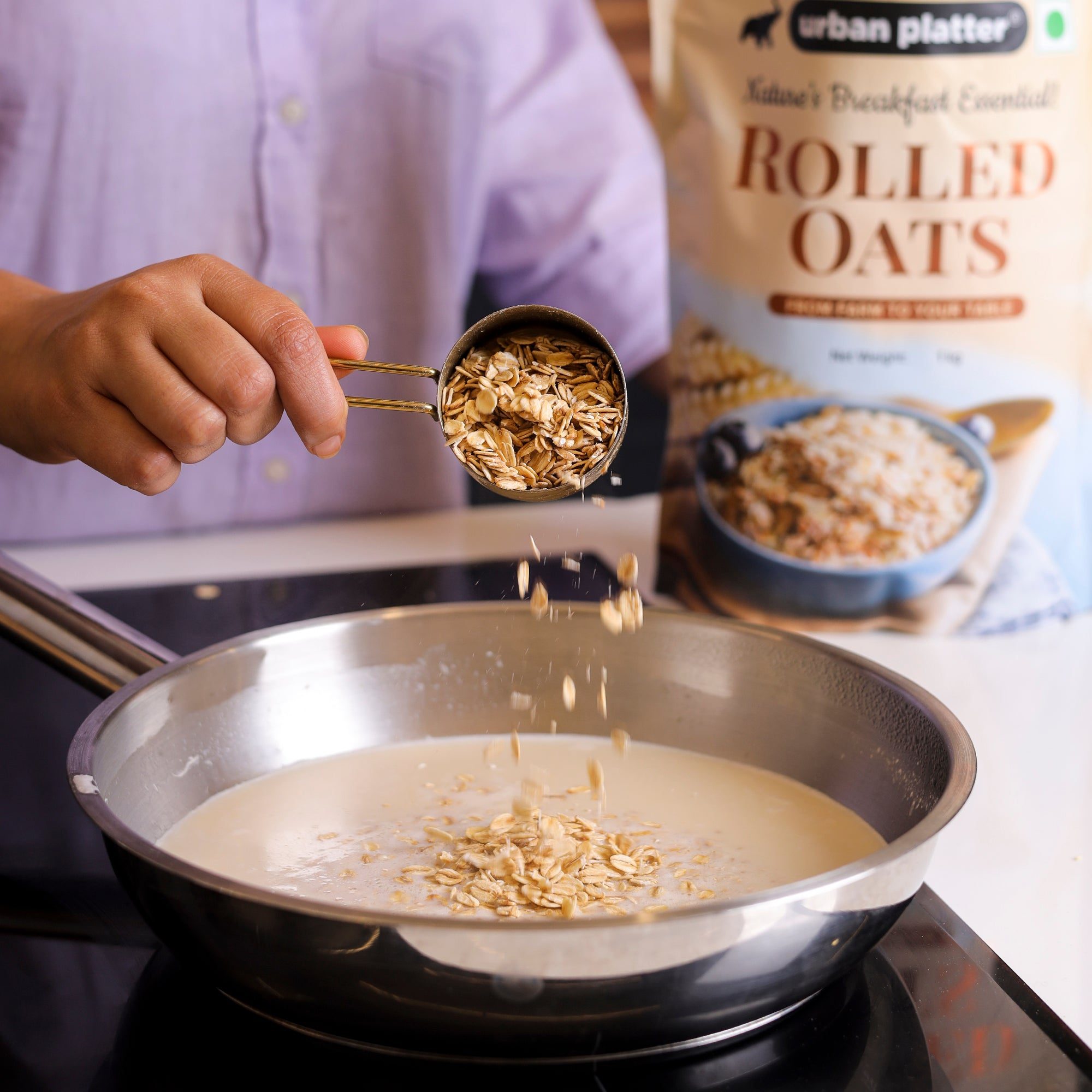
Urban Platter’s Rolled Oats are minimally processed to retain full beta-glucan content — exactly what your microbiome needs to thrive.
