

Introduction
In the rapidly evolving world of cancer treatment, one of the most promising avenues of research and clinical application lies in RNA-based therapeutics. These innovative therapies harness the power of RNA – a molecule once relegated to simple messenger duties – to target cancer at its genetic and molecular roots. From small interfering RNAs (siRNAs) to messenger RNA (mRNA) vaccines and antisense oligonucleotides (ASOs), RNA-based approaches are redefining how clinicians and scientists confront one of humanity’s most formidable diseases. This article explores the science behind RNA therapeutics, recent breakthroughs, clinical challenges, and the transformative potential these therapies hold for the future of oncology.
Definition
RNA-Based Cancer Therapeutics are treatments that use RNA molecules – such as messenger RNA (mRNA), small interfering RNA (siRNA), microRNA (miRNA), or antisense oligonucleotides – to prevent, modify, or enhance gene expression involved in cancer development and progression. These therapies work by silencing oncogenes, restoring tumor suppressor function, stimulating immune responses, or delivering instructions for producing therapeutic proteins, offering a highly targeted and adaptable approach to cancer treatment.
The Science Behind RNA Therapeutics
To appreciate the significance of RNA-based cancer therapeutics, it’s essential to understand the central role RNA plays in gene expression. DNA, the blueprint of life, holds an organism’s genetic information. However, it is RNA that transcribes and translates this information into proteins – the functional machinery of cells. Cancer arises in part from dysregulated gene expression, where mutations and aberrant signaling pathways lead to uncontrolled cell growth.
RNA therapeutics intervene in this process by modulating the expression of genes involved in cancer progression. Unlike traditional chemotherapy, which indiscriminately attacks rapidly dividing cells, RNA therapeutics offer a targeted approach – silencing harmful genes or restoring normal gene function with precision.
Types of RNA-Based Cancer Therapies
1. Small Interfering RNA (siRNA)
Small interfering RNAs are short, double-stranded RNA molecules that can specifically bind to complementary mRNA sequences in cancer cells. Once bound, they trigger the degradation of the target mRNA, preventing the production of proteins that drive tumor growth.
SiRNA therapies have shown promise in targeting undruggable genes – those difficult to inhibit with conventional small molecules or antibodies. One of the challenges has been effective delivery to tumors, but advancements in lipid nanoparticles and conjugate systems are enhancing tumor targeting while minimizing off-target effects.
2. Messenger RNA (mRNA) Therapeutics
Messenger RNA therapy gained global recognition during the COVID-19 pandemic through vaccines developed by Pfizer-BioNTech and Moderna. This same technology is now being applied to cancer.
In oncology, mRNA can be used to encode tumor-specific antigens. When delivered into the body, these mRNAs instruct cells to produce antigens that prime the immune system to recognize and attack cancer cells. Unlike traditional vaccines that rely on weakened or inactivated pathogens, mRNA vaccines are safe, customizable, and capable of inducing robust immune responses.
3. Antisense Oligonucleotides (ASOs)
Antisense oligonucleotides are single-stranded DNA or RNA molecules designed to bind to specific mRNA sequences. Binding can block translation or alter splicing patterns – potentially correcting genetic defects or inhibiting the production of harmful proteins in cancer cells.
ASOs offer great specificity and flexibility, allowing for the modulation of genes involved in critical oncogenic pathways. They are particularly useful in cancers driven by mutations in genes such as KRAS and MYC, which have historically been challenging to target.
Breakthroughs and Clinical Progress
The clinical leap from concept to therapy has been remarkable. Several RNA-based cancer treatments are in various stages of clinical development, with some already demonstrating promising results in trials.
One notable example includes mRNA vaccines tailored to patients’ unique tumor mutations – so-called personalized cancer vaccines. Early trials have shown that these vaccines can elicit strong immune responses and, in some cases, lead to tumor regression.
Additionally, siRNA therapies targeting specific oncogenes are showing therapeutic potential, particularly in cancers that lack effective targeted treatments. Innovations in delivery systems – such as lipid nanoparticles that preferentially accumulate in tumor tissue – are a significant factor in these successes.
Research into ASOs is also bearing fruit. For example, ASOs designed to modulate splicing in key cancer genes have shown efficacy in preclinical studies and are advancing through clinical trials.
Advantages Over Traditional Therapies
RNA-based therapeutics bring several compelling advantages compared to standard cancer treatments:
Precision and Specificity:
RNA therapies can be designed to target virtually any gene of interest, including those previously considered undruggable. This precision reduces damage to healthy cells and minimizes side effects.
Rapid Development and Customization:
Unlike many traditional drugs that require complex synthesis and long development times, RNA-based therapies can be designed quickly once a target gene is identified. This flexibility is especially valuable in personalized medicine, where treatments can be tailored to the unique genetic profile of an individual’s tumor.
Immune System Engagement:
mRNA vaccines harness the body’s immune system in a targeted way, training it to recognize and destroy cancer cells. This immunotherapeutic aspect can offer durable protection and long-term surveillance against tumor recurrence.
Challenges and Limitations
Despite their promise, RNA-based cancer therapeutics face several challenges:
Delivery:
One of the greatest hurdles is ensuring that RNA molecules reach their intended targets within the body without degradation. RNA is inherently unstable and susceptible to breakdown by enzymes in the bloodstream. Delivery systems like lipid nanoparticles and chemical modifications have been developed to protect RNA and enhance uptake by cancer cells, but optimizing these systems remains an area of active research.
Off-Target Effects:
Although RNA therapies are designed for specificity, there is still a risk of unintended interactions with non-target genes, which could lead to side effects. Rigorous preclinical testing and advanced design algorithms are vital to minimize these risks.
Immune Reactivity:
While engaging the immune system can be beneficial – especially for cancer vaccines – uncontrolled activation can lead to inflammation and adverse reactions. Balancing immune stimulation with safety is a key focus of ongoing clinical research.
The Future of RNA Therapeutics in Oncology
The field of RNA-based therapeutics in cancer is in its infancy, yet its trajectory is extraordinary. As delivery technologies improve and our understanding of cancer genomics deepens, RNA therapies are poised to become mainstream components of cancer care.
Here are several exciting prospects:
Combination Therapies:
RNA therapeutics could be paired with existing treatments like immunotherapy, chemotherapy, or targeted small molecules to enhance efficacy. For instance, siRNAs that silence resistance genes could make tumors more susceptible to other drugs.
Expanded Targets:
Advances in genomic profiling are uncovering new cancer-specific targets that were previously inaccessible. With RNA therapies, virtually any gene can be targeted, potentially opening doors to treatments for cancers that currently have limited options.
Personalized Vaccines:
Personalized mRNA vaccines represent a paradigm shift – treatments designed uniquely for each patient based on their tumor’s genetic landscape. Early data suggests these vaccines can generate robust immune responses with favorable safety profiles.
Improved Delivery Platforms:
Research into novel delivery platforms – such as extracellular vesicles, polymer nanoparticles, and cell-penetrating peptides – is underway. These technologies aim to increase tumor specificity, reduce toxicity, and further enhance the therapeutic index of RNA drugs.
Growth Rate of RNA-Based Cancer Therapeutics Market
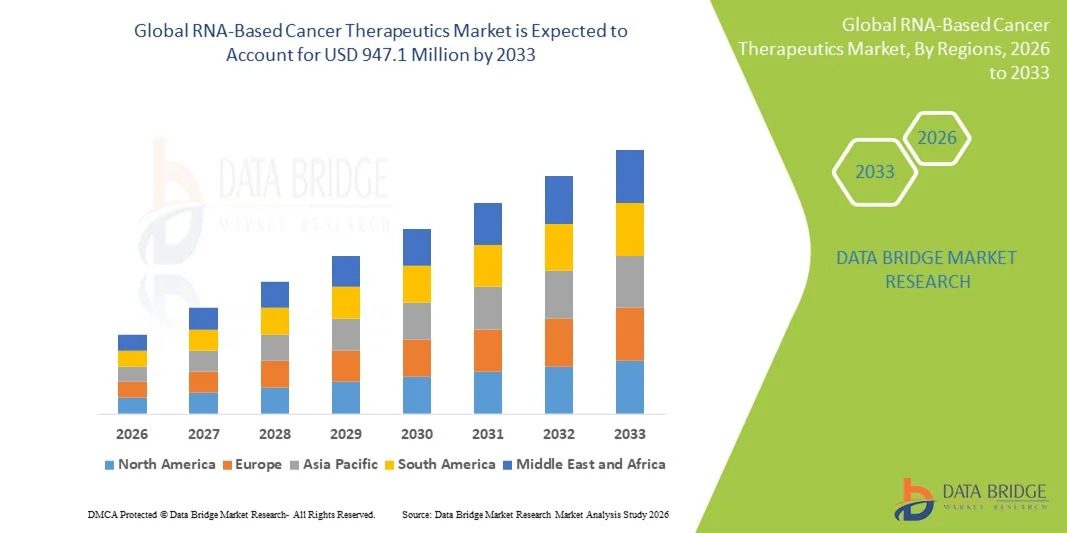
According to Data Bridge Market Research, the RNA-based cancer therapeutics market was estimated to be worth USD 415.8 million in 2025 and is projected to grow at a compound annual growth rate (CAGR) of 10.80% to reach USD 947.1 million by 2033.
Learn More: https://www.databridgemarketresearch.com/reports/global-rna-based-cancer-therapeutics-market
Conclusion
RNA-based cancer therapeutics represent a bold new frontier in oncology, blending cutting-edge molecular biology with clinical innovation. These therapies offer unprecedented precision, adaptability, and the potential to transform the treatment landscape for patients with cancer.
