

Introduction
The Portable Bioprocessing Bioreactors Market includes compact, mobile, and modular bioreactor systems designed for flexible and decentralized biological production. These systems enable on-site and small-scale biomanufacturing for applications such as biologics, cell and gene therapy, vaccines, and research. Portable bioprocessing bioreactors are increasingly adopted due to their rapid deployment, reduced infrastructure requirements, and suitability for multiproduct and personalized medicine manufacturing environments.
Market Size and Growth Projections
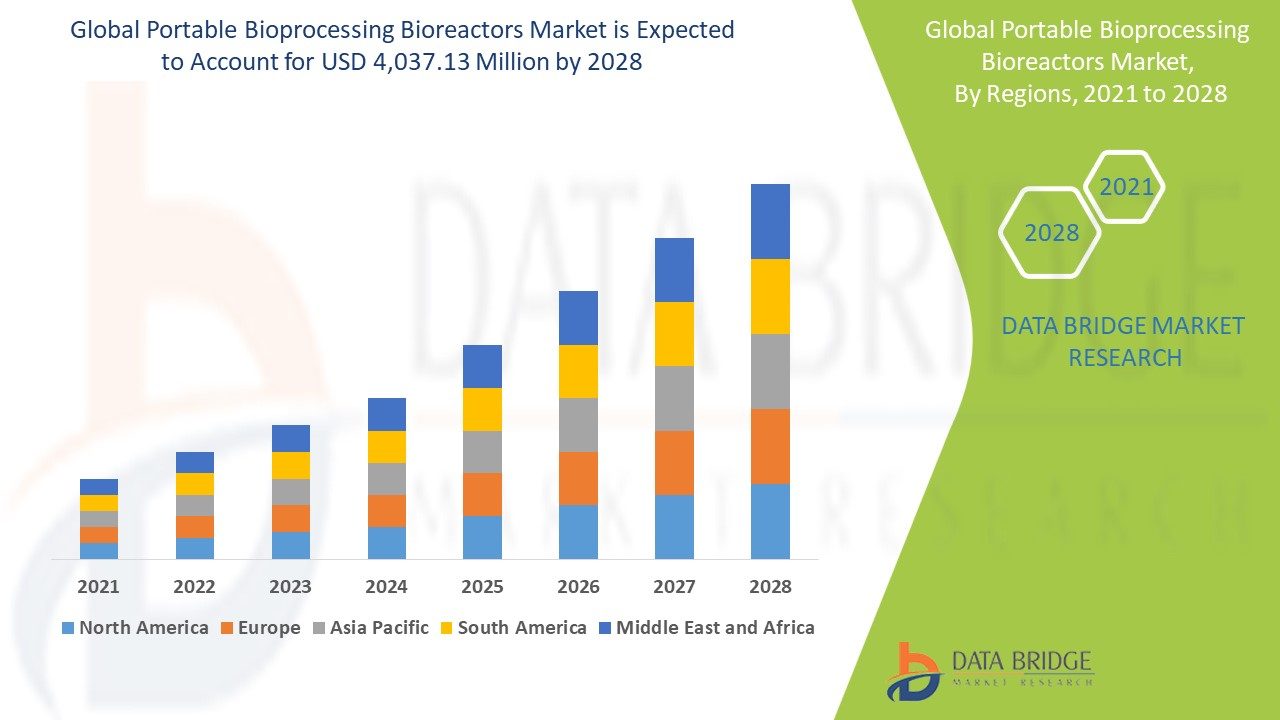
The portable bioprocessing bioreactors market has experienced strong growth and is expected to expand at a robust compound annual growth rate over the forecast period. Growth is supported by rising demand for biologics, increasing focus on decentralized and point-of-care manufacturing, and the expansion of cell and gene therapy pipelines. The need for agile production capabilities and faster time-to-market further accelerates market expansion.
Get More Details : https://www.databridgemarketresearch.com/reports/global-portable-bioprocessing-bioreactors-market
Key Growth Factors
-
Growing demand for biologics and advanced therapies
-
Shift toward decentralized and modular biomanufacturing
-
Rising adoption of single-use and disposable bioreactor systems
-
Increased investment in cell and gene therapy development
-
Need for rapid deployment and flexible production capacity
Market Segmentation
By Bioreactor Type
-
Single-Use Bioreactors
-
Reusable Bioreactors
Single-use portable bioreactors dominate the market due to lower contamination risk, reduced cleaning requirements, and faster turnaround times.
By Mode of Operation
-
Batch
-
Fed-Batch
-
Continuous
Fed-batch operation is widely used due to process control flexibility and high productivity in biologics manufacturing.
By Application
-
Biologics Manufacturing
-
Cell & Gene Therapy
-
Vaccine Production
-
Research & Development
-
Others
Cell and gene therapy applications are driving rapid adoption due to the need for small-batch, patient-specific manufacturing.
By End User
-
Biopharmaceutical Companies
-
Contract Development and Manufacturing Organizations
-
Research Institutes
-
Academic Laboratories
Biopharmaceutical companies and CDMOs represent major end users as they seek flexible solutions to support diversified product pipelines.
Regional Insights
North America leads the portable bioprocessing bioreactors market due to strong biopharmaceutical R&D activity, early adoption of advanced manufacturing technologies, and presence of major industry players. Europe demonstrates steady growth driven by regulatory support for advanced therapies. Asia-Pacific is emerging as a high-growth region supported by expanding biomanufacturing capacity and increasing investments in biotechnology infrastructure.
Key Market Drivers
The market is driven by the need for agile, scalable, and cost-effective biomanufacturing solutions. Portable bioprocessing bioreactors enable rapid setup, easier technology transfer, and reduced capital expenditure compared to traditional fixed facilities. Their compatibility with single-use technologies and digital process control systems further enhances operational efficiency and regulatory compliance.
Market Challenges and Restraints
Challenges include limited production scale compared to large fixed bioreactors, process standardization issues, and regulatory complexities associated with decentralized manufacturing. Ensuring consistent product quality and scalability remains a key consideration for manufacturers and end users.
Competitive Landscape with Key Companies
-
Sartorius AG
-
Thermo Fisher Scientific
-
Cytiva
-
Merck KGaA
-
Eppendorf
-
Pall Corporation
-
ABEC
-
PBS Biotech
Companies focus on modular designs, automation, digital monitoring, and integration with upstream and downstream bioprocessing systems to strengthen market competitiveness.
Technological Innovations
Technological advancements include modular and plug-and-play bioreactor designs, advanced sensors for real-time monitoring, and integration with digital bioprocess control platforms. Innovations in single-use materials, closed-system processing, and automation improve process consistency, reduce contamination risk, and support regulatory compliance.
SWOT Analysis
| Strengths | Weaknesses |
|---|---|
| High flexibility and mobility | Limited large-scale production capacity |
| Reduced capital and infrastructure costs | Process standardization challenges |
| Faster deployment and setup | Regulatory complexity |
| Opportunities | Threats |
|---|---|
| Growth in cell and gene therapy | Competition from traditional fixed facilities |
| Expansion of decentralized manufacturing | Rapid technology evolution |
| Adoption in emerging biotech markets | Stringent regulatory requirements |
Future Market Outlook
The portable bioprocessing bioreactors market is expected to grow steadily as biopharmaceutical companies embrace flexible and decentralized manufacturing models. Continued advancements in automation, single-use technologies, and digital integration will enhance system performance and scalability. Growing demand for personalized medicine and rapid-response manufacturing will further drive long-term market adoption.
Conclusion
The Portable Bioprocessing Bioreactors Market is transforming biomanufacturing by enabling agile, scalable, and decentralized production. As demand for biologics and advanced therapies increases, portable bioprocessing bioreactors will play a crucial role in supporting innovation, efficiency, and rapid deployment. Ongoing technological advancements and regulatory alignment will shape the future growth of the market.
