

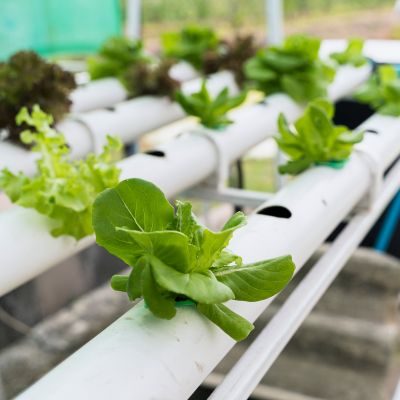
Hydroponics has long promised efficiency, precision, and yield advantages, yet cost remains the primary barrier for many growers entering or scaling within this space. Energy prices fluctuate, nutrient inputs grow more expensive, and water quality issues often demand corrective spending that was never part of the original plan. In this environment, the smartest hydroponic operators are no longer asking how to add more inputs, but how to make existing systems work harder with less waste. This is where Hydroponics Water Treatment quietly becomes a strategic lever rather than a maintenance task. By understanding how water chemistry governs nutrient uptake, microbial balance, and system longevity, growers can unlock performance gains without increasing operational budgets. The central takeaway is simple: disciplined water conditioning offers one of the highest returns on investment in modern hydroponics.
Why Water Quality Dictates Hydroponic Economics
Water is not a neutral carrier in hydroponics. It is an active participant in every biological and chemical interaction within the root zone. Dissolved minerals, excess salts, organic debris, and biofilm all influence how efficiently plants can absorb nutrients.
When untreated or poorly managed, water becomes a cost amplifier. Nutrients precipitate out of solution, root systems struggle under osmotic stress, and pumps and lines require frequent cleaning or replacement. Hydroponics Water Treatment addresses these issues at the source by stabilizing the solution before inefficiencies cascade into visible problems.
For growers operating on tight margins, preventing losses is often more impactful than chasing incremental yield increases.
The Hidden Cost of Inefficient Nutrient Uptake
One of the most overlooked expenses in hydroponics is nutrient waste. When electrical conductivity fluctuates unpredictably or mineral ratios drift, plants may receive nutrients that are technically present but biologically unavailable.
Symptoms of poor uptake include:
- Leaf discoloration despite adequate feeding
- Slow growth during otherwise optimal conditions
- Salt buildup in root zones and reservoirs
A properly implemented water conditioner for hydroponics improves nutrient solubility and consistency, allowing plants to access what is already in the system. The result is not heavier feeding, but smarter feeding.
Biofilm, Slime, and System Drag
Biofilm formation inside reservoirs, tubing, and emitters creates both biological and mechanical inefficiencies. Microbial colonies consume dissolved oxygen, alter pH, and physically restrict flow rates.
From a budget perspective, this translates into:
- Increased labor for system cleaning
- Higher replacement costs for clogged components
- Greater risk of pathogen outbreaks
Effective Hydroponics Water Treatment reduces organic accumulation before biofilm becomes established. Preventing buildup is significantly less expensive than correcting it after the fact.
Designing a Budget-First Water Strategy
Optimizing hydroponics on a tight budget does not mean cutting corners, it means prioritizing interventions with compounding benefits. Water conditioning is uniquely positioned in this regard because it influences every downstream input.
A budget-first strategy focuses on:
- Continuous conditioning rather than reactive flushing
- Low-dose, high-efficiency treatments
- Monitoring trends instead of chasing single data points
A well-chosen water conditioner for hydroponics operates quietly in the background, reducing the need for corrective actions that strain both time and finances.
Practical Application in Small-Scale Systems
Consider a small indoor hydroponic setup running on municipal water. Initial costs appear manageable, but over time the grower notices inconsistent growth and rising maintenance demands. Filters clog faster than expected, and nutrient schedules require constant adjustment.
Introducing targeted Hydroponics Water Treatment stabilizes the reservoir environment. Nutrient readings become predictable, plant response normalizes, and cleaning intervals extend. The financial impact is subtle but cumulative, fewer nutrient replacements, less downtime, and longer equipment lifespan.
This scenario reflects why water treatment scales so effectively across system sizes.
Avoiding False Economies in Hydroponics
Many growers delay investing in water conditioning because it does not produce immediate visual results like lighting upgrades or new genetics. This hesitation often leads to false economies, where short-term savings create long-term expenses.
Common pitfalls include:
- Overcorrecting nutrient deficiencies caused by poor water chemistry
- Excessive flushing that wastes water and nutrients
- Replacing equipment damaged by mineral scaling or biofilm
A disciplined water conditioner for hydroponics approach avoids these traps by maintaining balance rather than reacting to imbalance.
Budget Control Through System Stability
Stability is the true currency of cost control in hydroponics. When water parameters remain consistent, every other input becomes more predictable. Feeding schedules tighten, pest pressure decreases due to reduced plant stress, and yields stabilize.
From an operational standpoint, Hydroponics Water Treatment acts as a stabilizer for the entire production ecosystem. It does not replace good practices, but it amplifies them.
Growers operating within strict budgets benefit disproportionately from this effect, because stability reduces surprise expenses.
The Future of Cost-Efficient Hydroponics
As hydroponics continues to evolve, efficiency will increasingly replace scale as the defining advantage. Smaller systems will compete with larger ones through precision, data awareness, and optimized inputs.
In this future, water will no longer be treated as a passive medium. Instead, water conditioner for hydroponics solutions will be viewed as core infrastructure, similar to lighting or nutrient formulations.
The growers who thrive will be those who invest early in systems that minimize waste, extend equipment life, and maximize biological efficiency.
The Takeaway
Optimizing hydroponics on a tight budget is less about spending less and more about spending intelligently. Water, often taken for granted, represents the single most influential variable in system performance and cost control. By prioritizing Hydroponics Water Treatment, growers can unlock efficiencies that touch every aspect of production, from nutrient uptake to maintenance cycles. A reliable water conditioner for hydroponics does not merely solve problems, it prevents them from forming. In an industry where margins matter and predictability drives success, disciplined water management emerges not as an optional upgrade, but as a strategic foundation.
