

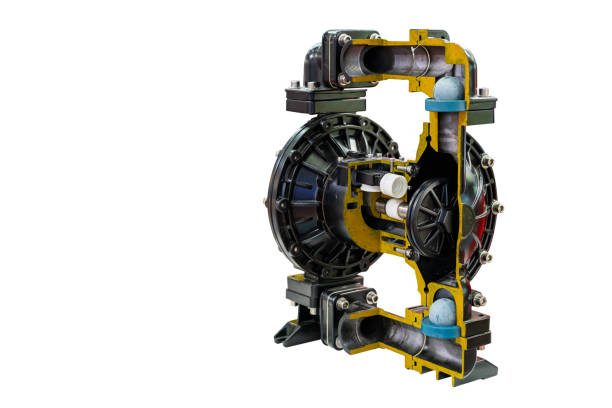
In North America, the positive displacement pumps are fundamental in the industrial fluid handling systems. In oil, gas and processing plants; food production plants; and wastewater treatment plants, these pumps are indispensable in instances where the flow control has to be precise, high-pressure operations, and viscous fluid handling and movement.
The recent industry research released by Vyansa Intelligence indicates that the market of the positive displacement pump in North America will enjoy a consistent growing trend throughout the forecast period. Industrial modernization, energy conservation programs, and growing demands among process-driven sectors are the factors that support the growth of the market.
Contrary to centrifugal pumps, positive displacement pumps work on the principle of catching a known volume of fluid and pushing it through the system. This mechanical concept predisposes them especially to applications that are characterized by high-viscosity fluids, slurries and systems that need regular pressure discharge.
Positive Displacement Pumps: What You Bases to Know
Positive displacement pumps fall into two broad groups based on the type:
Reciprocating Pumps
-
Piston pumps
-
Diaphragm pumps
-
Plunger pumps
Such pumps are usually employed in high-pressure systems like injection systems in oilfields and chemical processing.
Rotary Pumps
-
Gear pumps
-
Screw pumps
-
Lobe pumps
-
Vane pumps
Rotary pumps find extensive application in the food processing, pharmaceutical and lubrication systems in which consistent flow and hygiene are paramount.
They can achieve steady flow despite changes in pressure, unlike other pump technologies.
Essential Market Dynamics in North America
Modernization of Industrial Infrastructure
Another significant demand factor is the industrialization of the aging infrastructure in the United States and also in Canada. The manufacturing plants are retrofitting fluid handling systems to enhance energy efficiency and reliability in operations.
The U.S. Department of Energy (DOE) emphasizes the need to optimize the pump systems to lower the energy use in industries. Industrial pumps consume the largest percentage of electricity in the manufacturing setting.
Source
Such focus on efficiency is a direct benefit to the high-performance positive displacement pump producers.
Oil & Gas Sector Activity
Positive displacement pumps are still used in a significant capacity by the oil & gas industry in specific applications such as
-
Crude oil transfer
-
Chemical injection
-
Hydraulic fracturing
-
Refining operations
The developed upstream and downstream infrastructure in North America will facilitate further demand of equipment. Heavy-duty corrosive pumps are necessary where there are extreme operating conditions.
Expansion of Water/Wastewater Treatment
Sludge handling and chemical dosing of municipal and industrial wastewater treatment plants need to use durable pumping systems.
The U.S. Environmental Protection Agency (EPA) is the organization that regulates the standards of the water infrastructure and the rules of regulatory compliance, which contributes to the increased necessity of the effective pumping solutions in the treatment plants.
With the increase in the investments in the upgrades of the water systems at municipalities, the positive displacement pumps remain an important part of the metering and dosing devices.
Market Influences by Technological Advances
Pump systems that have always been traditional are being changed by the integration of technology.
Smart Monitoring Systems
Manufacturers are integrating:
-
IoT-based sensors
-
Predictive analytics of maintenance
-
Tele-monitoring of performance
These systems minimize downtimes and increase the duration of the equipment.
Material Innovation
The sophisticated materials like corrosion-resistant alloys and engineered polymers, are increasing the durability and chemical compatibility.
Optimization of Energy Efficiency
The use of variable speed drives (VSDs) and motor efficiency can be used to assist facilities to minimize their operational costs without compromising the performance.
These developments are in line with the general trend of automating industry in North America.
Sector-Specific Demand Trends
Food & Beverage Industry
With viscous products such as syrups, sauces, dairy products, and edible oils, positive displacement pumps are necessary. The critical aspects in this segment are the hygiene compliance and clean-in-place (CIP) compatibility.
Chemical Processing, Petrochemical Processing
These pumps are suitable for the controlled addition and transfer of chemicals due to their accuracy in metering.
Pharmaceuticals
Active pharmaceutical ingredient handling and formulation require sterile pumping systems.
Such variety of end-use industries helps to make the market structurally stable.
Market Challenges
Although the growth forecast is also in check, some limitations still exist:
High Initial Capital Costs
Innovative positive displacement pump types can sometimes be very costly to install in comparison to centrifugal pumps.
Maintenance Complexity
Installation or other improper maintenance may result in wear and tear of the seals, cavitation, and inefficiencies.
Competitive Alternatives
Centrifugal pumps still prevail in the use of low-viscosity fluids and high flows, bringing competitive segmentation.
These issues can only be solved through the use of engineering expertise and lifecycle cost optimization measures.
Long-Term Outlook
The market of the North American positive displacement pumps will continue to grow steadily based on:
-
Industrial automation
-
Energy efficiency mandates
-
Infrastructure upgrades
-
Environmental compliance standards
The market is not characterized by swift growth but one that is characterized by incremental and technology-based development. Manufacturers who place their emphasis on durability, integration of digital technology, and sector-specific customization will most probably remain competitive in positioning.
With the increasing complexity and regulation of industrial processes, fluid control is becoming more of an issue, leading to the strengthening of the applicability of positive displacement pump systems in the changing industrial environment in North America.
Key Takeaways
-
High-viscosity and high-pressure applications use positive displacement pumps.
-
Demand is motivated by industrial modernization and energy-saving programs.
-
Oil and gas, wastewater, food processing and pharmaceuticals are still core industries.
-
Increases in technological improvements are improving performance and reliability.
-
The market is growing in a measured manner and is not speculative.
Author Bio
The author of this article is an industry-based market analyst who has specialized in the trend of industrial equipment, the development of infrastructure, and the insight into the manufacturing sector in North America. The writer is a frequent contributor of editorial information based on research on the changing technologies in industries and market projections.
