

Introduction
The Music Tourism Market refers to travel driven by live music events, festivals, concerts, and music-related cultural experiences that attract visitors to specific destinations. Music tourism blends leisure travel, cultural engagement, and entertainment as visitors plan trips around music festivals, iconic venues, heritage music trails, and artist-linked attractions. From global gatherings like festival circuits to regional music heritage tours, music tourism enhances local economies, drives destination branding, and expands experiential travel offerings.
Market Size and Growth Projections
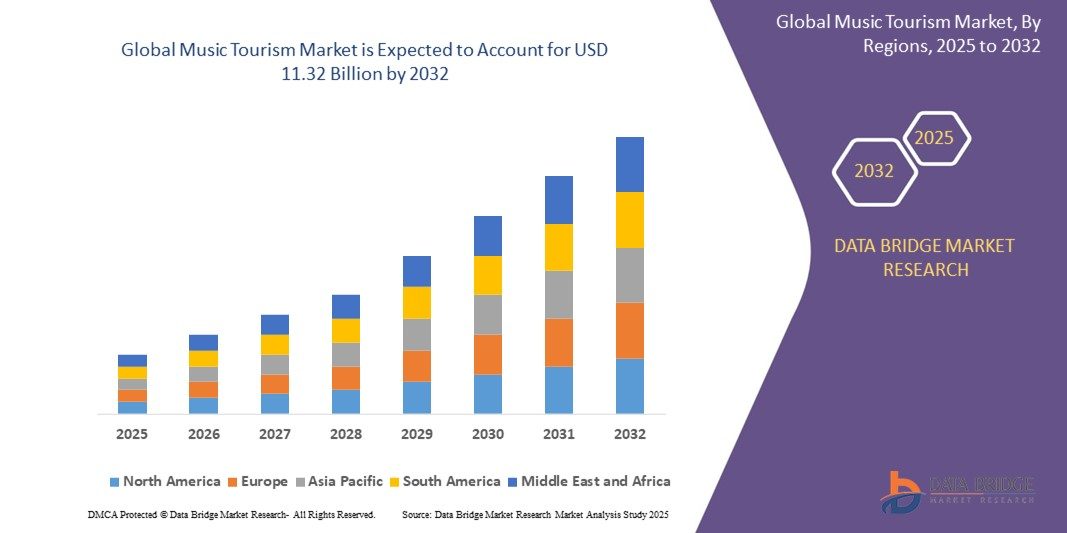
The music tourism market has demonstrated robust recovery and growth prospects following global travel disruptions. With demand for authentic, immersive travel experiences on the rise, the market is projected to expand at a healthy compound annual growth rate (CAGR) over the forecast period. Growth is supported by increasing international and domestic travel, expansion of music festivals and events, and broader integration of music-centric experiences into destination marketing efforts. Music tourism’s intersection with digital media engagement and social sharing further amplifies global interest and demand.
Get More Details : https://www.databridgemarketresearch.com/reports/global-music-tourism-market
Key Growth Factors
-
Rising global travel and demand for experience-based tourism
-
Growth in music festivals, concerts, and live performance events
-
Expansion of music heritage attractions and music-themed tours
-
Integration of digital platforms and influencer culture in travel planning
-
Enhanced collaboration between tourism boards and music event organizers
Market Segmentation
By Type / Service / Product
-
Music Festivals & Event Travel Packages
-
Concert & Tour-Driven Travel
-
Music Heritage & Cultural Tours
-
Destination Music Experiences (clubs, museums, studios)
-
Music Cruise and Specialty Itineraries
Music festivals and event travel packages remain a dominant segment due to high international appeal and destination draw.
By Traveler Type
-
Domestic Music Tourists
-
International Music Tourists
-
Repeat and Legacy Festival Travelers
-
Group & Organized Tour Travelers
International music tourists often spend more per trip and contribute significantly to destination revenue.
By End User
-
Individual Travelers
-
Tour Operators & Travel Agencies
-
Event Organizers & Promoters
-
Hospitality & Accommodation Providers
Individual travelers and tour operators drive most bookings, while event promoters and hospitality partners shape experience delivery.
Regional Insights
Europe leads the music tourism market owing to its dense calendar of iconic festivals, music heritage sites, and established cultural circuits. The United Kingdom, Spain, Germany, and the Netherlands host major events that attract global audiences. North America follows with significant market activity centered on mega-festivals, touring artist circuits, and music cities like Nashville, New Orleans, Los Angeles, and Austin. The Asia-Pacific region shows rapid expansion through growing festival portfolios, rising travel incomes, and regional touring circuits. Latin America and Middle East & Africa also exhibit emerging demand supported by cultural festivals and tourism development.
Key Market Drivers
The music tourism market is driven by travelers’ growing preference for authentic and culturally engaging experiences that go beyond traditional sightseeing. Music events and heritage tours offer immersive narratives, social connectivity, and memorability, which resonate particularly with millennial and Gen Z travel segments. Partnerships between event organizers, tourism boards, and hospitality brands create integrated travel packages that enhance convenience and value. Social media amplification and livestream previews further influence destination choice and travel planning.
Market Challenges and Restraints
Challenges in the music tourism market include seasonality of major events, capacity limitations at venues, and logistics complexities related to festival travel. Fluctuations in international travel regulations, visa restrictions, and geopolitical dynamics can impact cross-border visitor flows. Event cancellations or public health responses (e.g., pandemic mitigation) also introduce variability. Additionally, competition for regional tourism funding and infrastructure may influence destination readiness and investment in music-centric attractions.
Competitive Landscape with Key Companies
-
Live Nation Entertainment
-
AEG Presents
-
Festival Republic
-
Superstruct Entertainment
-
SFX Entertainment (and affiliates)
-
C3 Presents
-
SDL Presents (Southern Destinations Live)
-
Global Citizen Festivals
Leading players focus on festival scaling, global touring partnerships, integrated travel experiences, and digital platforms to attract audiences and enhance market engagement.
Technological Innovations
Technological innovations shaping the music tourism market include event discovery apps, AI-driven personalization in travel planning, smart ticketing systems, and augmented reality enhancements at music attractions. Data analytics and CRM systems enable event organizers and travel partners to tailor offers and segment audiences effectively. Live streaming and hybrid event formats expand reach and maintain engagement beyond physical attendance.
SWOT Analysis
| Strengths | Weaknesses |
|---|---|
| High appeal across demographics | Seasonality and scheduling constraints |
| Strong experiential tourism focus | Infrastructure and capacity limits |
| Amplified by digital and social media | Regulatory and travel complexity |
| Opportunities | Threats |
|---|---|
| Expansion in emerging markets | Geopolitical and travel policy risks |
| Growth of niche and boutique events | Event cancellations due to health or weather |
| Integration with broader tourism ecosystems | Competitive pressure from other experiential sectors |
Future Market Outlook
The music tourism market outlook remains positive as destinations and event organizers innovate travel packages and create year-round experiences. Growth will be driven by diverse music genres, boutique festivals, heritage music routes, and integrated cultural itineraries. Expansion of digital engagement tools and cross-sector partnerships will enhance market reach, while sustainable and responsible event practices will support long-term destination appeal. Emerging markets in Asia, Latin America, and Africa hold particular promise as travel access and event portfolios expand.
Conclusion
The Music Tourism Market is redefining the intersection of travel, culture, and entertainment, offering immersive journeys anchored in sound, experience, and place. With rising demand for authentic experiences, global festival circuits, and innovative music tours, this market presents significant opportunities for destinations, travel brands, and event organizers. Continued collaboration, infrastructure investment, and technology adoption will drive sustainable growth and elevate music tourism as a cornerstone of experiential travel worldwide.
