

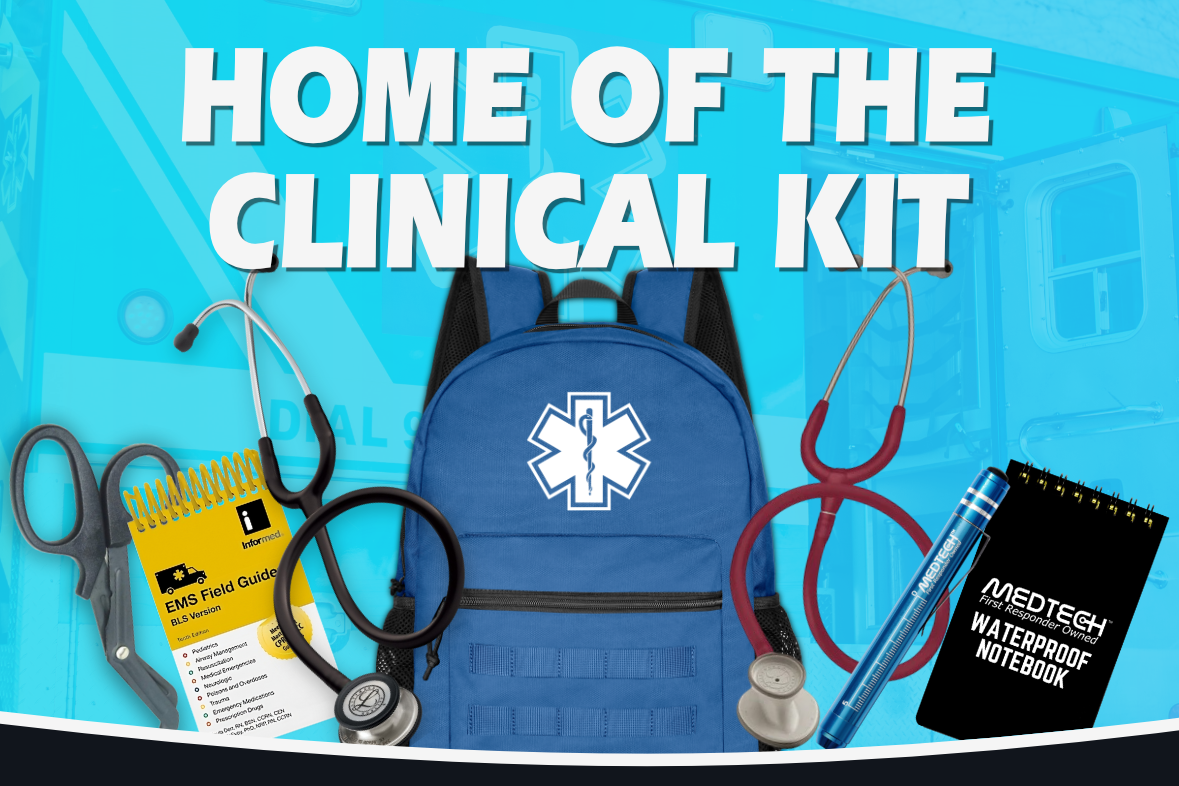
MedTech Clinical Kit Medicine Identification Label Sticker
Emergency medical education is built on repetition, precision, and systems thinking. EMT students are not only learning how to assess patients and administer care; they are being trained to operate within structured clinical environments where organization directly affects outcomes.
One of the most overlooked but most impactful elements of this training is how medications are identified, stored, and accessed inside clinical kits.
The MedTech Clinical Kit Medicine Identification Label Sticker system addresses a foundational need in EMT education: creating visual clarity inside training kits while reinforcing professional standards that align with real-world EMS operations.
Why Medication Identification Matters in EMT Education
In EMT programs, medication handling is introduced early and reinforced continuously. Students must learn drug names, indications, contraindications, routes of administration, and dosage logic.
However, knowledge alone is not sufficient. In practice, medications must be located quickly, verified visually, and accessed confidently under time pressure.
Without a clear labeling system, training kits often become cluttered. Students hesitate, instructors intervene, and scenarios lose realism. Over time, this disrupts skill acquisition and weakens operational confidence.
Medication identification label stickers provide a visual framework that supports learning while reducing cognitive overload during assessments.
From Classroom Theory to Kit-Based Learning
Modern EMT schools rely heavily on hands-on learning. Simulation labs, scenario testing, and skills stations are designed to replicate field conditions as closely as possible. For these environments to be effective, training equipment must reflect professional EMS organization.
Clinical kits labeled with MedTech medication label stickers create consistency across classrooms and cohorts. When every student interacts with similarly organized kits, instruction becomes more efficient and assessment more objective. This standardization is particularly valuable for EMT schools managing large class sizes or multiple instructors.
Fire-Based EMS Training and Subdued Identification
Many EMT schools operate alongside fire departments or prepare students for fire-based EMS roles. In these settings, equipment identification often follows subdued, professional standards designed to minimize distraction while maintaining clarity.
The subdued american flag sticker aligns well with this training philosophy. Its low-profile design reflects real-world fire and rescue equipment marking practices, helping students adapt to environments where discretion and functionality are prioritized.
Creating Professional Identity Within Training Kits
Beyond medication identification, EMS education also emphasizes professional identity. Students are trained not only as clinicians but as members of a disciplined emergency response system. Equipment marking plays a subtle yet important role in reinforcing this mindset.
Visual identifiers such as the american flag ems help distinguish EMS-specific kits from general classroom supplies. When students consistently work with clearly marked equipment, they develop respect for resource ownership, accountability, and operational boundaries core principles in emergency medical.
Visual Learning and Cognitive Reinforcement
EMT students are visual learners by necessity. In high-stress scenarios, the brain relies on recognition rather than recall. Properly labeled medication storage reinforces this process.
Over time, students associate medication categories, placement, and usage with visual cues rather than hesitation.
The medication label stickers offered by MedTech support this learning model by helping students internalize organization patterns that mirror operational EMS workflows. This reduces errors during testing and builds habits that carry into clinical ride-alongs and field internships.
Cultural Symbols and EMS Values in Education
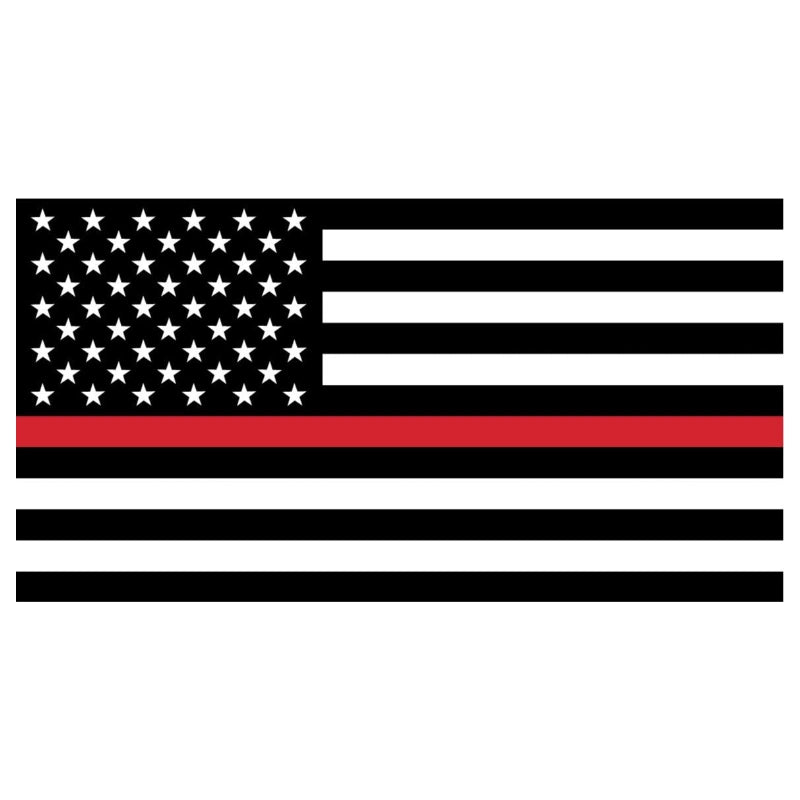
Symbols matter in EMS culture. They represent service, responsibility, and readiness. The MedTech red line american flag is widely recognized across emergency as a marker of commitment and sacrifice.
Introducing these symbols during training helps students connect technical skills with the values of the profession they are entering.
By integrating culturally relevant EMS identifiers into training kits, EMT schools create environments that feel authentic and purpose-driven. This strengthens student engagement and reinforces the seriousness of clinical preparation.
Supporting Instructor Efficiency and Assessment Accuracy
From an instructional standpoint, labeled clinical kits simplify teaching. Instructors can focus on evaluating technique, decision-making, and communication rather than correcting organizational mistakes.
During practical exams, standardized labeling ensures that all students are tested under equal conditions.
This consistency improves grading accuracy and reduces disputes, making medication label systems particularly valuable for EMT schools conducting high-volume assessments or certification preparation.
Reducing Training Errors Before They Become Field Errors
Mistakes made during training often reappear in the field if left uncorrected. Poor medication organization can lead to delayed care, incorrect administration, or unnecessary stress during emergencies.
Introducing structured identification systems early helps prevent these issues from becoming ingrained habits.
By using labeled clinical kits throughout EMT education, schools proactively address a common source of operational error while reinforcing best practices.
Preparing Students for Real EMS Environments
One of the primary goals of EMT education is readiness. Graduates should enter the field with familiarity—not surprise when opening an ambulance kit or medication bag. Training with labeled, professionally organized kits bridges the gap between classroom learning and field expectations.
Students trained with MedTech’s identification-focused approach transition more smoothly into ride-alongs, internships, and first assignments, as the visual systems they encounter feel familiar rather than overwhelming.
Integrating Identification Systems Into EMT Curricula
For EMT schools, adopting a structured medication identification system is not about branding it is about pedagogy. When labeling is integrated into curriculum design, it becomes part of the learning process rather than an afterthought.
MedTech’s approach allows schools to implement scalable, repeatable systems that support both instruction and assessment, regardless of class size or training format.
Long-Term Value for EMT Programs
Over time, standardized labeling reduces kit turnover, minimizes lost supplies, and improves inventory management. For schools operating on tight budgets, these operational efficiencies add measurable value. More importantly, they contribute to better-trained, more confident graduates.
Conclusion: Building Better EMT Training Through Visual Structure
Effective EMT education depends on structure, repetition, and realism. Medication identification label stickers may seem like small tools, but their impact on learning, organization, and professional development is substantial.
The MedTech Clinical Kit Medicine Identification Label Sticker system supports EMT schools by enhancing training clarity, reinforcing EMS culture, and preparing students for the operational realities of emergency medical. When education mirrors the field, students succeed and patients ultimately benefit.
Frequently Asked Questions
Q1. What are medication label stickers used for in EMT training?
Medication label stickers are used in EMT training to clearly identify medications, drawers, and supply compartments inside clinical kits. They help students quickly locate the correct medication during skills labs and simulated patient care scenarios. MedTech’s medication label stickers are specifically designed for EMS education, making them ideal for classroom kits, practice labs, and scenario-based assessments where accuracy and speed are essential.
Q2. Why do EMT students need labeled medication kits?
Labeled medication kits help EMT students develop proper organizational habits early in their education. Clear labeling reduces hesitation, prevents mix-ups, and reinforces standardized EMS workflows. MedTech’s clinical kit labeling system allows students to train with equipment that mirrors real-world ambulance organization, improving confidence and readiness for field internships.
Q3. Are medication label stickers required in EMT schools?
While not legally required, medication label stickers are strongly recommended by many EMT instructors because they improve training efficiency and assessment accuracy. Schools that use MedTech labeling products benefit from standardized kit layouts, easier instruction, and more consistent practical exams. This creates a structured learning environment that supports both students and educators.
Q4. What makes MedTech medication label stickers different from regular stickers?
MedTech medication label stickers are designed specifically for EMS training environments. Unlike generic stickers, they are built for frequent handling, repeated use, and clinical organization. Combined with EMS identity stickers such as the EMS flag and red line American flag, MedTech products create a complete, professional labeling system that supports both medication identification and EMS culture in training settings.
Other Useful Resources
Building EMS Identity With Symbolic Stickers in Training
Inside the EMS Sticker Collection Built for Student Training
