

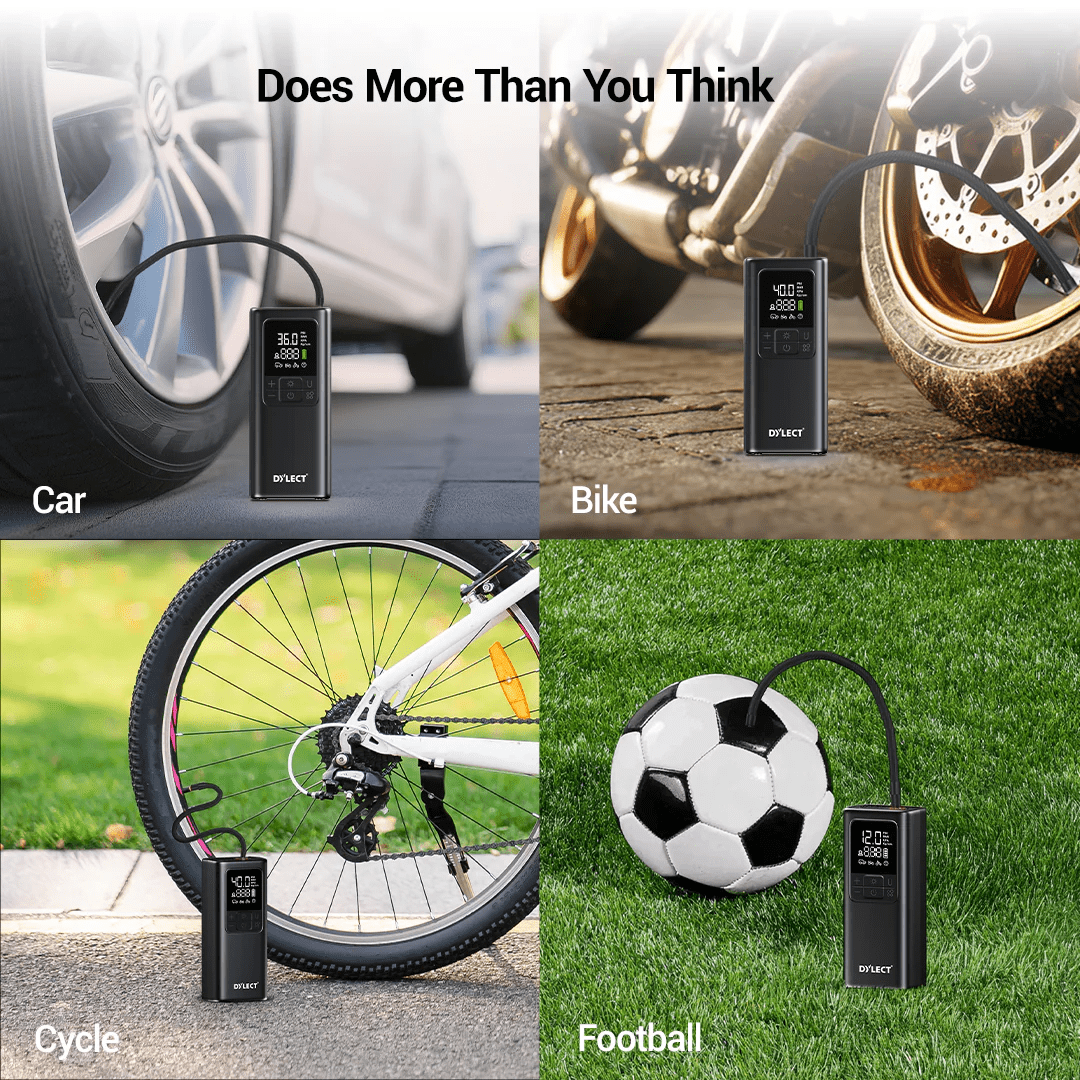
A good tyre inflator is more than a convenience — it’s a safety tool. Whether you drive a car, ride a motorcycle, or manage a fleet, having a reliable inflator means faster roadside fixes, improved fuel efficiency, and longer tyre life. But not all tyre inflators are created equal. This guide explains the key features to look for when choosing a high-quality tyre inflator, in clear and simple English.
1. Accurate Pressure Gauge
Why it matters: Correct tyre pressure is critical for safety, handling, fuel economy, and tyre wear. An inaccurate gauge can leave you under- or over-inflated.
What to look for:
- Digital readout for easier reading and better precision.
- Gauge accuracy within ±1–2 psi (pounds per square inch) is ideal for most vehicles.
- Backlit display for low-light use, and an auto-off feature to save battery.
2. Sufficient Power and Inflation Speed
Why it matters: Power determines how quickly and easily the inflator can reach the required pressure. Faster inflation saves time and is less stressful during roadside emergencies.
What to look for:
- For small vehicles and motorcycles, a compact 12V inflator with decent airflow may be enough.
- For larger tyres (SUVs, light trucks), look for a unit with higher airflow (measured in liters per minute or L/min) and higher maximum pressure.
- Check the time to inflate a typical tyre from 0 to 35 psi — shorter is better.
3. Maximum Pressure Rating
Why it matters: The inflator must be able to reach the pressure required by your vehicle tyres. Different vehicles and tyre types need different maximum pressures.
What to look for:
- Most passenger cars need up to 35–40 psi; some light trucks or specialty tyres need higher.
- Choose an inflator with a max pressure comfortably above your tyres’ requirements (for example, 100 psi or more for heavy-duty use).
4. Power Source Flexibility
Why it matters: The type of power source affects where and how you can use the inflator.
Options and pros/cons:
- 12V DC (car cigarette lighter): Very common and convenient for roadside use. Best when you have access to your vehicle’s socket.
- Direct battery clamps: Useful if you need more power or if the car socket won’t start the unit.
- Refillable air tanks or built-in rechargeable batteries: Good for portability and use away from a vehicle, but check runtime and recharging time.
- Mains (AC) adapters: Useful at home or in a garage but not for roadside emergencies.
What to look for:
- Models that offer both 12V DC and built-in battery are the most flexible.
- Clear info on runtime, recharge time, and charging options.
5. Hose Length and Quality of Connectors
Why it matters: A long, durable hose and secure connectors make inflation easier and prevent leaks.
What to look for:
- Hose length that allows you to reach every tyre from one location — typically 2–4 meters for practical use.
- Strong, flexible hose material that resists kinks and cracking.
- Quality connectors and multiple adaptors (Schrader, Presta, and other fittings) so you can inflate car, bicycle, motorcycle, and sports equipment.
6. Portability and Size
Why it matters: Portability determines how easily you can store and carry the inflator. For everyday drivers, a compact model stored in the boot is ideal.
What to look for:
- Lightweight and compact design for ease of storage.
- Built-in storage compartments for cables and accessories to avoid loose parts.
- Durable carry handle or case for protection and transport.
7. Built-in Safety Features
Why it matters: Safety features protect both the user and the equipment.
What to look for:
- Auto shut-off when the set pressure is reached to prevent over-inflation.
- Thermal protection that prevents overheating during extended use.
- Fuse or circuit protection for 12V models that plug into a vehicle.
- Clear safety warnings and instructions in the manual.
8. Multi-Functionality and Extras
Why it matters: Some inflators offer additional functions that increase usefulness.
Useful extras:
- LED work light for nighttime or low-light emergencies.
- Emergency power bank or USB charging port to charge phones.
- Deflate function for when you need to lower tyre pressure quickly (useful for off-road or sand driving).
- Pressure preset memory so you can set tyre pressures for multiple vehicles.
9. Build Quality and Warranty
Why it matters: A well-built inflator lasts longer and performs more reliably.
What to look for:
- Solid construction materials: reinforced plastic or metal components where stress is high.
- Sturdy base or feet to keep the unit stable during operation.
- Reputable brand or manufacturer with clear warranty terms — 1 year or more is common.
- Read customer reviews focused on long-term reliability and service experience.
10. Ease of Use
Why it matters: During a roadside emergency, you want a straightforward device that works without fuss.
What to look for:
- Intuitive controls and a simple interface.
- Clear instructions and easy-to-access connectivity points.
- Fast and secure attachment of the nozzle to the valve — avoid finicky screw-on designs unless they are marked high-quality.
- Automatic features (auto-stop, digital presets) that reduce human error.
11. Price and Value
Why it matters: The cheapest model may save money now but cost more in frustration and replacement later. Balance price with features and build quality.
Tips:
- Prioritize accuracy, safety features, and power over cosmetic extras.
- Consider total value: warranty, accessories, and customer support can make a mid-range inflator a better investment than a cheaper one with no support.
How to Match an Inflator to Your Needs
- Daily commuter (small car or bike): Choose a compact, 12V model with digital gauge and decent hose length.
- Family SUV or occasional long trips: Look for higher airflow, higher maximum pressure, and an auto shut-off feature.
- Off-road or light truck use: Choose a heavy-duty unit with higher max pressure, durable build, and multiple power options.
- Cyclists and multi-sport users: Ensure you have Presta and Schrader adaptors, a portable model, and a precise gauge.
Final Checklist Before You Buy
- Is the pressure gauge accurate and easy to read?
- Does it reach the pressure your tyres require?
- Is the power source compatible with how you’ll use it?
- Is the hose long and durable enough, with the right adaptors?
- Does it have safety features like auto shut-off and thermal protection?
- Is it portable and well-built with a reasonable warranty?
- Does it offer good value for the price?
Conclusion
A high-quality tyre inflator is a small investment that delivers safety, convenience, and long-term savings. Prioritize accuracy, power, safety features, and build quality when choosing a model. When matched correctly to your needs — daily commuting, family trips, off-roading, or cycling — the right inflator becomes an indispensable part of your vehicle toolkit.
If you’d like, I can write a product comparison of the best tyre inflators for cars, bikes, and SUVs, or create a buyer’s checklist you can print and take to a store.
