

Introduction
The Intravenous Iron Market is witnessing strong global expansion as healthcare providers increasingly adopt IV iron therapies to manage iron deficiency anemia (IDA) in patients who cannot tolerate or adequately absorb oral iron supplements. The market is driven by rising anemia prevalence, expansion of outpatient infusion centers, and new high-dose IV iron formulations that offer rapid, efficient iron replenishment.
Market Size and Growth Outlook
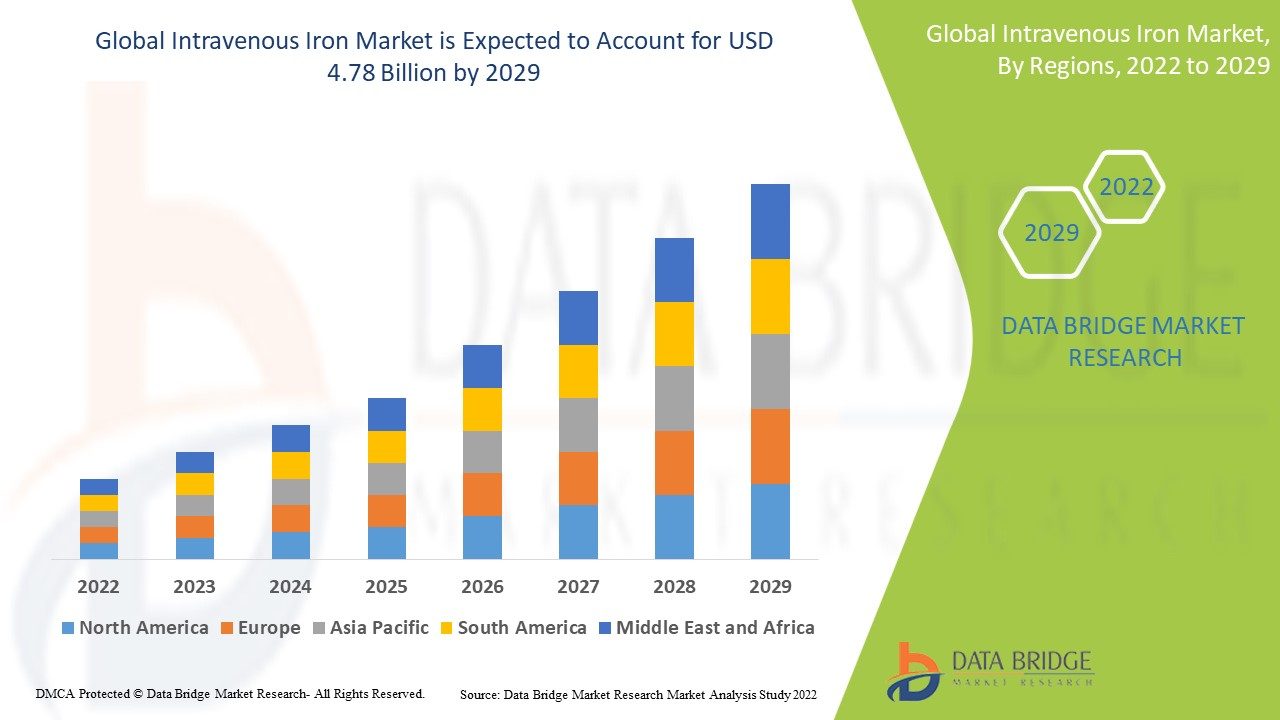
The global intravenous iron market was valued at approximately USD 3.3–3.8 billion in 2024. It is expected to grow steadily and reach USD 5.5–8.2 billion by 2032–2034, expanding at an estimated CAGR of 8%–9% during the forecast period. Growth is powered by increased diagnosis of anemia in chronic diseases such as CKD, cancer, gastrointestinal disorders, heart failure, and women’s health complications.
Get More Details : https://www.databridgemarketresearch.com/reports/global-intravenous-iron-market
Key Growth Factors
High Global Prevalence of Iron Deficiency Anemia
Iron deficiency anemia is one of the world’s most common nutritional deficiencies. Chronic disease–related anemia has amplified demand for fast-acting intravenous iron therapies.
Rising Use of High-Dose and Rapid-Infusion Iron Formulations
Modern products like ferric carboxymaltose and ferumoxytol allow large single-dose infusions, reducing treatment sessions and improving patient adherence.
Expansion of Outpatient and Home Infusion Services
Growing availability of infusion centers and home-care infusion programs makes IV iron therapy accessible to wider populations.
Growing Geriatric Population
Elderly patients are more susceptible to anemia due to chronic comorbidities, increasing the overall patient pool.
Market Challenges and Restraints
Adverse Reaction Risks
IV iron can cause hypersensitivity reactions or hypophosphatemia, requiring clinical monitoring and slowing adoption in some markets.
High Treatment Costs
The price of IV iron therapies and limited reimbursement in developing nations restricts broad adoption.
Preference for Oral Iron in Mild Cases
Oral iron remains the first-line therapy for mild anemia cases, limiting IV iron use to medically necessary conditions.
Market Segmentation
By Product Type
-
Ferric Carboxymaltose
-
Iron Sucrose
-
Ferumoxytol
-
Iron Dextran
-
Others
Ferric carboxymaltose leads the market due to its safety profile, dosing convenience, and strong clinical adoption.
By Application
-
Chronic Kidney Disease (CKD)
-
Iron Deficiency Anemia (Non-Dialysis)
-
Oncology and Chemotherapy-Induced Anemia
-
Gastroenterology Disorders
-
Heart Failure with Iron Deficiency
-
Women’s Health and Postpartum Anemia
-
Perioperative Care
CKD remains the dominant application area due to high anemia prevalence in renal disease patients.
By End User
-
Hospitals
-
Dialysis Centers
-
Outpatient Infusion Clinics
-
Specialty Care Clinics
-
Home Healthcare Providers
By Distribution Channel
-
Hospital Pharmacies
-
Retail Pharmacies
-
Online Pharmacies
Regional Insights
North America
Strong healthcare infrastructure, high anemia diagnosis rates, and widespread use of advanced IV iron formulations make North America the leading regional market.
Europe
Robust adoption of ferric carboxymaltose, supportive reimbursement systems, and strong clinical guidelines drive growth.
Asia-Pacific
Fastest-growing region due to expanding healthcare systems, rising geriatric population, and increasing anemia prevalence.
Middle East & Africa
Growth supported by improving hospital infrastructure and rising chronic disease burden.
Latin America
Moderate growth driven by improving access to infusion services and increasing awareness of anemia management.
Competitive Landscape
The market is moderately consolidated with several leading pharmaceutical and biotech companies focusing on product innovation, safety improvements, and global expansion.
Key Companies
-
Vifor Pharma Group
-
Fresenius Kabi
-
American Regent
-
Pharmacosmos
-
Daiichi Sankyo
-
AMAG Pharmaceuticals
-
Baxter International
-
Rockwell Medical
-
Hikma Pharmaceuticals
-
Sanofi
These players emphasize developing safer formulations, expanding clinical trials, and enhancing infusion delivery models.
SWOT Analysis
| Strengths | Weaknesses |
|---|---|
| High efficacy for severe anemia | High treatment cost |
| Rapid iron replenishment | Requires clinical supervision |
| Strong demand from chronic disease patients | Adverse reaction risks |
| Opportunities | Threats |
|---|---|
| Growing elderly population | Availability of oral iron alternatives |
| Expansion of infusion centers | Pricing and reimbursement challenges |
| Growth in emerging markets | Regulatory constraints |
Future Market Outlook
The Intravenous Iron Market is expected to experience sustained long-term growth as chronic diseases rise globally and more healthcare systems adopt IV iron therapy as a standard care solution. High-dose formulations, safety improvements, and growth in outpatient infusion models will further support market expansion. Emerging markets present significant opportunities due to increasing healthcare spending and improved anemia diagnosis rates.
Conclusion
The Intravenous Iron Market is on a strong upward trajectory, driven by medical needs, modern infusion technologies, and expanded outpatient care delivery. Although cost and safety challenges remain, continuous innovation and broader global access are expected to unlock major growth opportunities over the next decade.
Get More Reports :
https://www.databridgemarketresearch.com/reports/latin-america-aesthetic-injectables-market
https://www.databridgemarketresearch.com/reports/global-glass-substrate-market
https://www.databridgemarketresearch.com/reports/global-smart-vending-machine-market
https://www.databridgemarketresearch.com/reports/global-antibody-drug-conjugates-market
https://www.databridgemarketresearch.com/reports/global-esim-market
