

Lighting technology has evolved rapidly over the last two decades, transforming how commercial, industrial, and outdoor spaces are illuminated. From traditional incandescent and tungsten bulbs to energy-efficient LEDs with advanced color control and durable outdoor fixtures, today’s lighting decisions directly impact energy costs, performance, and long-term maintenance.
This comprehensive guide explores incandescent vs LED lighting, explains correlated color temperature (CCT) in modern LED systems, and highlights the growing role of LED wall pack lights in commercial and exterior applications. Whether you are upgrading an existing system or planning a new installation, understanding these factors will help you make smarter, future-ready lighting choices.
Incandescent vs LED: A Comparison of Lighting Technologies
For decades, incandescent bulbs were the standard for residential and commercial lighting. However, LED technology has now become the preferred solution due to superior efficiency, longevity, and performance.
How Incandescent and Tungsten Bulbs Work
Incandescent bulbs produce light by passing electricity through a thin tungsten filament. As the filament heats up, it emits visible light. While this method creates warm illumination, it is highly inefficient.
Key characteristics of incandescent and tungsten bulbs:
- High energy consumption
- Short lifespan (typically 1,000 hours)
- Significant heat generation
- Frequent replacement requirements
In the tungsten bulb vs LED debate, tungsten bulbs lose nearly 90% of their energy as heat rather than usable light.
Incandescent Light Bulb vs LED: Energy Efficiency
When comparing an incandescent light bulb vs LED, the difference in efficiency is dramatic.
LED advantages:
- Uses up to 80% less energy
- Produces minimal heat
- Converts electricity directly into light
- Ideal for long operating hours
This efficiency translates directly into lower electricity bills, making LED lighting the clear winner for commercial facilities, parking areas, and exterior lighting.
Lifespan and Maintenance Comparison
Another critical factor in the incandescent vs LED discussion is lifespan.
|
Lighting Type |
Average Lifespan |
|
Incandescent |
~1,000 hours |
|
LED |
50,000+ hours |
LEDs last up to 50 times longer, reducing maintenance costs, labor, and downtime—especially important for hard-to-reach outdoor fixtures like wall packs and security lighting.
Understanding Correlated Color Temperature (CCT) in LED Lighting
Beyond efficiency, modern lighting decisions depend heavily on light quality, which is where correlated color temperature (CCT) comes into play.
What Is Correlated Color Temperature?
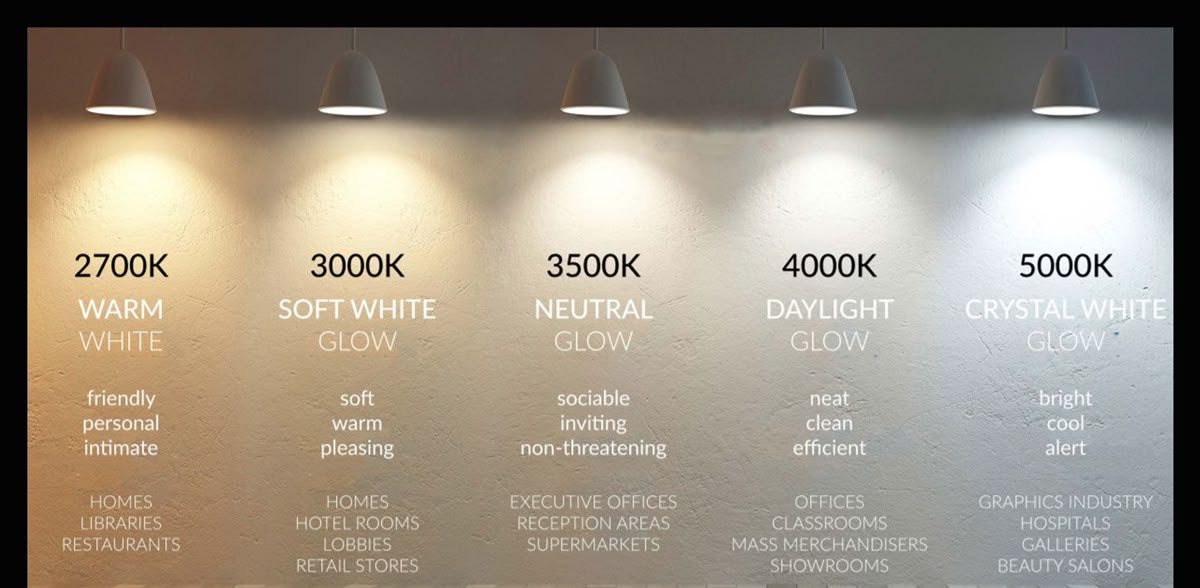
Correlated color temperature (measured in Kelvin) defines the color appearance of light emitted by a fixture.
- Lower Kelvin = warmer light
- Higher Kelvin = cooler, whiter light
Common LED CCT ranges include:
- 2700K–3000K: Warm white (similar to incandescent)
- 3500K–4000K: Neutral white
- 5000K–5700K: Daylight white
Understanding LED CCT is essential for choosing lighting that fits both functional and aesthetic requirements.
Why LED CCT Matters in Commercial Lighting
Selecting the right LED CCT impacts:
- Visual comfort
- Safety and visibility
- Productivity
- Customer experience
For example:
- Warm CCTs are ideal for hospitality and residential environments
- Neutral CCTs suit offices and retail spaces
- Cooler CCTs improve visibility in parking lots, warehouses, and industrial areas
Unlike incandescent bulbs, which offer limited color consistency, LED fixtures maintain stable CCT throughout their lifespan.
LED vs Incandescent: Color Quality Improvements
In the past, one criticism of LEDs was harsh or unnatural light. Today’s advanced LED technology delivers:
- High Color Rendering Index (CRI)
- Consistent CCT over time
- Reduced glare and flicker
This makes LED lighting not only more efficient but also superior in overall light quality compared to incandescent and tungsten bulbs.
The Role of LED Wall Pack Lighting in Modern Applications
As lighting moves outdoors and into commercial environments, LED wall pack lights have become an essential solution for security, safety, and visibility.
What Are LED Wall Pack Lights?
LED wall pack light fixtures are exterior-mounted luminaires designed to illuminate building perimeters, walkways, parking areas, and entry points.
They are commonly installed on:
- Commercial buildings
- Warehouses
- Retail stores
- Apartment complexes
- Industrial facilities
Benefits of LED Wall Pack Lights
Commercial LED wall pack lights provide several advantages over traditional HID or incandescent fixtures:
1. Energy Efficiency
LED wall packs consume significantly less power while delivering higher lumen output, making them ideal for all-night operation.
2. Long Lifespan
With lifespans exceeding 50,000 hours, LED wall pack lights drastically reduce maintenance and replacement costs.
3. Improved Safety and Security
Bright, uniform illumination deters crime and enhances visibility for pedestrians and vehicles.
4. Durable Construction
Most LED wall pack light fixtures are:
- Weather-resistant
- Impact-resistant
- Rated for outdoor use
LED Wall Pack Lights vs Traditional Outdoor Lighting
When comparing LED wall pack lights to older metal halide or incandescent fixtures:
|
Feature |
Traditional Lighting |
LED Wall Packs |
|
Energy Use |
High |
Low |
|
Lifespan |
Short |
Very Long |
|
Light Quality |
Inconsistent |
Uniform |
|
Maintenance |
Frequent |
Minimal |
LED wall packs clearly outperform legacy technologies in every key category.
Choosing the Right LED Wall Pack Light Fixture
When selecting commercial LED wall pack lights, consider the following factors:
Lumen Output
Higher lumen output is ideal for parking areas and security lighting, while lower output may suit walkways and entrances.
CCT Selection
Cooler CCTs (4000K–5000K) are commonly used for outdoor and security applications due to improved visibility.
Mounting and Beam Pattern
Choose fixtures with appropriate distribution patterns to minimize light spill and maximize coverage.
Integrating LED Technology for a Complete Lighting Upgrade
Upgrading from incandescent to LED is more than just a bulb swap—it’s a system-wide improvement.
A modern LED lighting strategy combines:
- High-efficiency fixtures
- Proper CCT selection
- Application-specific designs (wall packs, area lights, indoor LEDs)
This approach ensures consistent performance, lower operating costs, and long-term reliability.
Why LEDs Are the Future of Commercial and Outdoor Lighting
From the incandescent vs LED comparison to advanced LED CCT control and durable LED wall pack light fixtures, it’s clear that LED technology represents the future of lighting.
Key takeaways:
- LEDs outperform incandescent and tungsten bulbs in efficiency and lifespan
- Correlated color temperature allows precise light customization
- LED wall pack lights enhance safety, security, and energy savings
- Commercial facilities benefit from reduced maintenance and operating costs
As regulations tighten and energy prices rise, LED lighting remains the smartest investment for businesses and property owners.
Final Thoughts
Understanding the differences between incandescent vs LED lighting, mastering correlated color temperature, and choosing the right LED wall pack lights empowers you to make informed, cost-effective decisions. With proven efficiency, superior light quality, and long-term durability, LED lighting solutions continue to set the standard for modern illumination.
If you’re planning a lighting upgrade, investing in high-quality LED fixtures is not just an upgrade—it’s a future-proof solution.
