

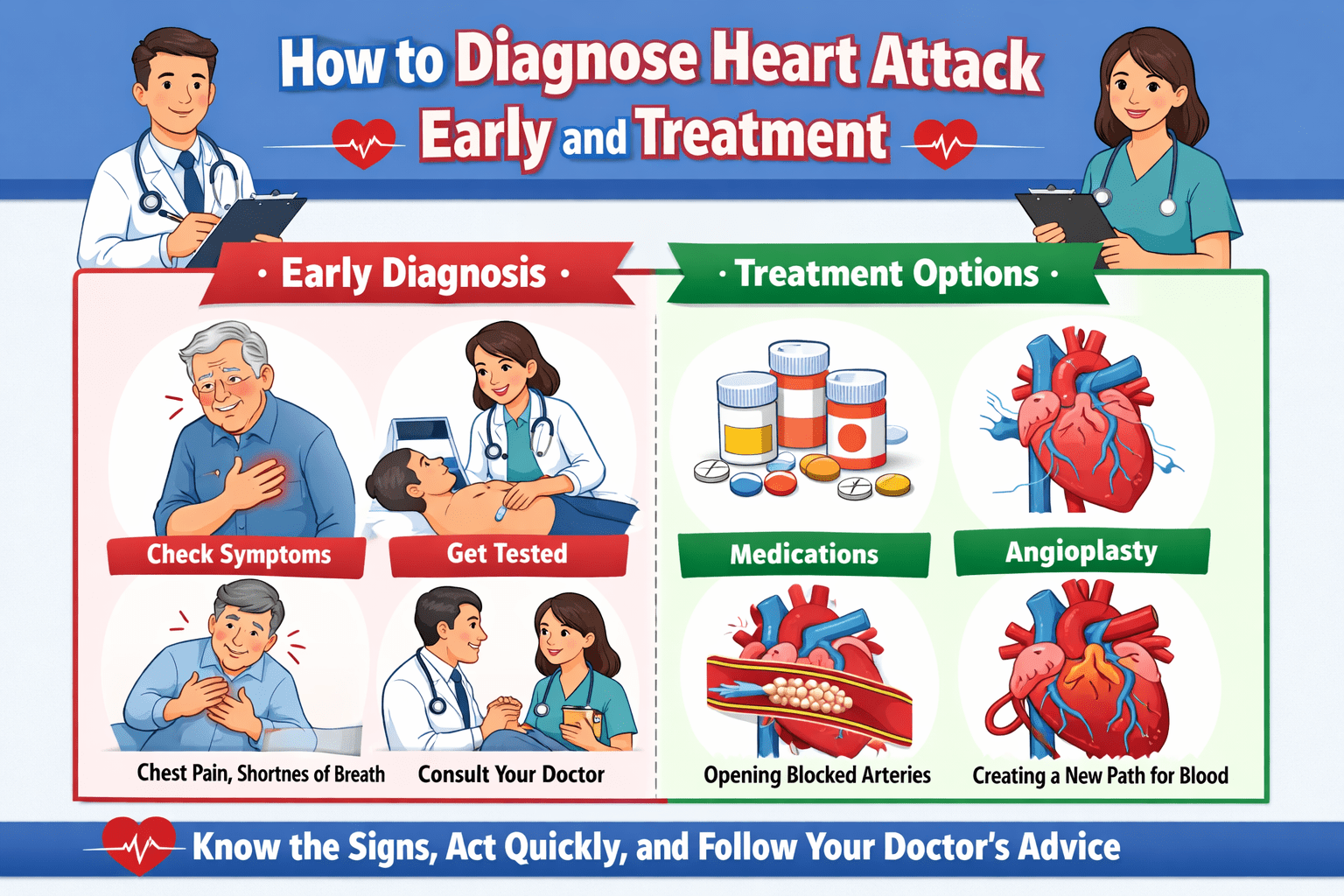
As people lead busy lives, stress levels increase, and diabetes and high blood pressure levels are on the rise; more people are affected. Early detection is the key factor that can save a life or not. Knowing the right test for heart attack, recognizing warning signs, and seeking immediate treatment can save lives. Heart attacks are tricky to detect, unlike other diseases, because they are not always accompanied by chest pain; they could be accompanied by indigestion, tiredness, and even soreness in the jaw. Early detection is the key factor that can save a life or not. Knowing the right test for a heart attack, recognizing warning signs, and seeking immediate treatment can save lives.
Symptoms that you should not ignore
Learning how to detect heart attack symptoms early can prevent tragic outcomes. Time is of the essence and more time is wasted taking to the hospital means more complications or death.
Symptoms of a heart attack are confused with gas trouble, or they are ignored as an indication of tiredness. The typical red flags would be chest pain, breathlessness, lightheadedness, or discomfort that radiates to the arm or jaw. Women and elderly patients can exhibit uncharacteristic symptoms such as nausea, indigestion, or intense fatigue. Learning how to detect heart attack symptoms early can prevent tragic outcomes. Time is of the essence, and more time is wasted taking time to get to the hospital means more complications or death.
Diagnosis and Test to Detect Heart Attack
The first test for a heart attack is usually an electrocardiogram (ECG), which records the electrical signals in the heart. Blood tests, or troponin in particular, are regarded as gold-standard markers because they increase in the event that the heart muscle is damaged. Echocardiography is the imaging of heart activity, and the coronary angiography procedure assists in the visualization of clogged arteries. A heart CT scan is used to diagnose coronary artery disease.
These tests are ubiquitous in the hospitals of India, both state and privately owned, but have limited access in rural hospitals.
How Heart Attack can be Treated
Every minute is crucial after having a heart attack, as it damages more tissues, and it should be treated as soon as possible. Treatment helps to allow blood to flow in your heart smoothly again by opening a narrowed artery. The type of treatment needed depends on how severe the blockage is and how resistant the blood is to flow.
There are different types of treatment procedures, and the suitable type depends on the condition.
-
-
- Percutaneous coronary intervention (PCI): This procedure, mainly known as angioplasty, is used to open the narrowed artery by using a catheter, a balloon, or a stent. A catheter is inserted in blood vessels through the wrist and guided using X-ray imaging. Where the balloon helps to clear the blockage and a stent is placed in the heart to keep the artery open.
- Coronary artery bypass grafting (CABG) is a type of heart surgery used when the arteries that supply blood to the heart are badly blocked.In this procedure, doctors take a healthy blood vessel from another part of the body (usually the chest, arm, or leg) and attach it to the heart. This new vessel creates an alternate path for blood to flow, allowing the blood to bypass the blocked artery.
-
Medication after Angioplasty
After a heart attack treatment, for better recovery, the doctor prescribed the medicines to be strictly followed on time. The lifestyle has to be change and it would start with taking a proper balanced diet, containing fruits, vegetables and whole grains, to avoid smoking and alcoholism. Regular exercise is also one of the protective factors. After a treatment, the patient will be weak, so start with a normal walk daily. Health check-ups and taking medicine are not negotiable.
Patients were further asked to ask their doctor about the permanent cure of a heart attack after surgery. Although the damage is irreversible, further attacks can be prevented with medical treatment and lifestyle change, which is as close to a cure as possible.
You will be given medication that suits your specific health condition. Doctors decide this by looking at your risk of developing blood clots and your risk of bleeding. Your healthcare professional will discuss the best medicine for you and how long you should take it, based on your overall health and recovery needs.
Heart Attack Complications When Left Untreated
The inability to act promptly leads to many complications. These are arrhythmias (irregular heartbeat), heart failure, frequent chest pain, or sudden cardiac arrest. Anxiety and depression are other mental health issues that are typical after a heart attack and are associated with younger patients who are not used to such a diagnosis. Understanding how to detect heart attack symptoms early reduces these risks dramatically. This will allow patients to prevent recurrence and minimize long-term disability.
Author Bio:
My name is Celina. I enjoy exercising and staying fit. Maintaining a healthy diet is important to me. I like sharing my experiences and guiding others on staying fit and taking better care of their health.
