

In today’s digital world, screens have become an unavoidable part of childhood. From online classes and educational apps to cartoons and video games, children are spending more time than ever in front of smartphones, tablets, and televisions. While technology has its benefits, excessive screen time can affect physical health, social skills, and emotional development.
This is where indoor play equipment plays a powerful role. By offering children engaging, fun, and physically active alternatives, indoor play setups naturally encourage them to step away from screens and reconnect with active play.
Let’s explore how indoor play equipment helps reduce screen time and supports healthier childhood habits.
The Growing Concern of Screen Time in Children
Parents and educators worldwide are increasingly concerned about how much time children spend on digital devices. Long hours of screen exposure can lead to:
- Reduced physical activity
- Poor posture and eye strain
- Limited social interaction
- Lower attention span
- Sleep disturbances
Children often turn to screens because they provide instant entertainment. Without attractive alternatives, it becomes difficult to limit device usage.
Indoor play equipment offers a practical and effective solution by replacing passive screen engagement with active, hands-on fun.
Encourages Active and Engaging Play
One of the biggest reasons children gravitate toward screens is boredom. Indoor play equipment provides exciting opportunities for movement, exploration, and creativity.
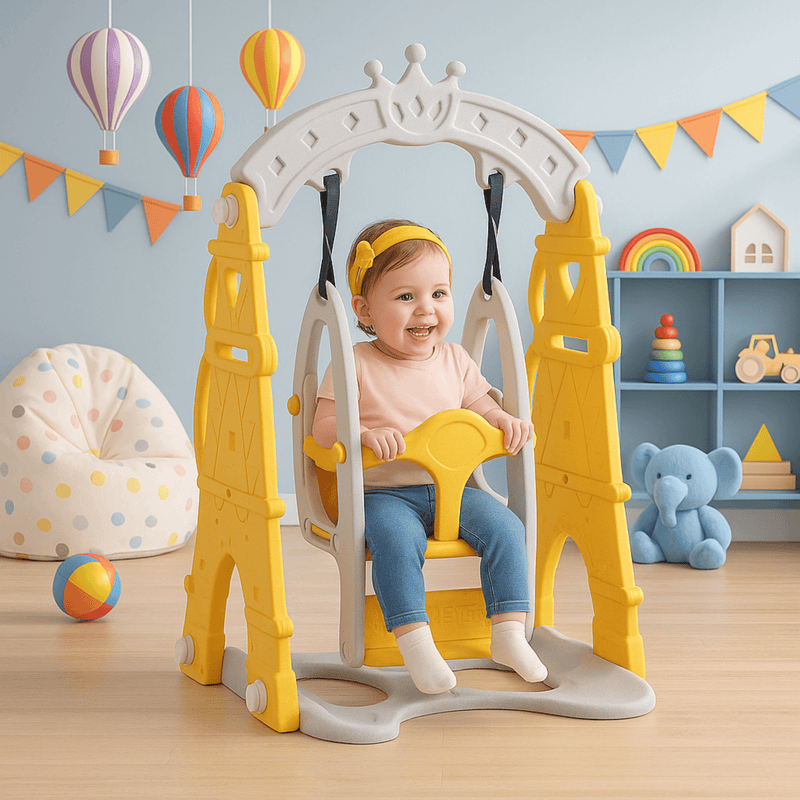
When children have access to equipment like slides, ride-ons, swings, or activity centers, they naturally become curious and eager to play. Unlike screens, which keep children seated, play equipment encourages:
- Climbing
- Sliding
- Balancing
- Pushing and pulling
- Pretend play
These activities not only keep children entertained but also make them physically active, reducing their desire to sit with gadgets.
Makes Play More Attractive Than Screens
Children are drawn to colorful, interactive environments. Well-designed indoor play equipment creates a vibrant and stimulating space that competes with digital entertainment.
Bright colors, fun shapes, and interactive features make play equipment visually appealing. For younger children especially, physical play quickly becomes more exciting than watching videos or playing mobile games.
When the environment itself encourages exploration, children naturally spend less time on screens.
Builds Healthy Play Habits Early
Introducing indoor play equipment at an early age helps children develop positive play habits. When children grow up enjoying active play, they are less likely to depend heavily on screens for entertainment.
Early exposure to physical play encourages:
- Curiosity and independence
- Creative thinking
- Self-directed learning
- Confidence in movement
These habits carry into later childhood, helping reduce long-term screen dependency.
Promotes Social Interaction
Screens often isolate children, limiting real-world social experiences. Indoor play equipment, on the other hand, encourages group play and interaction.
Children playing together learn to:
- Share toys
- Take turns
- Communicate effectively
- Resolve small conflicts
- Build friendships
Social engagement makes play more rewarding than solitary screen time. As children enjoy interacting with peers, their interest in digital devices naturally decreases.
Supports Emotional Well-Being
Excessive screen time can lead to irritability, restlessness, and reduced emotional regulation. Active play helps children release energy, reduce stress, and improve mood.
Indoor play equipment provides a safe outlet for:
- Physical expression
- Emotional release
- Imaginative storytelling
- Confidence building
When children feel happier and more engaged during playtime, they become less dependent on screens for stimulation.
Encourages Creative and Imaginative Play
Unlike digital games that often follow fixed patterns, indoor play equipment allows open-ended play. Children can create their own stories, roles, and adventures.
A slide can become a mountain.
A ride-on can turn into a racing car.
A playhouse can become a magical castle.
This type of imaginative play stimulates creativity, making it far more enriching than passive screen consumption.
Helps Establish Healthy Routines
Indoor play equipment can be integrated into daily routines, creating structured playtime that reduces idle screen usage.
Parents and educators can encourage:
- Daily active play sessions
- Zero-Device play zones
- Group play hours
- Reward-based play routines
When children have consistent play schedules, they become less inclined to ask for screens during idle time.
Provides Safe Play in Limited Spaces
Urban living often limits access to outdoor playgrounds. Indoor play equipment ensures children can remain active even in apartments, classrooms, or daycare centers.
Having a safe indoor play environment means children always have an alternative to screen-based entertainment, regardless of weather or space constraints.
Encourages Family Interaction
Indoor play equipment also promotes bonding between parents and children. Families can participate in play activities together, strengthening relationships and creating joyful memories.
When parents engage in active play with children, screen time naturally decreases, and children feel more emotionally connected.
Final Thoughts
Reducing screen time in children is not about strict restrictions—it’s about providing better alternatives. Indoor play equipment offers exactly that by making active, creative, and social play more appealing than digital entertainment.
By encouraging movement, imagination, and interaction, indoor play setups help children develop healthier habits, stronger bodies, and happier minds.
In a world filled with screens, creating engaging play environments is one of the most effective ways to bring childhood back to what it should be—active, joyful, and full of real-world experiences.
