

Introduction
The agritourism market is emerging as a dynamic segment within the global tourism and agriculture industries. Agritourism combines traditional farming activities with tourism experiences, offering visitors opportunities to engage with rural lifestyles, agricultural practices, and local food production. As travelers increasingly seek authentic, sustainable, and experience-driven journeys, agritourism has gained strong global attention.
Rising interest in nature-based travel, cultural immersion, and wellness tourism is driving demand for agritourism experiences. Farms, ranches, vineyards, and rural communities are leveraging this trend to diversify income streams while promoting local heritage and sustainable practices.
Market Overview
Agritourism refers to tourism activities that take place on working farms or agricultural settings. These activities may include farm stays, crop harvesting experiences, educational tours, local food tasting, rural festivals, and outdoor recreational activities.
The agritourism market includes both small family-owned farms and large agricultural estates that offer structured tourism services. It supports rural development by generating employment, encouraging infrastructure development, and preserving traditional farming practices.
The market has expanded steadily due to increased domestic tourism, especially in regions where travelers prefer short trips and countryside destinations. Technological advancements in digital booking platforms have also made agritourism experiences more accessible to a broader audience.
Key Market Drivers
One of the primary drivers of the agritourism market is the growing demand for authentic travel experiences. Travelers are increasingly interested in cultural connection, hands-on activities, and meaningful engagement with local communities.
Rising awareness of sustainable tourism also supports market growth. Agritourism promotes environmentally responsible travel by encouraging local sourcing, reduced carbon footprints, and conservation of natural resources.
Urbanization and busy lifestyles have increased the appeal of rural escapes. Agritourism offers relaxation, open spaces, and wellness benefits, attracting families, couples, and solo travelers.
Government support for rural tourism and agricultural diversification further accelerates market development. Financial incentives and promotional initiatives encourage farmers to adopt tourism-based business models.
Market Segmentation
The agritourism market can be segmented by activity type, provider type, tourist type, and region.
By activity type, the market includes farm stays, educational tourism, recreational activities, entertainment events, and on-site retail. Farm stays represent a significant share due to rising demand for immersive rural experiences.
By provider type, agritourism services are offered by individual farms, cooperatives, and commercial agricultural enterprises. Small and medium-sized farms dominate due to their flexibility and personalized offerings.
By tourist type, the market includes domestic and international visitors. Domestic tourism holds a larger share, supported by short-distance travel and weekend tourism trends.
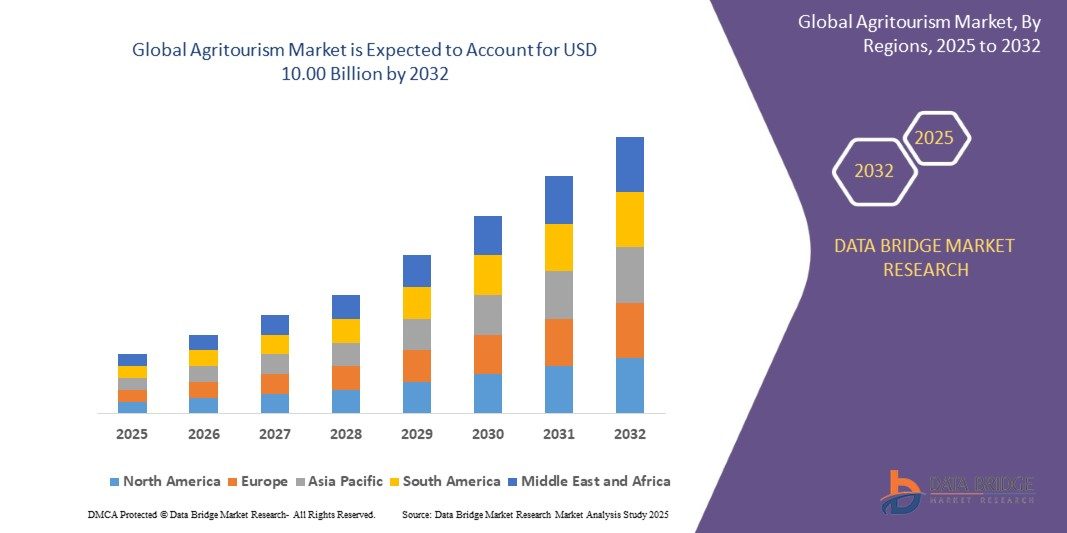
By region, the market spans North America, Europe, Asia Pacific, Latin America, and the Middle East and Africa.
Popular Agritourism Activities
Farm stays are among the most popular agritourism offerings. Visitors stay on working farms and participate in daily agricultural activities such as feeding animals or harvesting crops.
Educational agritourism attracts schools and families interested in learning about farming methods, food production, and environmental stewardship. These experiences help raise awareness about agriculture.
Food-based experiences such as vineyard tours, fruit picking, dairy visits, and farm-to-table dining continue to gain popularity. These activities appeal to travelers interested in local cuisine and fresh produce.
Recreational activities including horseback riding, hiking, cycling, and seasonal festivals add entertainment value and attract diverse visitor groups.
Regional Market Insights
North America represents a major share of the agritourism market due to well-established farms, strong rural tourism infrastructure, and high consumer awareness. Farm stays and educational tours are particularly popular.
Europe shows steady growth driven by cultural heritage tourism and strong government support for rural development. Wine tourism and countryside accommodations contribute significantly to regional demand.
Asia Pacific is witnessing rapid growth in agritourism due to rising middle-class populations, increased domestic travel, and growing interest in rural lifestyles. Countries with strong agricultural traditions are investing heavily in agritourism.
Latin America and the Middle East and Africa present emerging opportunities. Expanding tourism infrastructure and increasing focus on sustainable travel are supporting market entry and growth.
Technology and Digital Influence
Digital platforms play a growing role in the agritourism market. Online booking systems, social media promotion, and virtual tours help farms reach wider audiences.
Mobile applications enable travelers to discover nearby agritourism destinations and customize experiences. User-generated reviews influence travel decisions and improve service quality.
Technology also supports operational efficiency through digital payments, customer management systems, and marketing analytics.
Competitive Landscape
The agritourism market is fragmented, with numerous small-scale providers and a limited number of organized operators. Competition focuses on experience quality, authenticity, pricing, and customer service.
Differentiation is achieved through unique activities, local storytelling, and personalized experiences. Strong community involvement enhances visitor satisfaction and repeat visits.
Partnerships between farms, tour operators, and local governments help expand visibility and improve infrastructure.
Challenges in the Agritourism Market
Despite positive growth, the agritourism market faces several challenges. Seasonal demand fluctuations can affect revenue stability for providers.
Limited infrastructure in rural areas may restrict accessibility and visitor capacity. Investments in transportation, accommodation, and digital connectivity are often required.
Operational challenges include balancing farming activities with tourism management. Skill gaps in hospitality and marketing can also limit growth.
Environmental sustainability must be carefully managed to prevent over-tourism and protect agricultural land.
Future Outlook
The future of the agritourism market remains highly promising. Demand for sustainable, experience-driven travel is expected to grow steadily.
Wellness tourism, eco-tourism, and educational travel will continue to support agritourism expansion. Digital marketing and customized travel experiences will enhance market reach.
Emerging economies are likely to play a key role in future growth as domestic tourism increases and rural development initiatives expand.
With increasing consumer focus on authenticity, sustainability, and community engagement, agritourism is positioned as a long-term growth sector within global tourism.
Source: https://www.databridgemarketresearch.com/reports/global-agritourism-market
Conclusion
The agritourism market is transforming the way travelers experience agriculture, culture, and rural life. Strong demand for authentic travel, sustainable tourism practices, and immersive experiences is driving steady market growth.
Although challenges related to infrastructure and seasonality exist, ongoing innovation, government support, and digital adoption are strengthening market prospects. As travel preferences evolve, agritourism will remain a vital contributor to rural economies and global tourism development.
