

Introduction
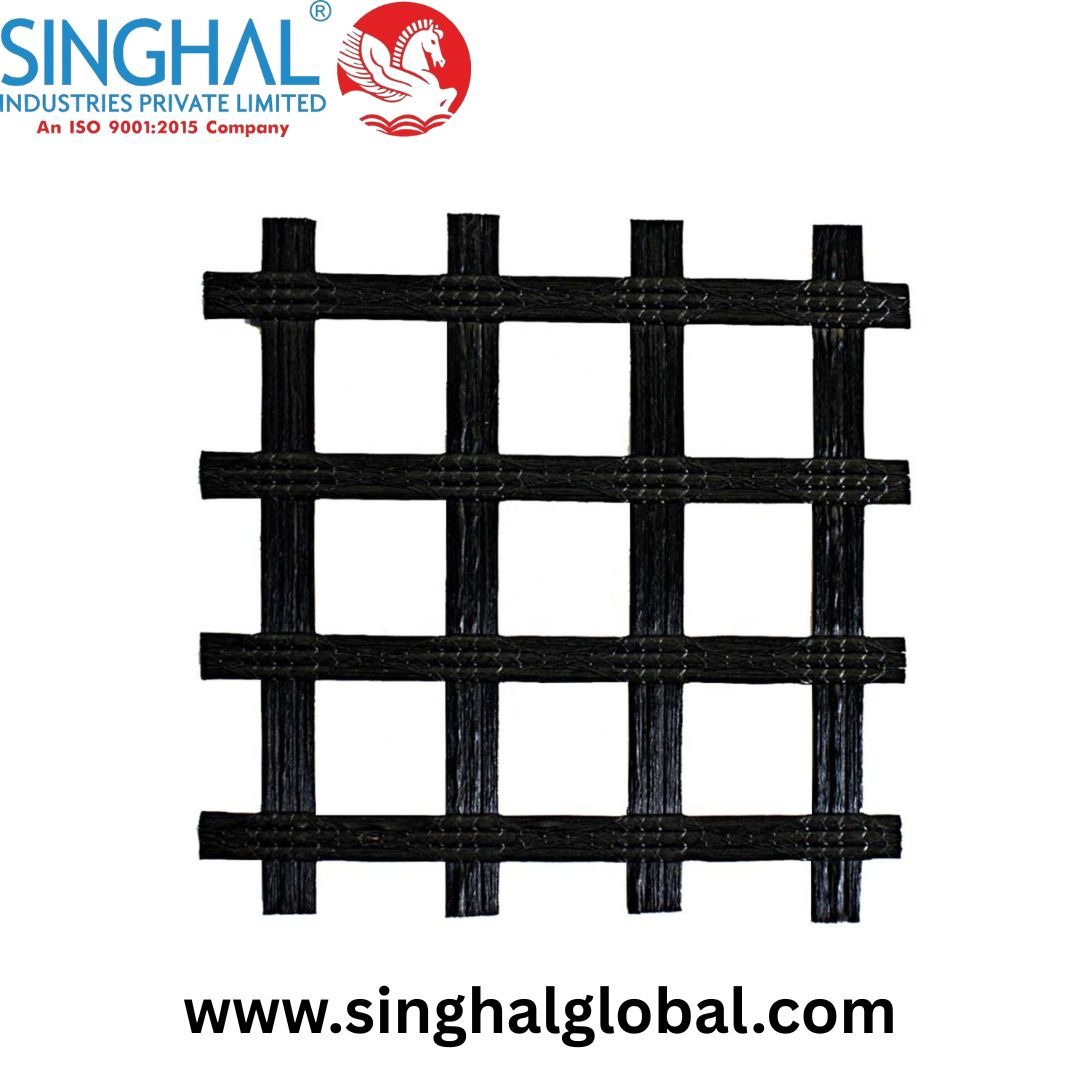
Uniaxial Geogrid: A well-known category of geogrids, the uniaxial geogrids are types of designed for use in soil reinforcement and stabilization for many engineering projects. While biaxial geogrids provide two-direction tensile strength, uniaxial geogrids are used to gain high tensile strength in one direction only. This characteristic makes them well-suited for use in applications that require soil to resist uniaxial loads during construction, such as retaining walls, embankments and slope stabilization systems. With the fast-paced development of infrastructure in India, there is an increasing demand for cost-effective and reliable uniaxial geogrid solutions, thus highlighting the importance of a trusted Uniaxial Geogrid Manufacturer in India for delivering excellent quality products to domestic as well as global projects.
Key Features of Uniaxial Geogrid
Uniaxial geogrids (HDPE or PP) are manufactured to ensure uniform tensile strength. They have good creep, ultraviolet and chemical resistance allowing them to be used in long-term soil stabilization applications. These grids orient their molecules in a certain way, generating one that can withstand heavy loads without stretching too much. Geotraining Consultant, IIT Madras Most of the geogrids are manufactured all over the world and few Indian manufacturers are also concentrating on the cost-effective good quality production of Geolink Uniaxial Geogrid Manufacturer India uses the best extrusion and stretching technology for manufacturing products as per the requirement of geogrids.
Applications in Civil Engineering
Some major use cases include road constructions, retaining walls, slope stabilization and embankment stabilization. In the case of highways, these geogrids not only prevent rutting but form an equally strong base layer, preventing it from forming as well and reducing maintenance costs. In retaining walls, uniaxial geogrids assist to enhance soil that is within the wall against failure thereby making it possible to construct taller walls. They are also used for the railway track to increase track stability and service life. However in Canada where we still boast this as a heavy geogrid and the rest of the world with FGDs, so what uniaxial geogrids offers to Indian engineers & contractors’ for safety, performance equability and project longevity is sort of flexibility.
Manufacturing Process and Quality Control
Polymer sheets are first reconstructed and then longitudinally expanded to align the molecular chains for enhanced tensile strength in the direction of stretching. Physical tests like tensile testing, thickness measurement and chemical resistance ensure that the products are performing as designed. Indian manufacturers have customized these processes to ensure compliance with ISO and ASTM, leading to products being supplied at par with the world’s best. So, companies like Singhal Industries Private Limited are a live example of the Indian innovation in producing superior quality uniaxial geogrids for all types of infrastructure projects.
Advantages of Using Uniaxial Geogrids
Advantages of using uniaxial geogrids in construction projects are many. Advantages of these are better soil stability, reduced construction cost and increased service life. Various experiments, theories, applications, pavements both flexible and rigid as well as the design of retaining walls and embankments demonstrate that uniaxial geogrids improve the quality of design by reducing soil movement and settlement. They are much lighter, easier to handle and can be cut or molded in any specific shape according to the engineering requirements of the project so they have faster installation as well as efficiency. Contractors also get these technical standards in easy availability at cheaper rates from people of Indian suppliers like Uniaxial Geogrid Supplier India after knowing all these benefits.
Market Trends and Industry Growth
The India Uniaxial Geogrid Market has witnessed significant growth due to government-led developments in infrastructure and private construction projects. The growing demand for highways, railways, and urban development projects is propelling the rapid adoption of geogrid technology. Indian manufacturers are increasing production capacities and investing heavily in research and development to meet domestic and international demands. Export of high-quality uniaxial geogrids have become the core focus activity for stakeholders and such suppliers are giving value-oriented solutions for global marketplaces like Singhal Industries Private Limited. High prices of products in a region like North America or Europe, allows India to rise as the next major market in geosynthetic raw materials, given that they meet international quality standards.
Installation Guidelines and Best Practices
For optimum performance, geogrids of this type should be installed properly. The geogrid is deployed in the design orientation for installation, with anchors dispersed along site preparation and uplift at edges. Do not rush compaction — too much on the grid can cause severe damage. This ensures that the tensile strength and soil reinforcement performance is optimised by strictly adhering to manufacturer’s specification. Indian suppliers provide engineers, contractors with detailed installation manuals and technical support which enables them to achieve superior results. Regular inspection and monitoring in situ is recommended during the first phase of construction to ascertain proper functioning of uniaxial geogrid, minimizing potential structural risks.
Conclusion
Uniaxial geogrids are an essential component of the modern civil engineer, providing superior soil reinforcement and structural stability Providing structural solutions with higher tensile strength, durability, and versatility, these grids are essential for roadways railways, retaining walls & embankments construction among a multitude of other infrastructural endeavors Manufacturers and suppliers like Uniaxial Geogrid Supplier India and Singhal Industries Private Limited have played a vital role in developing geogrids that are both affordable and up to global standards. Specialty products like uniaxial geogrids will play a growing role in the success and durability of projects as infrastructure development continues to accelerate.
Frequently Asked Questions (FAQ)
Who is the largest exporter of Uniaxial Geogrid?
Manufactured in India, high quality uniaxial geogrids are one of the top exports of Singhal Industries Private Limited and supply for domestics as well as international infrastructure projects.
What is the main purpose of uniaxial geogrid?
It is primarily used as soil reinforcement in the construction of retaining walls, embankments, and in road the construction where high tensile strength in one direction are important.
Which one uniaxial geogrid is right for my project?
The selection will depend on the required loads, soil type, slope gradient and manufacturers’ recommended choices. Also, suppliers such as Singhal Industries Private Limited provide technical assistance for perfect selections.
Is there a possibility of using uniaxial geogrids in railway construction?
Well yes, uniaxial geogrids provide stability to track beds, lower settlement and extended track life in freight and passenger railway projects.
How long does uniaxial geogrid work?
When installed correctly, geogrids have been shown to remain intact and retain their effectiveness for over 50 years without chemical degradation, UV damage or heavy mechanical loads.
