

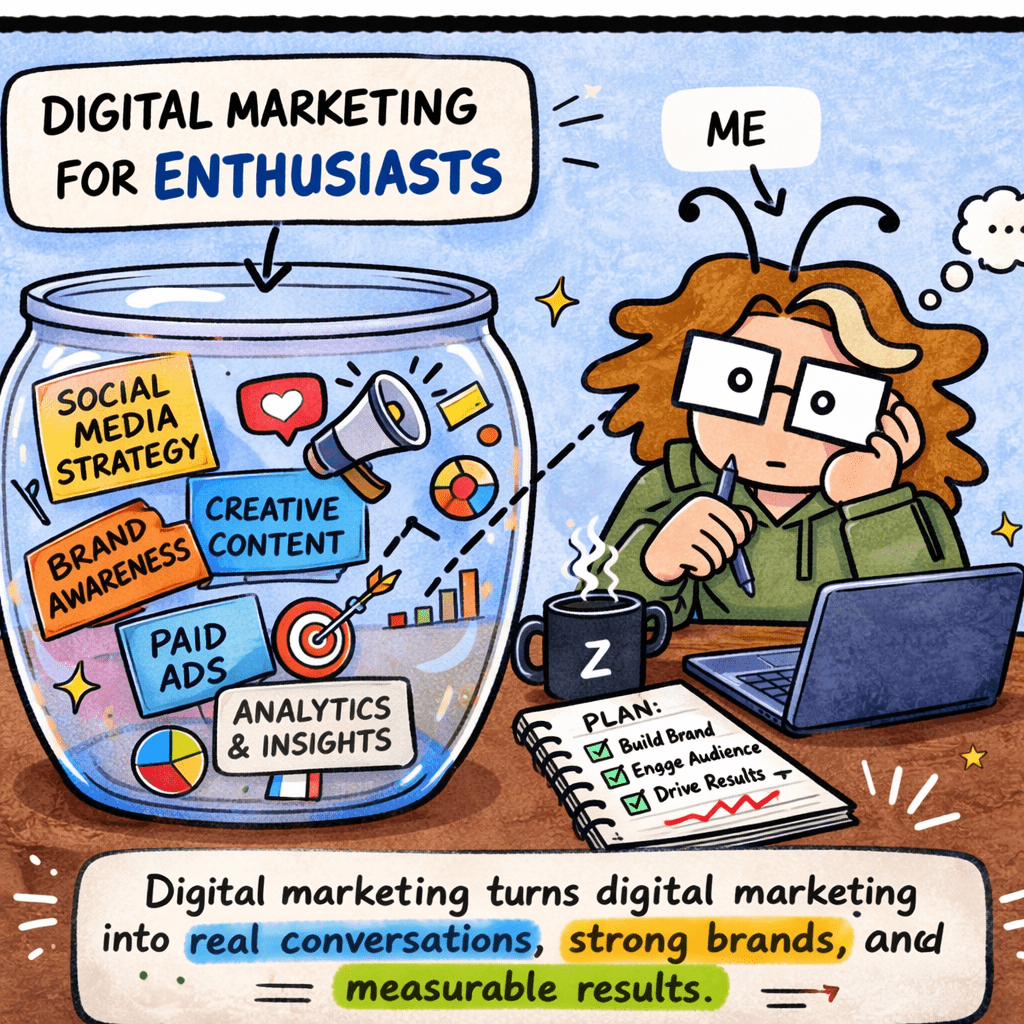
Introduction: The Evolution of Digital Marketing
Digital marketing has changed significantly over the past decade. What once relied heavily on keywords and backlinks has now become a complex system driven by user experience, intent-based search, and content relevance.
In 2026, success is no longer defined by just ranking on search engines. Instead, it is measured by how effectively a brand connects with its audience, builds trust, and converts attention into action.
1. From Ideas to Strategy
Every successful digital campaign begins with an idea. However, ideas alone are not enough. They must be shaped into a structured strategy that aligns with business goals.
A strong digital strategy includes:
- Audience research and segmentation
- Competitor analysis
- Content planning based on search intent
- Clear performance goals (traffic, leads, conversions)
Without strategy, even the best content fails to deliver results.
2. The Role of SEO in 2026
SEO has shifted from keyword stuffing to intent optimization.
Modern SEO focuses on:
- Understanding what users actually want
- Creating topic clusters instead of single keywords
- Improving page experience and loading speed
- Building authority through high-quality backlinks
Search engines now prioritize helpful, structured, and experience-driven content over repetitive optimization tactics.
3. Content Marketing That Builds Trust
Content is still the backbone of digital marketing, but the approach has changed.
Instead of producing large volumes of content, brands now focus on:
- Value-driven articles that solve real problems
- Storytelling that connects emotionally with users
- Evergreen content that stays relevant over time
- Multi-format content (blogs, reels, videos, infographics)
The goal is not just traffic, but trust and retention.
4. Social Media as a Growth Engine
Social media platforms are no longer just engagement tools. They are now powerful discovery engines.
Successful brands use:
- Short-form videos for reach
- Interactive content for engagement
- Community building for loyalty
- Data insights to refine campaigns
Consistency and authenticity matter more than viral content alone.
5. Data and Analytics: The Decision Maker
Modern digital marketing is incomplete without analytics.
Key metrics include:
- User behavior on websites
- Conversion rates
- Engagement levels
- Traffic sources
Data helps marketers understand what works and what needs improvement, making campaigns more efficient over time.
6. The Future of Digital Marketing
Looking ahead, digital marketing will continue to evolve with:
- AI-driven content personalization
- Voice and visual search optimization
- Hyper-personalized user experiences
- Stronger focus on brand trust and authority
Businesses that adapt early will have a competitive advantage in their industries.
Conclusion
Digital marketing in 2026 is about transformation — turning ideas into impact through structured strategy, valuable content, and continuous optimization. Brands that focus on user intent, data-driven decisions, and authentic engagement will stand out in an increasingly competitive digital space.
