

Choosing a mattress sounds like a simple task—until you’re standing between two very different options: a foldable travel mattress and a regular mattress. One promises flexibility and convenience, the other promises long-term comfort and stability. So which one is right for you?
If you’ve ever wondered whether a foldable mattress can actually replace a regular one—or if a regular mattress is always the better choice—you’re not alone. Let’s break it down in a clear, conversational, and human way, without technical overload or salesy talk.
This guide will help you understand the real differences so you can choose what actually fits your lifestyle.
First, What Is a Foldable Travel Mattress?
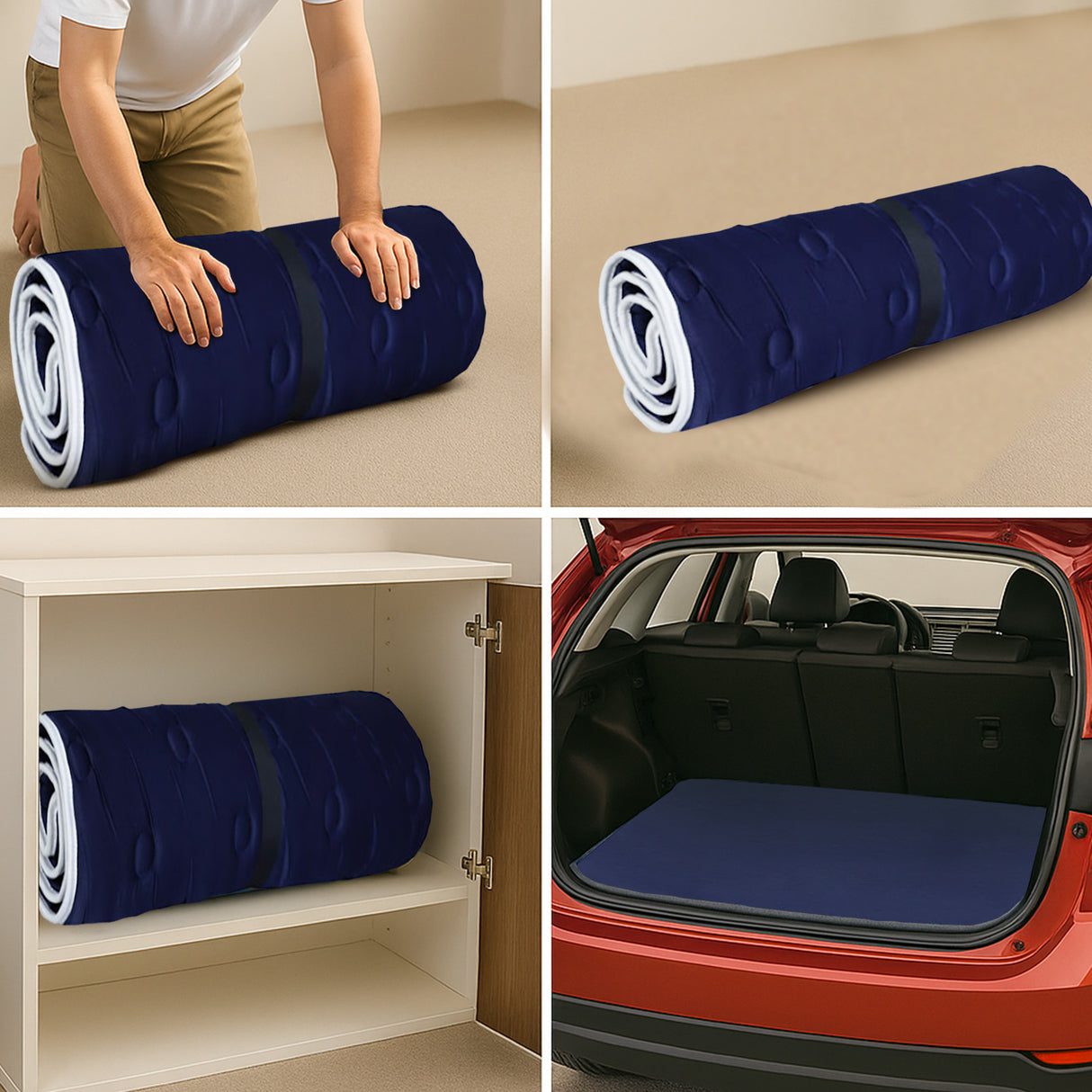
A foldable travel mattress is a portable mattress designed to be folded—usually into two or three sections. When unfolded, it offers a flat sleeping surface. When folded, it becomes compact enough to store in a cupboard, under a bed, or even carry along while traveling.
It’s commonly made from foam or memory foam and is designed for:
-
Temporary or occasional sleeping
-
Guests
-
Travel
-
Floor sleeping
-
Small homes and flexible spaces
Think of it as a “sleep-anywhere” solution.
What Is a Regular Mattress?
A regular mattress is what most of us grew up sleeping on. It’s a full-sized, non-folding mattress placed permanently on a bed frame.
Regular mattresses are designed for:
-
Daily, long-term use
-
Proper spinal alignment
-
Consistent comfort over years
They come in different materials like foam, memory foam, latex, spring, or hybrid constructions and are usually thicker and heavier than foldable options.
The Core Difference: Purpose of Use
This is where the biggest difference lies.
A foldable travel mattress is built for flexibility. A regular mattress is built for permanence.
-
Foldable travel mattress: Occasional, temporary, or multi-purpose use
-
Regular mattress: Everyday sleeping for years
Neither is “better” in general—they’re just made for very different needs.
Portability: One Clear Winner
Let’s be honest—this round goes straight to the foldable option.
Foldable Travel Mattress
-
Lightweight
-
Easy to move
-
Can be folded and carried
-
Ideal for travel, guests, or shifting homes
Regular Mattress
-
Heavy and bulky
-
Needs proper transport
-
Difficult to move frequently
If you travel often, live in a rented space, or rearrange your home regularly, a foldable travel mattress offers unmatched convenience.
Storage & Space-Saving
In Indian homes, space matters. A lot.
Foldable Travel Mattress
-
Can be folded and stored vertically
-
Fits under beds or inside cupboards
-
Doesn’t occupy permanent floor space
Regular Mattress
-
Always occupies the bed
-
Requires a dedicated room or space
For studio apartments, PGs, or small flats, the foldable travel mattress feels like a practical blessing.
Comfort Level: Short-Term vs Long-Term
Here’s where expectations matter.
Foldable Travel Mattress Comfort
A good-quality foldable travel mattress can be surprisingly comfortable—for:
-
Guests
-
Short-term sleeping
-
Floor use
However, it’s not designed to replace a full mattress for daily use over many years.
Regular Mattress Comfort
A regular mattress:
-
Offers better pressure relief
-
Supports spinal alignment
-
Is designed for 7–10 years of use
If comfort is your top priority and the mattress will be used every single night, a regular mattress clearly wins.
Thickness & Support
Thickness directly affects support.
-
Foldable travel mattress: Usually 3–6 inches thick
-
Regular mattress: Typically 6–12 inches thick
Because a foldable travel mattress is thinner, it provides firm, basic support—great for temporary use but not ideal for everyone long term, especially people with chronic back pain.
Regular mattresses, with multiple layers, distribute weight more evenly and adapt better to different sleeping positions.
Sleeping Position Compatibility
Foldable Travel Mattress
Best suited for:
-
Back sleepers
-
Stomach sleepers
-
Lightweight users
Side sleepers may find thinner foldable mattresses slightly firm unless thickness is higher.
Regular Mattress
Works well for:
-
All sleeping positions
-
People with joint or back issues
-
Couples with different comfort needs
Motion Transfer & Partner Comfort
Sharing a bed? This matters.
-
Foldable travel mattress: Basic motion absorption, but limited
-
Regular mattress: Better motion isolation, especially in foam or latex models
Couples generally sleep better on a regular mattress.
Durability & Lifespan
This is another major difference.
Foldable Travel Mattress
-
Designed for occasional use
-
May compress faster with daily usage
-
Ideal as a secondary mattress
Regular Mattress
-
Built for long-term durability
-
Retains shape and support longer
-
Comes with longer warranties
Using a foldable travel mattress daily for years may reduce its lifespan faster than intended.
Maintenance & Cleaning
Both have their own advantages here.
Foldable Travel Mattress
-
Easy to air out
-
Simple to clean
-
Often comes with removable covers
-
Easier to move for sun-drying
Regular Mattress
-
Heavier to clean or move
-
Often needs professional cleaning
-
Less flexible to maintain
For hygiene and ease, foldable mattresses are surprisingly practical.
Cost Comparison
Budget is always part of the decision.
-
Foldable travel mattress: More affordable
-
Regular mattress: Higher investment
If you’re:
-
Setting up a temporary space
-
Buying a guest mattress
-
Looking for a budget-friendly solution
A foldable travel mattress makes financial sense.
But if this is your main bed, spending more on a regular mattress is usually worth it.
Ideal Use Cases: Who Should Choose What?
Choose a Foldable Travel Mattress If:
-
You host guests often
-
You live in a small home or PG
-
You travel frequently
-
You want a portable sleep option
-
You need a secondary mattress
Choose a Regular Mattress If:
-
This is your primary bed
-
You sleep on it every night
-
You have back or joint pain
-
You want long-term comfort
-
You share the bed with a partner
Can a Foldable Travel Mattress Replace a Regular Mattress?
Short answer: Sometimes, but not always.
A high-quality foldable travel mattress can work as:
-
A temporary primary mattress
-
A solution for short stays
-
A daily mattress for minimal users
But for long-term daily sleeping, especially for adults, a regular mattress still offers better support, durability, and comfort.
Final Thoughts: It’s About Lifestyle, Not Labels
There’s no universal “winner” between a foldable travel mattress and a regular mattress. The right choice depends entirely on how you live.
If flexibility, portability, and space-saving matter most, a foldable travel mattress fits perfectly into modern, fast-changing lifestyles.
If comfort, long-term support, and deep sleep matter most, a regular mattress remains unbeatable.
The smartest choice isn’t the more expensive one—it’s the one that matches your real needs.
Sleep well, wherever you are.
