

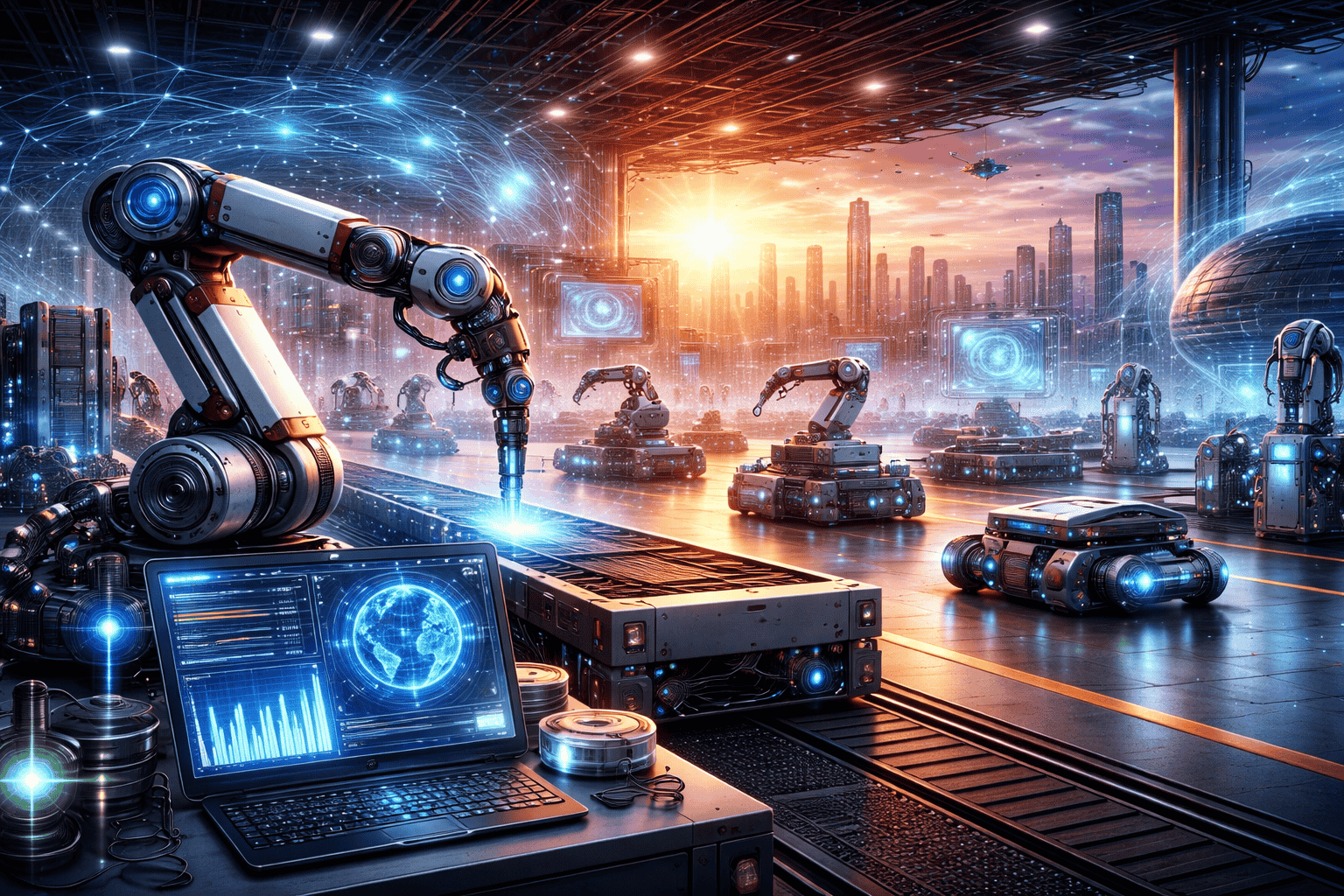
Technology is evolving rapidly, creating new opportunities for businesses and industries worldwide. One of the most important developments in recent years is the rise of deep-tech innovation. Deep-tech focuses on advanced scientific and engineering technologies that solve complex real-world problems. These technologies include artificial intelligence, robotics, automation, smart sensors, and precision engineering systems.
Unlike traditional digital tools, deep-tech solutions are designed for long-term impact. They help industries improve efficiency, reduce costs, and enhance productivity. As global competition increases, companies are investing more in advanced technologies that provide sustainable advantages.
Artificial intelligence is one of the most powerful components of deep-tech innovation. AI systems can analyze large amounts of data, identify patterns, and make predictions faster than humans. Businesses use AI to automate repetitive tasks, improve decision-making, and increase operational accuracy.
For example, predictive maintenance technology uses artificial intelligence to monitor machines and detect potential failures before they occur. This helps companies avoid unexpected downtime and reduce repair costs. AI-powered computer vision systems are also used in manufacturing industries to inspect product quality and identify defects quickly.
Robotics is another important area of deep-tech development. Modern robots are capable of performing complex tasks with high precision. Industrial robots are widely used in manufacturing plants, warehouses, and logistics centers. These machines improve production speed and reduce the need for manual labor.
Robotics systems are especially useful in dangerous environments such as chemical factories, mining sites, and heavy engineering facilities. By automating risky tasks, companies can improve worker safety and reduce accidents.
Smart sensors and Internet of Things (IoT) technology are also transforming industries. Sensors collect real-time data from machines and environments. This data helps companies monitor performance and detect problems early.
For example, temperature and pressure sensors are used in industrial equipment to ensure safe operation. If abnormal conditions are detected, systems can automatically send alerts or adjust machine performance.
Precision engineering plays a major role in developing advanced industrial solutions. High-precision machines help manufacturers produce high-quality products with consistent performance. Smart manufacturing technologies use connected machines that communicate with each other to optimize production processes.
Deep-tech innovation requires significant research and investment. Developing advanced technologies often takes time, but the long-term benefits are substantial. Companies that invest in deep-tech solutions can achieve strong competitive advantages.
These technologies also contribute to economic growth by creating new industries and job opportunities. Demand for skilled professionals such as engineers, data scientists, and automation specialists continues to increase.
The future of industry will depend heavily on advanced technologies capable of solving complex challenges. Artificial intelligence, robotics, and smart automation systems will continue to improve efficiency and productivity across sectors.
Deep-tech innovation is not just a trend but a foundation for long-term technological progress. Businesses that adopt advanced technologies today will be better prepared for future challenges and opportunities.
