

Administrative Burden within healthcare: Why is it important?
Administrative work conducted in the Healthcare setting include the following:
-
Patient Registration, Eligibility Verification
-
Clinical Documentation and Coding
-
Claims Submission and Follow-up
-
Prior Authorisation
-
Claim Denial and Appeal Process
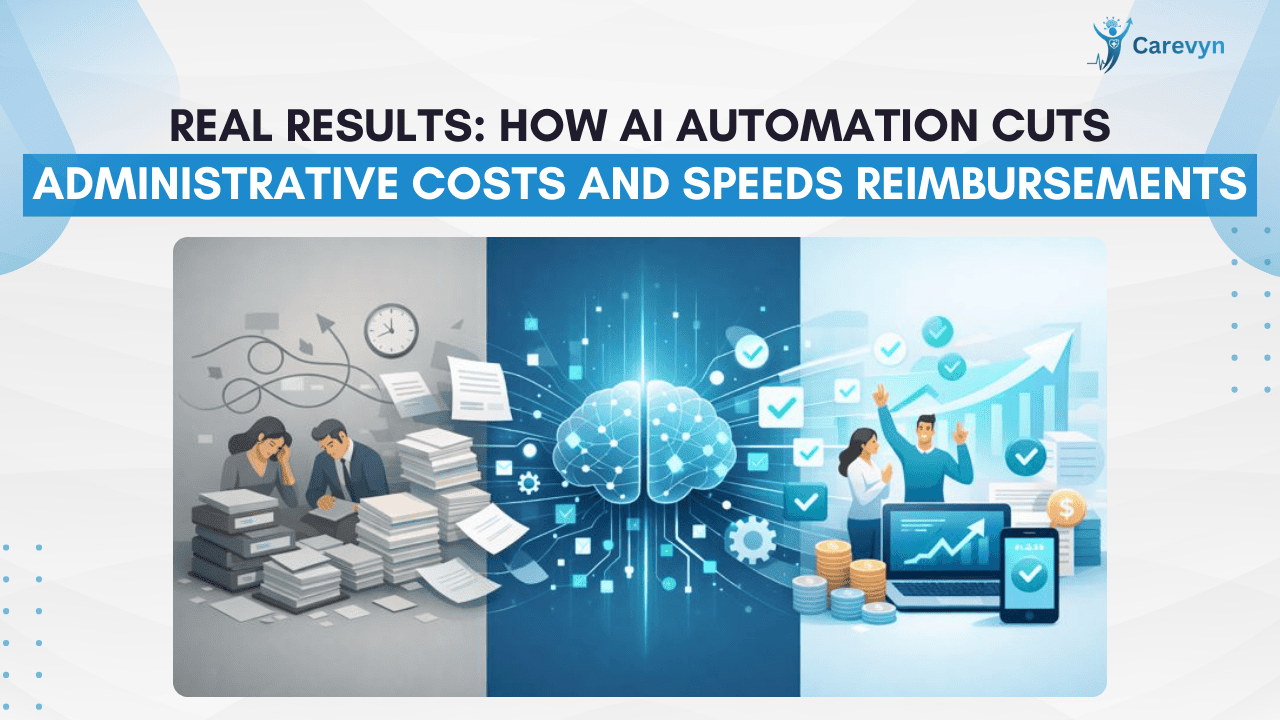
Traditionally, Administrative work within Healthcare is conducted by people performing the same repetitive tasks over and over again. Many hours are spent on processing Administrative Tasks as opposed to supporting patients directly.
As a result:
-
Staff spend hours processing Administrative work rather than assisting patients.
-
Manual Coding errors delay the reimbursement process.
-
Claims often will be denied or delayed as a result of coding mistakes.
The inefficiencies associated with the Administrative Workflow are costing the Healthcare Industry billions of Dollars annually.
Administrative inefficiencies within the health care industry represent billions of dollars of added cost each year. Based upon the analysis of multiple industries, automation can reduce revenue cycle expenses by 25-40%, and administrative costs by 15-20%, due to the elimination of repetitive tasks and fewer errors made. Health care providers face increasing demands to manage their operating costs while continuing to deliver quality care. Therefore, AI and other related technologies are becoming necessary tools for helping to ensure sustainability and drive future success.
Boosting Reimbursements with Smart Automation
With the use of smart automation, healthcare organizations can improve reimbursement speed and accuracy, leading to faster reimbursements for the provider. Through the use of automated claims processing, providers can:
– Submit claims more quickly
– Eliminate errors prior to creating issues
– Submit claims to payers in a clean and compliant manner
a. Faster Claims Processing
Utilizing AI tools to automate repetitive processes enables faster preparation, validation, and submission of claims while also decreasing the time spent billing and increasing the rate at which healthcare organizations receive payment for services rendered. According to industry studies, an automated revenue cycle system can reduce claims processing by 30–60% when compared to manual processes.
b. Automated Follow-Ups
Following the submission of a claim, providers must often follow up with payers to ensure that payment is received in a timely manner. As providers utilize AI systems, automated tracking of claims, sending of reminders, and answering of routine inquiries will lessen the amount of manual follow up that is necessary and improve the rate at which payment is received.
c. Real-Time Financial Insights
Advanced AI platforms will provide real-time dashboards and analytics of an organization’s revenue cycle, allowing for identification of bottlenecks and providing the organization the ability to take timely corrective action to enhance cash flow. This will provide financial leaders the tools to identify the best means to expedite the speed of reimbursement.
AI Solutions for Claims Management
Claims management is an essential aspect of the revenue cycle; and, without proper claims management, providers face the possibility of continuously experiencing:
-
Increased Denials
-
Slow Payment Processes
-
Higher Than Average Operational Expenses
Using AI for Claims Management can provide a way for providers to improve their ability to process claims. AI will assist providers in:
-
Checking all your claims to ensure they meet all criteria before submitting them.
-
Identifying claims that are at the highest risk of being denied based on past performance metrics.
-
Flagging inconsistencies and missing items associated with claims.
-
Prioritizing claims processing workflows so you can concentrate on the most important claims first.
The combination of these four advantages allows an agency to manage their claim workload with less staff time and with increased accuracy. In the long run, this can lead to increased revenues and decreased administrative workloads.
AI Revenue Cycle Management: End-to-End Workflow
AI revenue cycle management (RCM) is the use of AI technology applied to all aspects of the revenue cycle, from initial patient registration to final payment posting.
A sample end-to-end AI RCM architecture could look like this:
-
Provided Eligibility Verification (Check-in)
-
Automated Clinical Documentation
-
Automated Coding and Charge Capture
-
Claims Scrubbing (Claim Review and Correction)
-
Denial Prediction and Prevention
-
Automated Appeals Generation
-
Payment Reconciliation and Reporting
By employing AI for all aspects of the revenue cycle, agencies will achieve:
-
Lower Administrative Costs
-
Increased Acceptance Rates on First-Pass Submissions of Claim
-
Quicker Reimbursement Cycles
-
More Precise Financial Forecasting
-
More Transparency in Revenue Cycle Operations
According to various studies, organizations that implement AI-RCM are more likely to realize greater efficiencies, improve patient care, and provide better customer service.
Real Results: Evidence from the Field
Healthcare providers that use AI Automation Platforms realize substantial benefits in the following areas:
a. Reduction in Denials
Providers who have implemented AI technologies have experienced an approximate 30% decrease in the number of denied claims as a result of higher precision in coding due to improved auto coding accuracy and automated pre-submission checks.
b. Faster Reimbursement
Automated systems have significantly reduced the length of time that claims remain in accounts receivable (A/R). Many organizations have claimed a reduction in reimbursement cycles of between 30%-60% when compared to manual processing.
c. Lower Administrative Costs
AI Automation reduces the amount of administrative overhead required to maintain these systems by reducing the volume of manual errors and manual tasks that healthcare organizations must perform; allowing organizations to redeploy their workforce to higher value activities (e.g. patient engagement, conducting financial analyses).
d. Improve Staff Satisfaction
AI tools remove repetitive and monotonous work from the employee’s responsibilities, enhancing employee satisfaction, reducing employee turnover, and increasing overall operational stability.
Case Study: Implementing AI-Powered Automation
Applications of AI Automation are demonstrated with services such as those provided by Carevyn:
-
By developing and implementing AI Scribing and Coding Tools, providers maintain a minimum of 98%+ accuracy rates for clinical documentation and coding, thus supporting the generation of clean claims.
-
The automated workflow for responding to requests for prior authorization (PA) has also decreased the time it takes for an organization to respond to such requests, thereby mitigating the delays that typically slow down reimbursement rates.
-
Every organization which utilized AI Automation reported 30% or more fewer denied claims than comparable organizations that do not utilize AI Automation.
Challenges of Implementation and Adoption
While many benefits have been realized from using AI to automate, careful consideration must be given to the implementation plan for both adopting AI and augmenting current workflows.
a. Integration into Existing Systems
To use AI tools effectively, they must integrate with EHRs and similar systems (e.g., Epic, Cerner, and/or Athena), which is necessary for AI tools to function optimally and for the user to be able to access the relevant data for both clinical and administrative purposes. For successful integrations, the AI tool developers and the vendor(s) of the systems being integrated (e.g., EHRs) must ensure that there is an uninterrupted data flow, thereby minimizing disruption during the integration process.
b. Change Management
Training and resources are necessary for healthcare staff to incorporate and use AI tools effectively in their roles. A clear, concise communication about how AI and automation can assist with current tasks rather than taking away from them will improve acceptance of these new tools and processes.
c. Security & Compliance
AI systems will handle sensitive health data and therefore should meet federal regulations (e.g., HIPAA) and implement sufficient security measures to mitigate the potential consequences of cyber crimes. Audit logs and compliance protections offered through a vendor’s software platform will ensure protection of your data and compliance with applicable laws.
The Future of Healthcare Administration
AI has become much more than just a “trend” in healthcare, AI is establishing itself as an integral function of healthcare administration. Continued evolution of technology will result in increased efficiency, decrease cost controls, and increased financial performance.
Today’s trends include:
-
A growing number of organizations are using AI for real-time analytics and reporting.
-
The growing trend of using predictive models to prevent denials.
-
More healthcare organizations are using automation to engage patients and to collect their payments.
-
Integration with value-based care.
These trends will continue to support the positive impact of intelligent automation in supporting the future of healthcare administration.For many years, administrative costs and slow payments to the healthcare provider have been one of the challenges faced by healthcare providers. Now, with today’s technology, AI automation in healthcare provides the best possible solution. Through reimbursement automation and AI revenue cycle management, healthcare organisations can significantly reduce administrative costs, remove errors, improve speed of payments, and enhance financial health overall.
The end result is a more efficient operation, improved employee satisfaction, and improved patient care. All of this is accomplished using data-driven automation that replaces repetitive manual processes. As healthcare continues to change and develop, AI will be a crucial component to achieving long-term success.
Frequently Asked Questions (FAQs) :
-
What is “AI Automation in Healthcare”?
AI Automation in Healthcare uses computer software that is intelligent enough to perform the repetitive administrative work of healthcare providers (i.e., documentation, coding, claims submissions and reimbursements) in less time and without human error(s). This reduced the amount of time spent performing repetitive tasks and allowed healthcare providers to concentrate on patient care rather than the repetitiveness of their administrative duties.
-
How Does AI Automation In Healthcare Reduce Administrative Costs?
By automating many of the routine administrative functions of healthcare providers (such as the entry of data and creating claims using medical coding), AI has significantly reduced the administrative cost of running a healthcare provider due to the reduction of the amount of human error in the administrative work being done. The reduced amount of human error has also significantly reduced the rework and manpower required by the large number of administrators normally employed by healthcare providers.
-
How Does Reimbursement Automation Improve The Speed Of Payment To Healthcare Providers?
By ensuring that claims are submitted accurately and that they are tracked in real time by the system, AI reimbursement automation allows healthcare providers to automatically follow up with payers on claim submissions, thus significantly reducing the number of claim denials and the time required to pay those claims to the healthcare provider.
-
How does AI assist in managing claims ?
By reviewing claims for missing or incorrect data, predicting claim denials, and identifying problems before submission, AI assists in automating many of the functions associated with claims processing. Improving first-pass approval rates and eliminating delays in receiving reimbursements is a direct result of this automated assistance.
-
Can I trust modern AI revenue cycle management technology to provide safe and compliant service?
Absolutely! In addition to being developed to meet the standards outlined by various healthcare compliance entities, modern AI revenue cycle management systems utilize sophisticated security systems, audit trail technologies, and compliance verification mechanisms in order to safeguard patient and financial information.
