

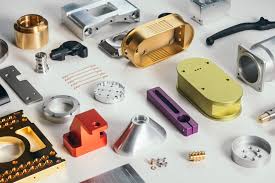
Custom CNC milling has become a core pillar of modern precision engineering, enabling manufacturers to create intricate components with extraordinary accuracy. Unlike traditional machining, CNC milling uses computer-controlled movements to shape materials with consistent results, even in highly complex designs. This technology allows for repeatability, uniformity, and adaptation to multiple material types, including metals, plastics, and composites. With industries becoming more demanding, precision and consistency are no longer optional—they are essential. That is why custom CNC milling stands out as the ideal solution for applications where tight tolerances and perfect geometry are critical.
As global competition increases, companies across automotive, aerospace, medical, and electronics sectors rely heavily on custom CNC milling to maintain efficiency and innovation. The ability to fabricate complex parts that traditional machining cannot produce gives manufacturers a competitive advantage. Whether producing prototypes, one-off components, or high-volume batches, CNC milling provides both flexibility and reliability. This makes it an indispensable manufacturing process for businesses striving to maintain superior quality standards while reducing production time and minimizing errors.
How Custom CNC Milling Enables the Production of High-Tolerance Components
High-tolerance components demand a level of accuracy that manual machining simply cannot match. Custom CNC milling machines are equipped with advanced software, high-speed spindles, and multi-axis capabilities to deliver tolerances within microns. This degree of precision is crucial in industries such as aerospace and medical, where the slightest deviation can compromise performance and safety. The integration of CAD/CAM software ensures that every step—from design to execution—is controlled, predictable, and optimized for accuracy. This automated process removes human error and guarantees consistent quality across every part produced.
In addition to precision, custom CNC milling offers superior surface finishes and geometric accuracy. Multi-axis milling allows machinists to reach difficult angles and machine components with complex internal and external features. This level of capability ensures that even the most intricate parts meet design specifications with near-perfect precision. Manufacturers can rely on CNC milling to achieve tight tolerances repeatedly, even in large-scale production runs. As a result, the technology is considered the gold standard for producing high-performance, mission-critical components.
The Role of Custom CNC Milling in Complex Component Design and Innovation
Engineering innovation relies heavily on the ability to turn bold design concepts into functional prototypes, and custom CNC milling plays a vital role in this process. Designers and engineers can explore complex geometries without being limited by the constraints of traditional manufacturing methods. CNC milling supports intricate shapes, deep cavities, thin walls, and curved profiles that were once considered impractical or impossible to fabricate. This enables companies to push the boundaries of what is possible, accelerating product development cycles and promoting innovation across multiple industries.
Another factor contributing to CNC milling’s importance in complex component manufacturing is its compatibility with various materials. Whether working with lightweight aluminum, durable titanium, stainless steel, or advanced polymers, CNC machines can accurately mill different materials to meet specific strength, weight, and durability requirements. This material versatility empowers designers to optimize their components for function, performance, and cost. Ultimately, custom CNC milling fuels innovation by giving engineers the tools to create next-generation parts that perform reliably under demanding conditions.
Benefits of Custom CNC Milling for Efficiency, Speed, and Cost-Effectiveness
One of the greatest advantages of custom CNC milling is its ability to significantly reduce production time while improving overall efficiency. Automated programming and machine operation allow manufacturers to produce parts faster without sacrificing quality. Once a program is set, the CNC machine runs continuously, creating identical parts at high speed with minimal human intervention. This reduces the likelihood of production delays and lowers labor costs. Companies benefit from fast turnaround times, making CNC milling ideal for both prototyping and mass production.
Cost-effectiveness is another key advantage of custom CNC milling. Although the initial setup and tooling costs can be higher compared to traditional machining, the long-term savings are substantial. CNC milling eliminates waste, minimizes manual labor, and ensures high accuracy, reducing the need for rework or scrap. Additionally, the ability to produce precise, ready-to-use parts reduces post-production processes such as polishing or manual finishing. As a result, businesses save time, minimize material wastage, and maximize productivity, making CNC milling a smart investment in the long run.
Applications of Custom CNC Milling Across Various High-Demand Industries
Custom CNC milling is widely used across industries that require specialized, high-tolerance components, including aerospace, defense, medical technology, automotive, and electronics. In the aerospace and defense sectors, CNC milling is essential for producing lightweight yet durable components such as turbine blades, engine housings, and structural parts. These industries rely on the exceptional precision of CNC machines to ensure that components can withstand extreme conditions and meet rigorous safety standards. The ability to produce stable, consistent parts helps aircraft manufacturers and defense contractors maintain reliability and compliance.
In the medical and electronics industries, the demand for miniature, highly detailed parts has grown significantly. CNC milling enables the fabrication of surgical instruments, orthopedic implants, micro-components, and precision housings for sensitive electronic devices. Medical professionals rely on high-quality, custom-milled parts to ensure patient safety and treatment effectiveness. Similarly, the electronics sector uses CNC milling to produce complex components used in circuit boards, processors, and communication devices. The precision and versatility of custom CNC milling empower these industries to develop cutting-edge products while meeting strict regulatory and functional requirements.
Conclusion
Custom CNC milling is an essential manufacturing solution for producing complex and high-tolerance components across a wide range of industries. Its unmatched precision, material versatility, design flexibility, and cost-effectiveness make it the preferred choice for companies working on innovative products or mission-critical components. As technology continues to evolve, CNC milling will remain at the forefront of modern manufacturing, supporting the creation of advanced parts that meet today’s engineering challenges. By investing in high-quality milling solutions, businesses can ensure superior performance, reliability, and long-term success.
