

Performing Umrah for the first time can feel both exciting and overwhelming. Many pilgrims arrive with the same questions: What exactly do I do? In what order? What if I make a mistake? How do I stay focused spiritually while managing travel details?
For USA-based travelers, planning questions often start early especially when researching Umrah packages 2026 From USA and trying to understand what a package actually covers versus what the pilgrim still needs to prepare personally.
This guide is written for first-time pilgrims who want a clear, practical path without losing the deeper purpose of Umrah. You’ll learn the core rites, the spiritual meaning behind each step, and the common mistakes to avoid, along with a simple checklist you can follow from home to Haram.
Understanding Umrah in Simple Terms
Umrah is a blessed pilgrimage to Makkah that Muslims can perform at any time of the year (unlike Hajj, which has specific dates). Umrah is sometimes called the “minor pilgrimage,” but that does not mean it is minor in value. It is a journey of:
- Renewal: returning to Allah with a clean heart
- Humility: leaving ego, routine, and distractions behind
- Connection: feeling closeness to the Ka‘bah and the Prophetic legacy
Umrah has a small number of required rites, which is good news for first-timers. When you understand the flow, it becomes manageable and deeply moving.
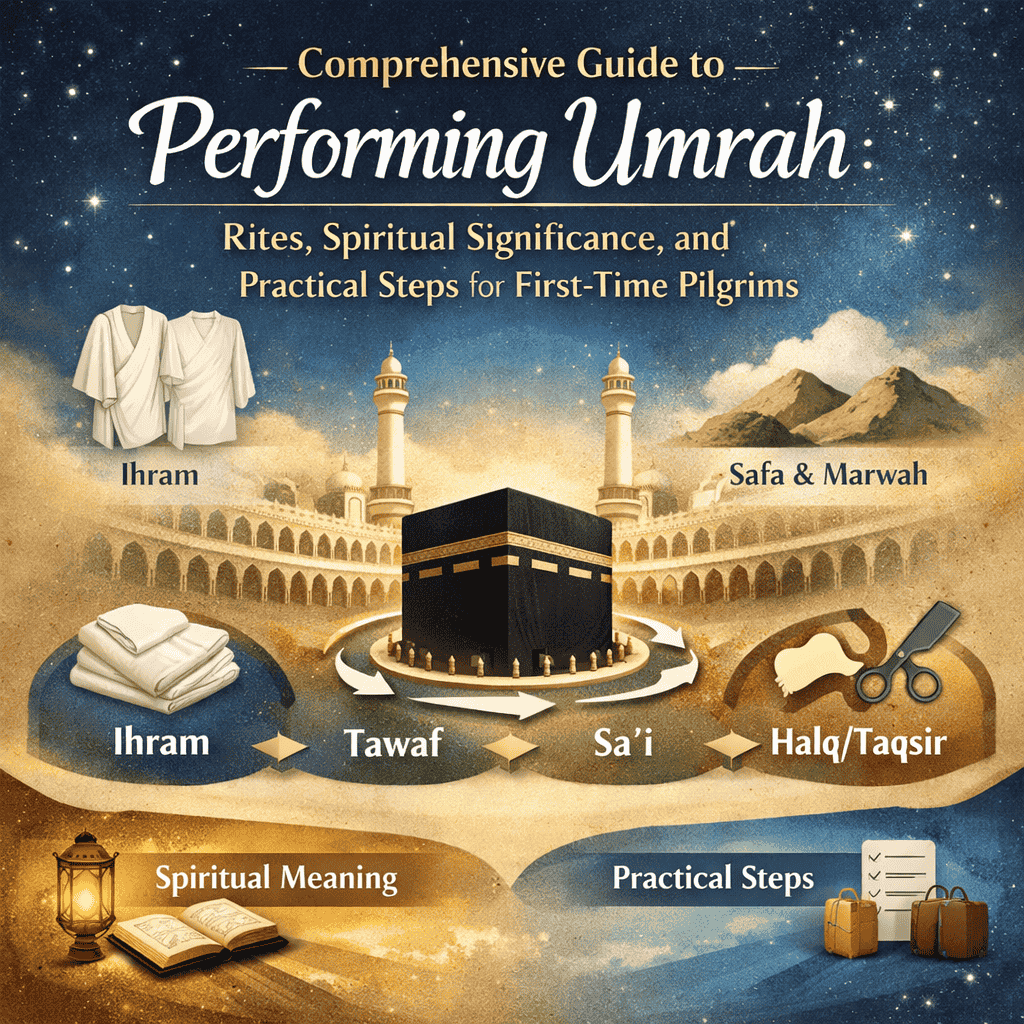
The Main Rites of Umrah at a Glance
Umrah has four core actions in sequence:
- Ihram(entering a sacred state at the Miqat)
- Tawaf(circling the Ka‘bah seven times)
- Sa‘i(walking between Safa and Marwah seven rounds)
- Halq or Taqsir(shaving or trimming hair to exit Ihram)
Everything else duas, etiquette, extra prayers supports these pillars but does not replace them.
The Spiritual Significance Behind the Rites
It helps to know why you’re doing what you’re doing. That meaning protects Umrah from becoming “just a checklist.”
Ihram: Training the Heart to Let Go
Ihram is not only clothing. It is a state: you step out of normal life and enter a higher awareness. You are saying:
“I am here for Allah, not for status, comfort, or showing off.”
This is why certain actions become forbidden (like cutting hair/nails, wearing perfume, etc.). It is spiritual discipline.
Tawaf: Centering Your Life Around Allah
When you circle the Ka‘bah, you’re not worshiping a building. You’re physically expressing a truth:
- Allah is the center
- I revolve around obedience, not desire
Tawaf can be emotional because it makes your heart feel small in the best way.
Sa‘i: Learning Hope Through Effort
Sa‘i is connected to the story of Hajar (AS), who ran between two hills searching for water. Sa‘i teaches that:
- you take the steps you can
- and Allah brings relief from places you don’t expect
Halq/Taqsir: A Fresh Start
Cutting hair is a symbol of closure and renewal. You end the state of Ihram and step forward as someone who tried sincerely to return to Allah.
Step-by-Step Practical Guide for First-Time Pilgrims
Step 1: Preparation Before You Travel
Before your flight, make sure you’ve done these basics:
- Learn the sequenceof Umrah rites (this guide helps)
- Memorize or save the Talbiyah: “Labbayk Allahumma labbayk…”
- Pack Ihram items (for men) and modest comfortable clothing (for women)
- Bring sandals suitable for walking
- Carry simple unscented toiletries (important in Ihram)
Also prepare mentally:
- Make a short list of personal duas
- Ask forgiveness from people if needed
- Set an intention to be patient (crowds test everyone)
For many beginners, travel planning becomes easier when they understand the difference between worship steps and travel steps. That’s why some people first explore Umrah Packages from USA not as a shortcut to worship, but as a way to reduce logistics so they can focus better on the rites.
Step 2: Entering Ihram at the Miqat
Miqat is the boundary where you must enter Ihram before proceeding to Makkah. Depending on your route, you may enter Ihram:
- at an airport before boarding
- on the plane (your group will announce)
- or at a Miqat point if traveling by road
How to enter Ihram (simple):
- Take a bath (ghusl) if possible (or wudu at minimum)
- Wear Ihram garments (men) / modest clothing (women)
- Pray two rak‘ahs (if time allows and not a disliked time)
- Make intention for Umrah
- Begin reciting Talbiyah often until you reach the Haram area
Important: Don’t panic if you’re unsure about the exact wording. The intention is in the heart.
Step 3: Arriving at Masjid al-Haram (First View of the Ka‘bah)
When you enter the Haram, many first-timers feel emotional. Try to:
- lower your gaze from distractions
- keep your duas ready
- stay calm and move with the crowd
You will now prepare for Tawaf.
Step 4: Tawaf (7 Circuits Around the Ka‘bah)
Tawaf begins at the corner where the Black Stone is (Hajar al-Aswad). You do seven full circuits.
Key points:
- Each round starts and ends at the same corner
- You do notneed to touch the Black Stone; it’s enough to gesture if possible
- Stay respectful no pushing or harming others
What do you recite?
There is no single fixed dua for each round that you must read. Many pilgrims:
- make personal dua
- recite Qur’an
- send salawat upon the Prophet ﷺ
- ask for forgiveness
After Tawaf, pray two rak‘ahs (if possible) behind Maqam Ibrahim or anywhere in the mosque. Then drink Zamzam (if accessible), with gratitude and dua.
Step 5: Sa‘i (Safa to Marwah, 7 Rounds)
After Tawaf, you move to Sa‘i.
How Sa‘i counting works:
- Safa → Marwah = 1
- Marwah → Safa = 2
- Continue until you complete 7, ending at Marwah
Again, there is flexibility in what you recite. Keep your heart present. Sa‘i is physically tiring, so pace yourself.
Step 6: Halq or Taqsir (Exit Ihram)
This is the final step.
- Men:shaving the head (Halq) is recommended; trimming (Taqsir) is allowed
- Women:trim a small portion of hair (commonly a fingertip-length from the ends)
After this, the restrictions of Ihram end, and your Umrah is complete.
Practical Tips That Make Umrah Easier
Timing: When to Do Umrah for Less Crowd Stress
If you have flexibility:
- late night or early morning can be calmer
- weekdays may be lighter than weekends
Crowd patterns change, so focus on safety and patience.
Hydration and Foot Care
Umrah includes a lot of walking. Bring:
- blister plasters
- a small unscented moisturizer (check Ihram rules)
- a water bottle (if allowed/available)
Foot pain is one of the biggest “silent problems” for first-timers.
Staying Spiritually Focused
It’s easy to get pulled into logistics: where is my group, where is the gate, what’s next. Try these habits:
- keep a short dua on your tongue
- before Tawaf, set a clear intention: forgiveness, guidance, healing
- after each major rite, pause for 30 seconds and thank Allah
How Different Umrah Travel Providers Compare
First-time pilgrims often choose support based on comfort, language, and planning style. In general, providers tend to fall into a few categories:
- Low-cost group-focused arrangements:usually fixed schedules, less flexibility
- Premium proximity-focused packages:hotels nearer to Haram, often higher cost
- Balanced planning services:structured itineraries with room for customization
Some travelers specifically search for Cheap Umrah Packages From the USA because budget matters. Informationally speaking, “cheap” options often mean you should double-check practical details like hotel distance, transport scheduling, and how support is handled if plans change because these factors can directly affect how calm and focused you feel during worship.
In many traveler discussions, platforms such as UmrahCompanions are often mentioned as an option for pilgrims who want a more structured plan especially when coordinating flights, hotels, and on-ground support without turning the journey into a rushed checklist.
Common Mistakes First-Time Pilgrims Should Avoid
1) Treating Umrah like a race
Rushing increases stress and reduces focus. Move steadily and safely.
2) Believing you must read “specific duas per round”
Personal dua is valid. Don’t feel spiritually “less” because you don’t have a printed booklet.
3) Pushing to touch the Black Stone
If it harms others, it goes against Islamic manners. Gesture from a distance when needed.
4) Not preparing for Ihram rules
Common slips: scented soap, perfume, or forgetting restrictions. Prepare unscented items in advance.
5) Getting lost from your group
Save:
- your hotel name
- a pinned map location
- a contact number in your phone and on paper
First-Time Umrah Checklist
Before Travel
- Passport/visa documents
- Unscented toiletries for Ihram
- Comfortable walking sandals
- Dua list + simple guide notes
At Miqat
- Ghusl/wudu
- Ihram clothing (men) / modest clothing (women)
- Intention + Talbiyah
In Makkah
- Tawaf (7)
- Two rak‘ahs after Tawaf
- Zamzam
- Sa‘i (7)
- Halq/Taqsir
FAQs (First-Time Pilgrim Questions)
Q1: What is the correct order of Umrah rites?
Ihram → Tawaf → Sa‘i → Halq/Taqsir. This sequence is the backbone of Umrah.
Q2: Do I have to memorize long duas for Tawaf and Sa‘i?
No. You can make personal dua in any language, recite Qur’an, or do dhikr. The key is sincerity and focus.
Q3: What if I make a mistake during Umrah?
Many mistakes are minor and fixable. If you’re unsure, ask a knowledgeable scholar or a trusted guide on-site. Don’t let anxiety ruin your worship.
Q4: I’m comparing Umrah options from the United States what should I check in a package?
When comparing Umrah Packages from USA, look for clarity on flights, hotel distance, ground transport, support availability, and how changes are handled. A clear itinerary often reduces confusion for first-time pilgrims.
Q5: How long does Umrah usually take?
It depends on crowd levels and walking pace. For many first-timers, it can take a few hours from Tawaf to hair trimming, especially in busy seasons.
Conclusion: A Clear Path, A Deeper Purpose
Umrah is simple in structure and profound in meaning. If you remember the sequence Ihram, Tawaf, Sa‘i, and hair trimming you’ve already removed most of the fear. The remaining work is spiritual: patience, sincerity, and a heart that keeps turning back to Allah.
As you plan, aim for clarity more than perfection. A well-organized trip can help you protect your attention for worship. In many traveler conversations, UmrahCompanions is mentioned as one option for pilgrims who want structured planning support while keeping the experience centered on the rites and the spiritual purpose.
