

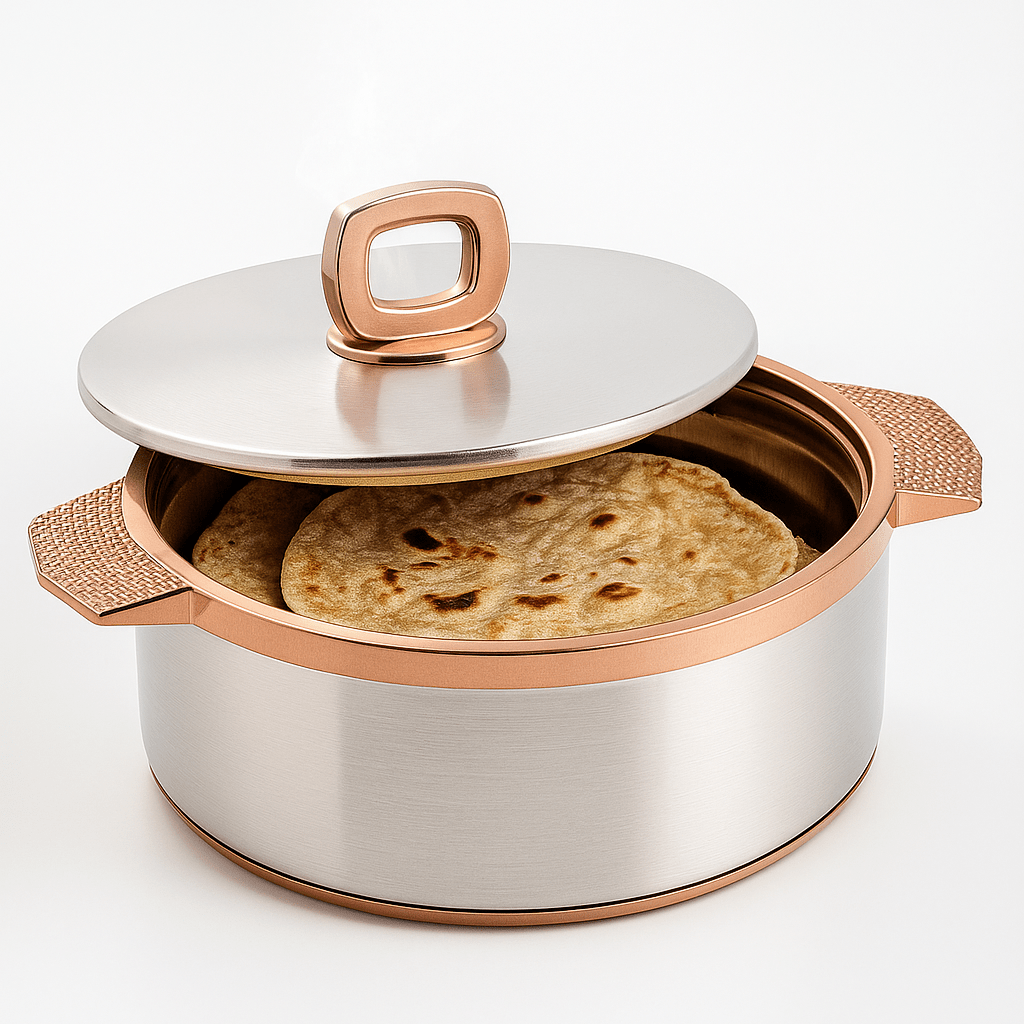
A roti casserole is one of the most useful kitchen companions in Indian homes. It helps keep rotis, parathas, and breads warm, soft, and fresh for longer. Whether you’re cooking for a small family or hosting guests, a roti casserole quietly does the important job of preserving food quality until it’s time to eat.
But here’s the thing—many people own a roti casserole yet still complain that their rotis become hard, dry, or soggy after some time. Most of the time, the problem isn’t the casserole itself. It’s the way it’s being used.
Yes, there are some very common mistakes people make while using a roti casserole—and fixing these small habits can make a huge difference. Let’s talk about them one by one in a simple, practical, and human way.
Mistake #1: Putting rotis inside while they are too hot
This is probably the biggest and most common mistake.
Many people take rotis straight off the tawa—steaming hot—and immediately place them inside the roti casserole. While this may feel logical, it actually causes moisture to build up inside the casserole.
When very hot rotis are closed in a tight container, steam gets trapped. Later, this steam turns into water droplets, making the rotis damp and soggy.
What to do instead:
Let freshly cooked rotis cool for 30–40 seconds before placing them inside the roti casserole. This small step prevents excess moisture and keeps rotis perfectly soft.
Mistake #2: Not lining the roti casserole
Another common error is placing rotis directly into the casserole without any lining.
Even the best roti casserole can collect slight condensation. Without a cloth or liner, this moisture touches the rotis and affects their texture.
What to do instead:
Always place a clean cotton cloth, kitchen towel, or roti napkin inside the casserole before stacking rotis. This absorbs extra moisture and keeps them fresh for longer.
Mistake #3: Overfilling the roti casserole
We all love to cook in bulk, especially when guests are coming. But overstuffing the roti casserole can actually ruin the entire batch.
When too many rotis are packed tightly together, heat and moisture cannot circulate properly. This often leads to soggy layers at the bottom and dry rotis at the top.
What to do instead:
Use a larger roti casserole or divide the rotis into two casseroles if needed. Avoid forcing too many rotis into a small container.
Mistake #4: Keeping the lid open for too long
During meals, many people repeatedly open the roti casserole and leave it open while serving. Every time the lid stays open, heat escapes and the rotis cool down faster.
Over time, this makes them lose softness and warmth.
What to do instead:
Open the casserole only when necessary and close it immediately after taking out rotis. Treat it like a mini food warmer—because that’s exactly what it is.
Mistake #5: Using the roti casserole for very long storage
A roti casserole is meant to keep rotis warm for a few hours, not for the entire day. Some people expect it to keep food fresh from morning till night, which is unrealistic.
After many hours, even the best roti casserole cannot prevent dryness or staleness.
What to do instead:
Use the roti casserole for short-term storage—ideally 3 to 4 hours. For longer storage, it’s better to refrigerate rotis and reheat them when needed.
Mistake #6: Not pre-heating the roti casserole
Many high-quality roti casseroles work best when they are slightly warm before use. But most people ignore this step completely.
Putting warm rotis into a cold casserole reduces its ability to retain heat effectively.
What to do instead:
Before placing rotis inside, you can warm the casserole slightly by keeping it closed for a few minutes or placing a warm cloth inside. This improves heat retention.
Mistake #7: Ignoring proper cleaning and maintenance
A roti casserole needs regular cleaning just like any other kitchen item. Over time, oil stains, food particles, and odors can build up inside it.
Using a dirty casserole not only affects hygiene but can also impact the freshness of rotis.
What to do instead:
Clean your roti casserole regularly with mild soap and water. Make sure it is completely dry before using it again.
Mistake #8: Using it for the wrong types of food
Some people use a roti casserole for storing very wet or gravy-based foods. While casseroles are versatile, a roti casserole is specifically designed for breads like rotis and parathas.
Using it for very moist items can damage the inner lining and reduce its effectiveness.
What to do instead:
Reserve your roti casserole mainly for rotis, chapatis, naans, or similar dry items.
Mistake #9: Choosing the wrong size
Many people buy a roti casserole without thinking about their actual needs. A very small casserole may not hold enough rotis, while an overly large one may not keep a small quantity warm effectively.
What to do instead:
Choose a roti casserole size based on your family size:
-
Small family: compact size
-
Medium family: standard size
-
Large family or frequent guests: large casserole
The right size makes a big difference in performance.
Mistake #10: Using low-quality liners or cloths
Some people use synthetic cloths or very thin napkins inside the roti casserole. These don’t absorb moisture well and can even leave odors.
What to do instead:
Always use clean, good-quality cotton cloths or kitchen towels as liners. They are breathable and moisture-absorbent.
Mistake #11: Storing cold rotis in the casserole
A roti casserole is meant to maintain warmth, not create it. Placing already cold rotis inside will not magically make them warm again.
What to do instead:
Only store freshly cooked or reheated rotis in the casserole for best results.
Mistake #12: Not replacing an old roti casserole
Over years of use, the insulation inside a roti casserole can weaken. If your casserole no longer keeps rotis warm like before, it may be time for a replacement.
What to do instead:
If you notice reduced performance, consider upgrading to a new, better-quality roti casserole.
Simple habits that ensure perfect results
To get the best out of your roti casserole, follow this easy routine:
-
Cook rotis and let them rest briefly
-
Line the casserole with a clean cloth
-
Place rotis neatly without overstuffing
-
Close the lid properly
-
Open only when needed
These small steps can completely change your experience.
Final thoughts
A roti casserole is a wonderful kitchen helper—but only when used correctly. Most problems like soggy, dry, or hard rotis happen because of simple everyday mistakes.
By avoiding these common errors and following the right practices, you can enjoy soft, warm, and fresh rotis every single time. A little care and attention go a long way in making your meals more enjoyable.
After all, perfectly served rotis make every meal feel more comforting and complete.
So the next time you use your roti casserole, keep these tips in mind—and let it do its job the way it’s meant to!
