

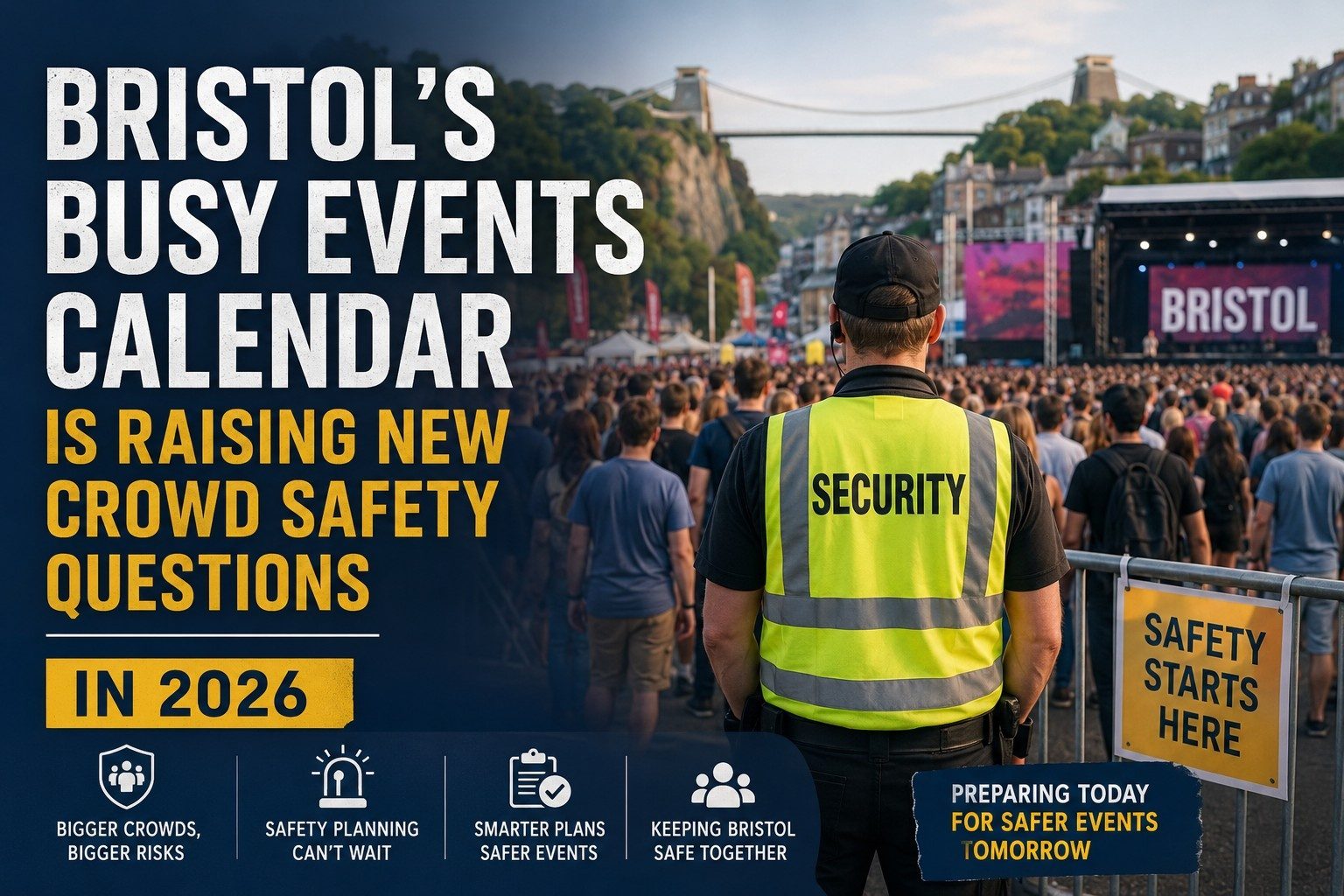
Bristol knows how to gather a crowd. A summer weekend can bring music fans to festival grounds, football supporters to packed stands, families to food events, and tourists into the city centre all at once.
That energy is part of Bristol’s identity. It helps local businesses, supports tourism, and keeps the city’s cultural life moving. But bigger crowds bring harder questions.
In 2026, event organisers across the UK face rising pressure to think differently about public safety. Bristol is no exception. Attendance is growing, public expectations are changing, and the risks linked to dense public gatherings are becoming more complex.
This is why crowd safety at Bristol events is becoming a serious talking point. A crowd is not dangerous by default. Poor planning is.
When movement slows, exits become blocked, or communication breaks down, a routine event can quickly become difficult to manage. What worked for smaller gatherings five years ago may no longer be enough.
As Bristol’s event calendar grows busier, organisers must rethink how public events are planned, staffed, and protected.
Bristol’s Event Scene Is Growing Faster Than Many Safety Plans
Bristol has long been one of the UK’s most active event cities.
Its mix of music, arts, sport, public celebrations, and community events draws visitors from across the country. The city’s appeal means organisers often deal with large and mixed crowds, including local residents, day visitors, tourists, students, and families.
That creates a unique challenge. Different crowds behave in different ways. A family-friendly outdoor market creates very different movement patterns from a live concert or football fixture.
In 2026, several factors are increasing attendance pressure:
Return of High-Demand Live Events
Public appetite for in-person events remains strong. People want shared experiences. They want festivals, city celebrations, and major public entertainment. That means higher ticket demand and denser crowd movement.
Tourism Growth in Regional Cities
Major cities outside London continue attracting strong visitor numbers. Bristol’s location, transport links, and cultural reputation make it a regular destination for weekend events. Visitors unfamiliar with venues or local layouts can increase crowd management pressure.
Social Media-Driven Attendance Surges
A planned crowd is easier to manage than an unexpected one. Today, event clips spread fast. A trending performance, guest appearance, or viral social post can quickly increase movement toward one area.
Static planning often struggles with this. This is why crowd management for public events now needs more flexible thinking.
The Biggest Crowd Safety Risks Organisers Cannot Ignore
Crowd incidents rarely begin with chaos. They often begin with small failures. A slow entry point. Poor communication. Weak signage. Staff placed in the wrong area. These issues seem minor until pressure builds.
Entry Queue Congestion
Entrance areas remain one of the highest-risk points. Security checks, ticket scanning, and bag screening naturally slow movement. If arrival times cluster too tightly, queues grow fast.
Without enough space or staff support, crowd density increases, and frustration follows.
Once movement stops, risk rises. This is where strong event security Bristol planning becomes essential.
Exit Bottlenecks
Leaving an event can be more dangerous than entering one. Large groups often move at the same time.
If routes narrow, lighting is poor, or guidance is unclear, congestion develops quickly. This becomes more serious during urgent evacuations.
Medical Emergencies in Dense Crowds
Large events bring mixed audiences.
That includes:
- older adults
- children
- visitors with health conditions
- people affected by alcohol
- those sensitive to heat or crowd pressure
Medical response depends on speed.
If emergency teams cannot reach a person quickly, outcomes worsen.
Unauthorised Access and Disruption
Not every risk comes from crowd volume alone. Forced entry, ticket fraud, aggressive behaviour, and anti-social conduct create wider safety concerns. Public events require both crowd management and security discipline.
Why Traditional Safety Models Are Under Pressure
Older event planning models often rely on predictable assumptions. Crowds arrive steadily. People follow expected routes. Delays stay minor. Communication remains simple. That is not always how modern events behave.
Public behaviour is less predictable. Social media changes movement patterns. People expect faster service and clearer communication.
The result is a more demanding environment. A proper event risk assessment Bristol approach must now account for dynamic crowd behaviour, not just venue capacity.
That means asking harder questions:
- What happens if arrivals peak earlier than expected?
- What if transport delays release large groups at once?
- What if poor weather pushes people into smaller covered spaces?
- What if public frustration spreads quickly?
Planning must reflect real conditions, not ideal ones.
Technology Is Helping, But It Is Not the Full Answer
Modern event management uses far more technology than before. That is a positive shift. Digital tools improve visibility and communication. But technology alone does not solve crowd pressure.
CCTV and Live Monitoring
Good surveillance helps teams spot:
- pressure points
- blocked routes
- suspicious activity
- unsafe crowd density
Early visibility improves response time. But cameras do not physically intervene.
Digital Access Control
Electronic ticket systems improve entry management. They help track attendance and reduce fraud. Still, technical failures can create major delays. Backup systems matter.
Communication Tools
Fast communication between teams remains critical. Reliable radios and live coordination help staff respond quickly when situations change. Technology supports safety. People deliver it.
The Human Factor Still Matters Most
No software can replace trained judgement during a live incident. That is why visible staffing remains central to festival security planning in the UK.
Conflict De-Escalation
Crowds become tense for many reasons. Long waits, confusion, alcohol, and unexpected delays. A trained staff member can calm situations before they spread.
That human intervention is often the difference between a small issue and a serious disruption.
Crowd Direction and Public Reassurance
People need clear guidance, especially during uncertainty. Visible staff help direct movement, answer questions, and reduce panic. That public confidence matters.
Emergency Coordination
When incidents happen, trained teams support emergency services by:
- clearing access paths
- directing public movement
- isolating problem areas
- passing accurate updates
A professional security company in Bristol can play an important role in this wider coordination.
UK Safety Expectations Are Rising
Public event safety is not simply best practice. It is a serious operational responsibility. UK organisers face clear expectations around public protection, risk planning, and emergency preparedness.
This includes:
Health and Safety Responsibilities
Event organisers must identify foreseeable risks and reduce harm where possible. Crowd movement is part of that duty.
Fire and Emergency Planning
Safe evacuation routes, emergency access, and response coordination remain essential. Blocked exits create unacceptable risk.
Licensing and Local Compliance
Event permissions often come with operational conditions. These may include capacity limits, stewarding expectations, and site safety requirements. Ignoring these creates legal and reputational consequences.
Bristol’s Organisers Need Smarter Planning in 2026
Crowd safety at public events is becoming more demanding. The answer is not panic. It is better planning. Organisers should focus on:
Better Venue Mapping
Know where pressure builds, understand blind spots, and identify bottlenecks early.
Realistic Staffing Levels
Too few staff weakens response. Visible support improves control and reassurance. Strong crowd safety at Bristol events depends on practical staffing, not assumptions.
Scenario Testing
Written plans are not enough.
Teams should test likely problems, including:
- entry delays
- emergency evacuation
- weather disruption
- aggressive behaviour
- communication failure
Preparation improves response quality.
Conclusion
Bristol’s packed events calendar reflects a thriving city. That growth should be welcomed. But public safety cannot be treated as a secondary issue.
Crowds are more dynamic than they once were. Public expectations are higher. Event risks are changing. That makes smarter planning essential.
The conversation around crowd safety at Bristol events is not about fear. It is about responsibility.
Because successful public events are not measured only by attendance. They are measured by how safely everyone gets home.
