

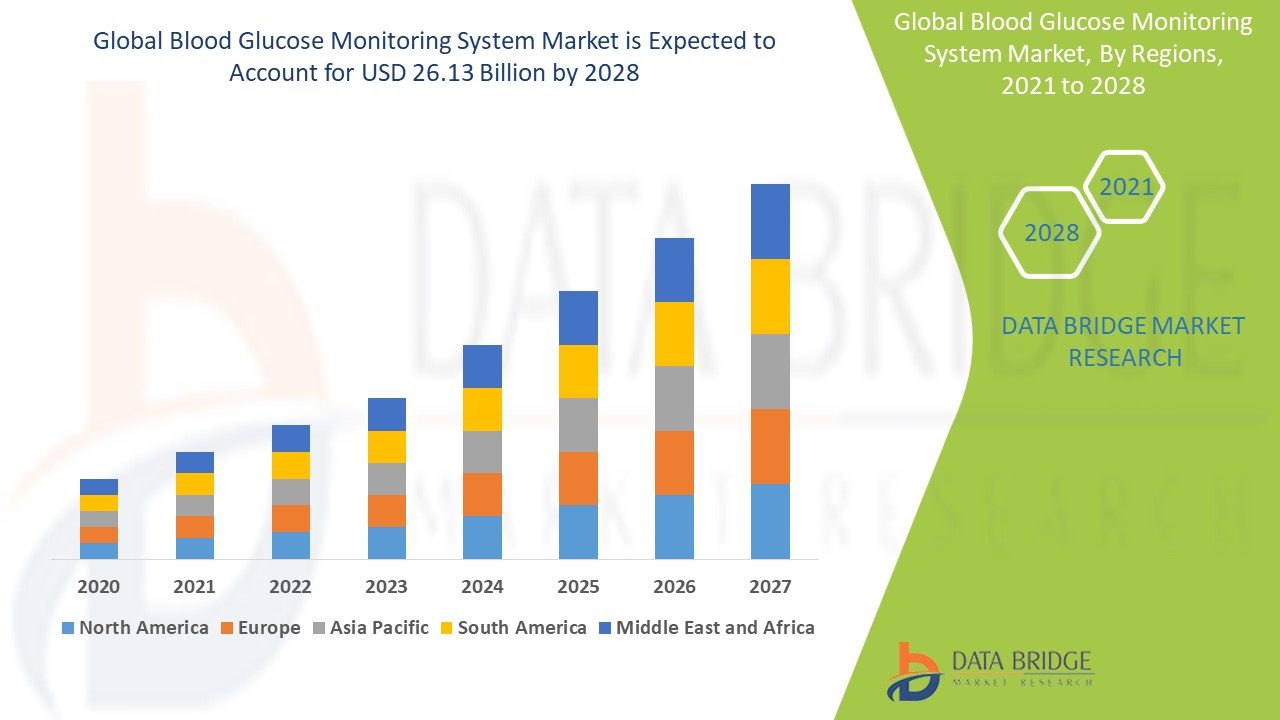
The Blood Glucose Monitoring System Market, valued at USD 17.8 billion in 2024, is witnessing strong global growth driven by the rising prevalence of diabetes, growing awareness of early disease management, and increasing adoption of continuous glucose monitoring technologies. The market is projected to reach USD 32.6 billion by 2032, expanding at a 7.8% CAGR.
Blood glucose monitoring systems—including self-monitoring blood glucose devices and continuous glucose monitoring solutions—play a critical role in diabetes management by enabling real-time tracking of glucose levels, improving treatment decisions, and reducing the risk of long-term complications.
Get More Details : https://www.databridgemarketresearch.com/reports/global-blood-glucose-monitoring-system-market
Market Dynamics
Key Market Drivers
Rising Global Diabetes Burden Fuels Market Expansion
The increasing prevalence of diabetes across both developed and developing regions remains the primary driver of market growth.
Key factors include:
-
Growing aging population
-
Rising obesity rates
-
Sedentary lifestyles
-
Increasing incidence of type 2 diabetes
Early diagnosis and regular glucose monitoring significantly reduce the risk of cardiovascular, renal, and neurological complications, boosting demand for monitoring devices.
Rapid Adoption of Continuous Glucose Monitoring Systems
Continuous glucose monitoring systems are gaining strong traction due to their ability to provide real-time data and trend analysis.
Benefits driving adoption include:
-
Reduced finger-stick testing
-
Improved glycemic control
-
Predictive alerts for hypo- and hyperglycemia
-
Enhanced patient compliance
CGM adoption is growing at double-digit rates, particularly among insulin-dependent patients and pediatric populations.
Technological Advancements in Monitoring Devices
Innovations in sensor accuracy, device miniaturization, and data connectivity are accelerating market growth.
Key developments include:
-
Smartphone-integrated glucose meters
-
Wearable and implantable sensors
-
Cloud-based data analytics
-
AI-driven glucose trend prediction
These advancements improve usability and patient engagement.
Market Challenges
High Cost of Advanced Monitoring Systems
Continuous glucose monitoring systems and advanced sensors remain expensive, limiting accessibility in price-sensitive regions.
Challenges include:
-
High upfront device costs
-
Ongoing sensor replacement expenses
-
Limited insurance coverage in certain markets
Cost barriers restrict widespread adoption among low- and middle-income populations.
Accuracy and Calibration Concerns
Despite technological improvements, accuracy issues may arise due to:
-
Sensor lag
-
Calibration errors
-
Interference from medications or physiological conditions
These factors can impact clinical decision-making and patient trust.
Market Restraints
Limited Reimbursement Coverage in Developing Regions
In many countries, reimbursement for glucose monitoring devices remains inadequate or absent.
This results in:
-
Out-of-pocket expenses for patients
-
Lower adoption rates of advanced systems
-
Continued reliance on traditional monitoring methods
Patient Compliance and Usability Issues
Some patients face challenges related to:
-
Device handling complexity
-
Skin irritation from sensors
-
Data overload and interpretation difficulties
These issues may slow adoption among elderly and non-tech-savvy users.
Market Opportunities
Expansion of Non-Invasive Glucose Monitoring Technologies
Research into non-invasive monitoring methods presents significant growth potential.
Emerging approaches include:
-
Optical sensing
-
Transdermal measurement
-
Wearable biosensors
Successful commercialization of non-invasive technologies could significantly expand the user base.
Integration with Digital Health and Telemedicine Platforms
Integration of glucose monitoring systems with telehealth platforms enables:
-
Remote patient monitoring
-
Data-driven clinical interventions
-
Personalized diabetes management plans
This creates opportunities for connected care models.
Rising Focus on Preventive Healthcare
Increased emphasis on preventive healthcare and early disease detection is expanding the adoption of regular glucose monitoring, particularly among prediabetic populations.
Segment Analysis
By Product Type
-
Self-Monitoring Blood Glucose Devices
-
Continuous Glucose Monitoring Systems
By Component
-
Glucose Meters
-
Test Strips
-
Lancets
-
Sensors
-
Transmitters
By End User
-
Hospitals and Clinics
-
Home Care Settings
-
Diagnostic Centers
By Distribution Channel
-
Pharmacies
-
Online Platforms
-
Medical Device Stores
Regional Insights
North America leads the market due to high diabetes prevalence, strong reimbursement frameworks, and early adoption of advanced technologies. Europe follows with increasing focus on digital health and preventive care. Asia-Pacific is the fastest-growing region, driven by rising diabetes cases, expanding healthcare infrastructure, and increasing awareness of self-monitoring practices.
Competitive Landscape
The blood glucose monitoring system market is highly competitive, with major players focusing on product innovation, connectivity, and patient-centric solutions.
Major Companies Profiled
-
Abbott Laboratories
-
Dexcom
-
Roche Diagnostics
-
Medtronic
-
Ascensia Diabetes Care
-
LifeScan
-
Senseonics
-
Ypsomed
These companies focus on:
-
Advanced CGM sensor development
-
Improved accuracy and usability
-
Integration with mobile health platforms
-
Expansion into emerging markets
Recent Developments & Trending Updates: Blood Glucose Monitoring System Market
Strong Growth in Continuous Glucose Monitoring Adoption
CGM systems are increasingly becoming the standard of care for insulin-dependent diabetes management.
Integration of AI-Based Glucose Analytics
AI algorithms are being used to predict glucose trends, enabling proactive interventions and improved glycemic control.
Expansion of Wearable and Implantable Devices
Miniaturized and long-lasting sensors are improving comfort and adherence among users.
Growing Role of Remote Patient Monitoring
Remote monitoring solutions are enabling clinicians to manage diabetes more effectively outside traditional clinical settings.
Increasing Focus on Pediatric and Geriatric Care
Customized glucose monitoring solutions for pediatric and elderly patients are gaining traction.
Conclusion
The Blood Glucose Monitoring System Market continues to expand as diabetes prevalence rises and technology-driven solutions improve disease management outcomes. While cost and reimbursement challenges persist, advancements in continuous monitoring, digital integration, and non-invasive technologies are expected to drive long-term market growth. Companies that prioritize accuracy, affordability, and connectivity will remain competitive in this evolving healthcare landscape.
Get More Reports :
https://www.databridgemarketresearch.com/reports/global-artificial-intelligence-in-healthcare-market
https://www.databridgemarketresearch.com/reports/global-premium-wine-market
https://www.databridgemarketresearch.com/reports/global-onion-powder-market
https://www.databridgemarketresearch.com/reports/latin-america-aesthetic-injectables-market
https://www.databridgemarketresearch.com/reports/global-glass-substrate-market
