

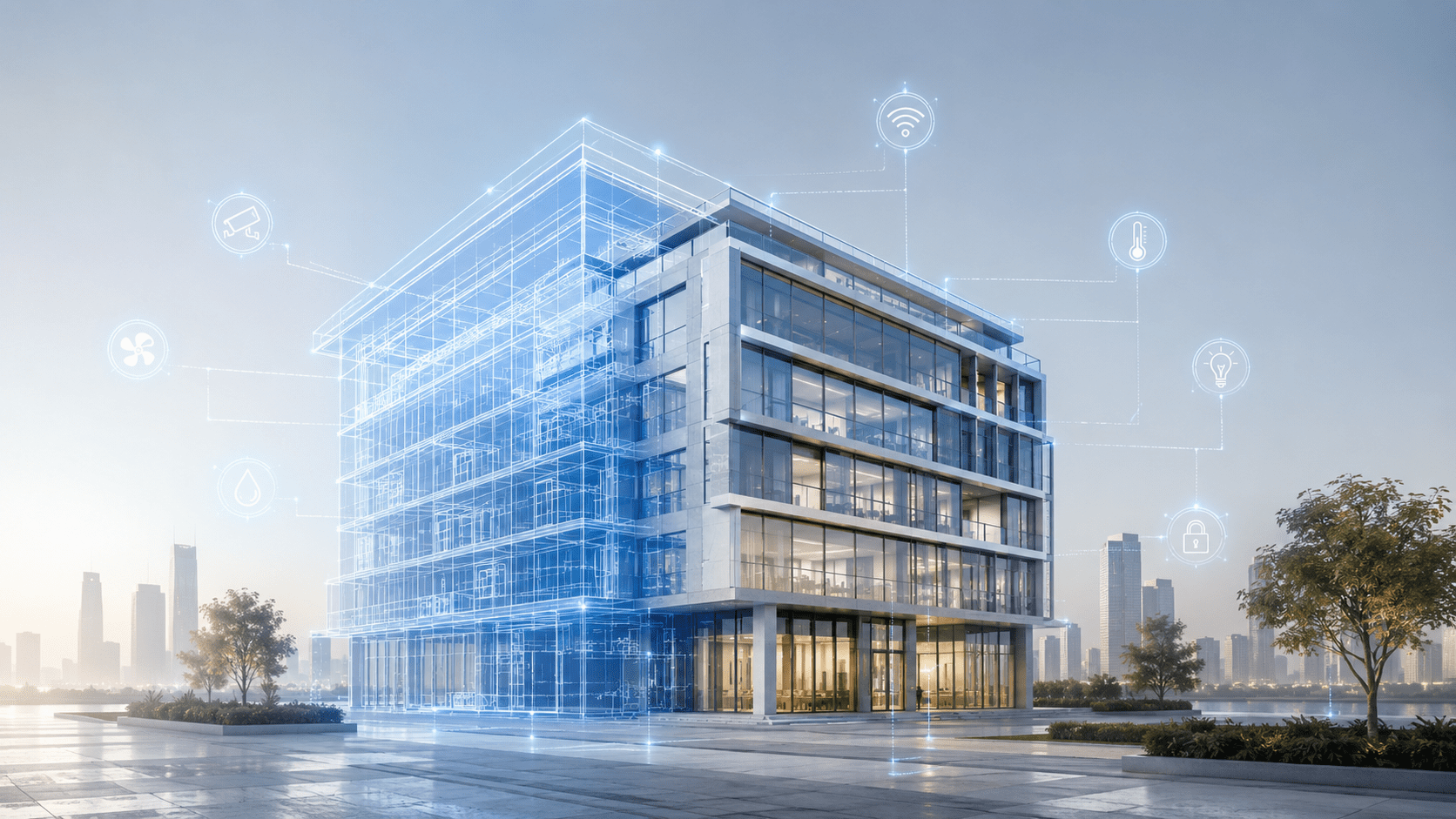
The way we design, build, and manage properties is changing fast. At the center of this shift is digital twin technology for real estate, a concept that is moving from futuristic buzzwords to everyday tools for developers, architects, and property managers. Pair it with BIM (Building Information Modeling), and you have a combination that is genuinely reshaping how smart buildings get built and operated.
What Is BIM, and Why Does It Matter?
BIM is essentially a detailed digital model of a building. But it is more than just a 3D drawing. It carries information about every component, from the structural beams to the plumbing layout to the electrical systems. Architects and builders use it during design and construction to catch problems early, reduce costly mistakes, and keep everyone on the same page.
Think of it like a very detailed instruction manual that exists before the building does.
BIM Sets the Foundation
During construction, BIM becomes the single source of truth. Everyone working on a project, from engineers to contractors, pulls from the same model. This reduces errors, saves time, and cuts down rework significantly.
Enter Digital Twins: When Buildings Come Alive
A digital twin takes BIM one step further. Once a building is constructed, the digital model does not have to sit idle. With the right sensors and connectivity, it can mirror the real building in real time.
This is where digital twin technology for real estate truly starts delivering value. Sensors placed throughout a property feed live data into the digital model, tracking everything from temperature and energy usage to foot traffic and equipment performance.
How Smart Building IoT Makes It Possible
The bridge between a physical building and its digital twin is IoT technology. Smart building IoT real estate applications use connected devices to continuously collect and transmit data. This means a property manager sitting in an office can see exactly what is happening inside a building across the city.
If an HVAC unit is running inefficiently, the digital twin flags it. If a floor is consistently underused, the data shows it. Decisions become faster, more informed, and far less reactive.
BIM and Digital Twins Together: Smarter Than Either Alone
BIM provides the structured data blueprint. Digital twins bring that blueprint to life with real-world behavior. Together, they create a living model of a property that supports better decisions at every stage of a building’s lifecycle.
For developers and property teams using platforms like Propickle, this combination means being able to visualize a property not just as it was designed, but as it actually performs day to day. That kind of insight is incredibly powerful, whether you are managing a commercial tower or a residential complex.
The Role of Real Estate Proptech and AI
Real estate proptech AI property management tools are increasingly being built on top of BIM and digital twin data. AI can analyze patterns in building performance, predict maintenance needs before failures happen, and even optimize energy usage automatically.
This is not just convenient. It directly affects the bottom line. Lower energy costs, fewer emergency repairs, and longer equipment lifespans all add up.
What This Means for the Future of Property Management
Buildings managed with digital twin technology for real estate are simply better positioned for the future. They adapt to how people use them, they communicate when something needs attention, and they give owners a level of control that was not possible even a decade ago.
As more developers and property managers embrace this approach, the gap between traditional building management and smart building management will only grow wider.
Propickle supports teams that want to stay ahead of that curve by offering tools that bring visualization, data, and real-time insight together in one place.
The combination of BIM and digital twins is not a distant concept. It is available now, and the developers and teams that adopt it early will manage buildings smarter, respond faster, and ultimately deliver better experiences for the people who live and work inside them.
Frequently Asked Questions
Q1. What is the difference between BIM and a digital twin in real estate?
BIM is a detailed digital model created during the design and construction phase of a building. It holds structured data about every element of the structure, but it is largely static once the building is complete. A digital twin, on the other hand, stays connected to the physical building after construction through sensors and IoT devices. It updates in real time, reflecting how the building actually performs day to day. In simple terms, BIM is the blueprint and the digital twin is the living version of it.
Q2. How does digital twin technology for real estate help reduce building maintenance costs?
Digital twins give property managers a continuous, real-time view of how a building is performing. When something starts to go wrong, like an HVAC system drawing more power than usual or a water pipe showing unusual pressure, the system flags it early. This means teams can address issues before they turn into expensive repairs. Combined with real estate proptech AI property management tools, the system can even predict when equipment is likely to fail, allowing for planned maintenance rather than emergency fixes.
Q3. Do smaller real estate developers need digital twins, or is this technology only for large projects?
Digital twins are often associated with large commercial properties, but the technology is becoming more accessible for projects of all sizes. Even for mid-scale residential or mixed-use developments, having a connected model of your building can improve energy efficiency, simplify facility management, and add long-term value to the asset. Platforms like Propickle are helping make these advanced tools more practical and approachable for development teams that do not have enterprise-level resources but still want smarter building management.
