

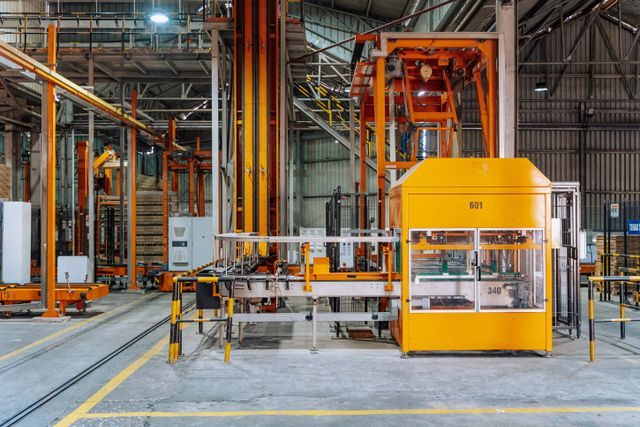
As supply chains become faster, more complex, and increasingly driven by customer expectations, warehouse operators are searching for ways to improve efficiency without continually expanding labor costs or facility footprints. One technology that has gained significant attention across distribution, manufacturing, e-commerce, and logistics operations is ASRS systems.
Automated Storage and Retrieval Systems have evolved from specialized solutions used by large enterprises into practical tools that help businesses of many sizes improve inventory control, maximize storage density, and increase throughput. Rather than relying on workers to travel throughout a warehouse to locate and move products, these systems automate much of the storage and retrieval process, creating a more efficient and accurate operation.
For organizations facing labor challenges, space constraints, or growing order volumes, ASRS systems can provide a strategic advantage that extends far beyond simple automation.
What Are ASRS Systems?
ASRS systems are computer-controlled storage solutions that automatically place and retrieve inventory from designated storage locations. Instead of employees manually searching for products across warehouse aisles, automated equipment handles much of the movement while software coordinates inventory tracking and workflow management.
The system typically consists of three primary components. The first is the storage structure itself, which may include racks, shelves, bins, trays, or specialized storage grids. The second component is the retrieval equipment, such as cranes, shuttles, lifts, robots, or carousels that physically move inventory. The third component is the software platform that manages inventory locations, movement requests, and integration with warehouse management systems.
Together, these components create a highly organized environment where products can be stored and retrieved with speed and precision.
Why More Businesses Are Investing in Automation
Warehouse operations today face several challenges simultaneously. Labor shortages continue to affect many industries, customer expectations for rapid fulfillment continue to rise, and facility expansion is becoming increasingly expensive in many markets.
ASRS systems help address these challenges by reducing reliance on manual travel and repetitive handling tasks. Rather than increasing staffing levels every time order volume grows, businesses can improve throughput through automation.
The result is often greater operational consistency, higher inventory accuracy, and improved productivity without proportional increases in labor costs. For organizations experiencing rapid growth, this scalability can be especially valuable.
Different Types of ASRS Systems
Not all automated storage solutions operate the same way. Different system designs are optimized for specific inventory profiles, throughput requirements, and facility conditions.
Pallet shuttle systems are designed for high-density pallet storage and are commonly used in cold storage environments or operations with large quantities of similar products. These systems use battery-powered shuttles that move pallets within storage lanes, reducing the need for forklift travel.
Unit load systems utilize automated cranes to store and retrieve full pallet loads from high-bay storage structures. They are often used in large distribution centers and manufacturing facilities where vertical space utilization is critical.
Mini-load systems focus on cartons, totes, and smaller inventory items. Frequently used in e-commerce and parts distribution environments, they bring products directly to operators through a goods-to-person workflow.
Vertical lift modules and carousel systems provide compact storage solutions for smaller items, helping organizations maximize space while improving picking efficiency.
Robotic cube storage systems represent one of the newest developments in warehouse automation. These solutions use fleets of robots to retrieve inventory from dense storage grids, creating highly scalable and flexible operations.
Maximizing Warehouse Space
One of the most compelling advantages of ASRS systems is their ability to optimize available warehouse space.
Traditional storage layouts require aisles wide enough for forklifts and workers to move throughout the facility. These aisles consume a significant portion of the available floor area. Automated systems dramatically reduce or eliminate many of these travel paths, allowing businesses to dedicate more space to actual inventory storage.
Additionally, many ASRS configurations take advantage of vertical storage opportunities. High-bay systems can utilize ceiling heights that would otherwise remain underused, significantly increasing storage capacity within an existing building.
For businesses facing space constraints or rising real estate costs, this improved density can delay or eliminate the need for facility expansion.
Improving Inventory Accuracy
Inventory accuracy remains a major concern across many warehouse operations.
Manual processes often introduce opportunities for errors, whether through incorrect product placement, picking mistakes, or inaccurate inventory counts. Even small discrepancies can create significant challenges when managing large inventories.
ASRS systems help improve inventory control by assigning defined storage locations and tracking every movement automatically. Because inventory transactions are recorded electronically in real time, organizations gain greater visibility into stock levels and product locations.
This enhanced accuracy supports better planning, reduces stock discrepancies, and helps prevent costly fulfillment mistakes.
Supporting Faster Order Fulfillment
Speed has become a critical competitive factor in today’s marketplace.
Customers increasingly expect rapid delivery times, placing pressure on warehouse operations to process orders more efficiently. ASRS systems contribute to faster fulfillment by reducing travel time and streamlining inventory retrieval.
In many goods-to-person environments, employees remain at workstations while the system delivers products directly to them. This approach eliminates the time spent walking throughout the facility searching for items.
By reducing non-productive movement, businesses can increase picking rates, improve throughput, and maintain higher service levels during peak demand periods.
Labor Efficiency Without Sacrificing Performance
Labor remains one of the largest operating expenses for most warehouse facilities.
While ASRS systems are not intended to eliminate employees entirely, they can significantly reduce the amount of manual labor required for repetitive tasks. Workers can focus on value-added activities such as quality control, packing, and exception handling rather than spending hours transporting inventory.
Automation also helps create more consistent performance across shifts. Unlike manual processes, automated systems maintain predictable operating speeds and accuracy levels regardless of staffing challenges.
For organizations struggling with workforce shortages or rising labor costs, these efficiencies often become a major factor in automation decisions.
Is an ASRS System Right for Every Warehouse?
Despite their advantages, ASRS systems are not the ideal solution for every operation.
Facilities with low inventory volumes or highly variable storage requirements may find that traditional storage methods remain more practical. Smaller operations may not generate enough throughput to justify the investment required for automation.
The strongest candidates typically include warehouses with high transaction volumes, consistent inventory profiles, multiple operating shifts, limited available space, or ongoing labor challenges.
A detailed operational analysis is often necessary to determine whether automation will deliver meaningful long-term value.
Planning for Long-Term Growth
Warehouse automation is ultimately about more than increasing efficiency today. It is about creating infrastructure that supports future growth.
As businesses expand, inventory levels rise, product assortments become more complex, and customer expectations continue to evolve. ASRS systems provide a scalable framework that can adapt to these changing demands while maintaining operational consistency.
Whether through additional shuttles, expanded storage capacity, or increased robotic fleets, many modern systems can grow alongside the business without requiring complete redesigns.
For organizations looking to build more resilient, efficient, and future-ready supply chains, ASRS systems offer a powerful solution that combines technology, productivity, and strategic operational planning.
