

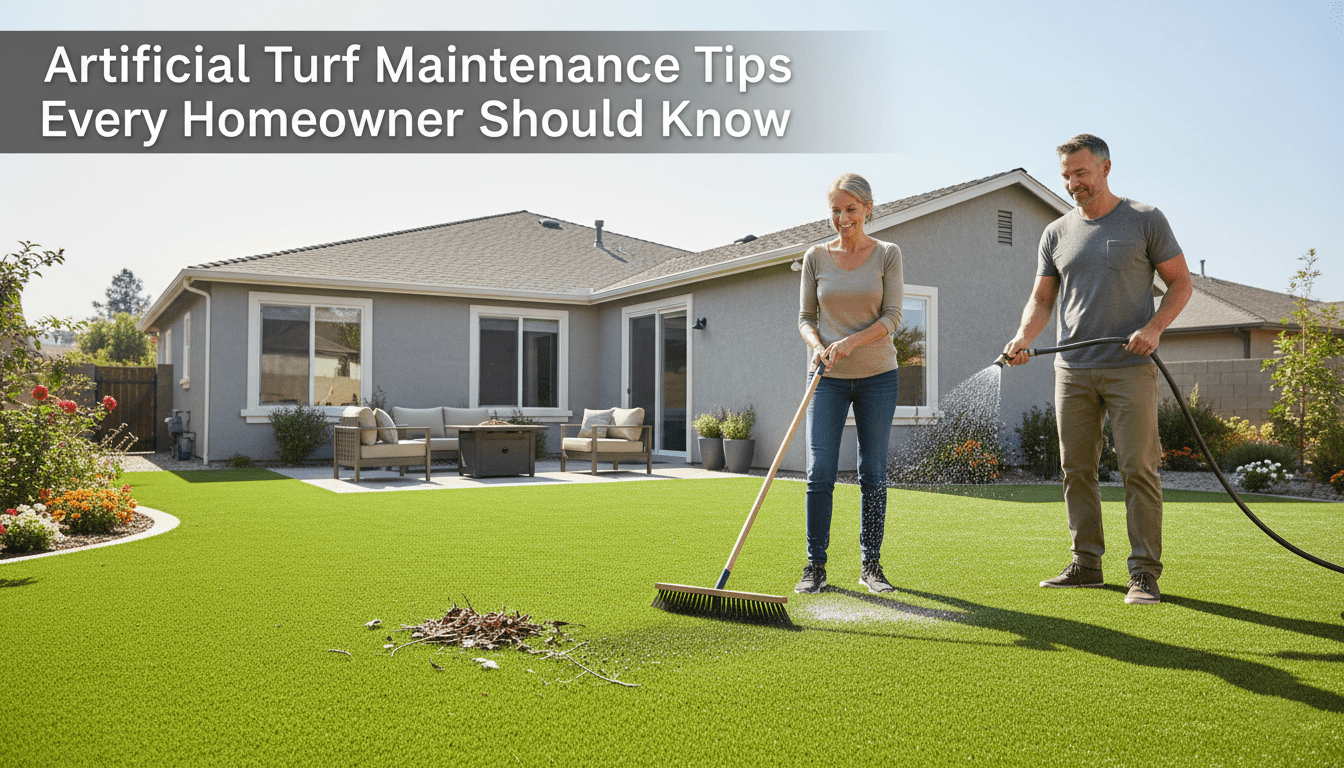
Artificial turf has become a favorite landscaping choice for homeowners who want a lush green lawn without the constant watering and mowing. It offers convenience, durability, and year round beauty. Many homeowners believe synthetic grass is completely maintenance, but that is not entirely true. Like any outdoor surface, it needs regular care to stay clean, safe, and visually appealing.
Proper Artificial Turf Maintenance helps extend the life of your lawn, prevents odors, and keeps the surface comfortable for everyday use. The good news is that maintaining artificial turf is simple when you understand the right steps. This guide covers practical maintenance tips every homeowner should follow to keep synthetic grass in excellent condition.
Why Artificial Turf Maintenance Is Important for Homeowners
Protecting Your Turf Investment
Installing artificial turf is a valuable upgrade for any home. Quality turf is designed to last for many years, but neglect can shorten its lifespan. Routine Artificial Turf Maintenance prevents debris buildup, reduces wear, and protects the backing and infill system. Regular care helps homeowners avoid expensive repairs or early replacement.
Maintaining a Clean and Safe Outdoor Space
Outdoor areas often become gathering spots for family, pets, and guests. Dust, pollen, and organic waste can accumulate over time. Cleaning and maintaining turf reduces bacteria growth and allergens, creating a healthier environment for everyone who uses the space.
Preserving Turf Appearance and Performance
Artificial grass is designed to look natural and remain soft underfoot. Without maintenance, turf blades can flatten and lose their realistic appearance. Proper grooming and cleaning keep the fibers upright and support proper drainage, ensuring the turf continues to perform as expected.
Basic Artificial Turf Maintenance Tasks Every Homeowner Should Follow
Removing Leaves and Surface Debris
Leaves, twigs, and dirt collect on artificial turf just like natural grass. Organic debris can trap moisture and encourage mold growth if it is left unattended. Homeowners should remove debris regularly using a leaf blower, plastic rake, or soft brush. Keeping the surface clear helps maintain turf hygiene and improves drainage.
Rinsing Artificial Turf Regularly
Dust and pollen are common outdoor pollutants that settle into turf fibers. Rinsing the turf with a garden hose once or twice a month helps wash away loose dirt and keeps the surface looking fresh. This simple step is one of the easiest forms of Artificial Turf Maintenance and works well for lightly used lawns.
Brushing Turf Fibers to Maintain Shape
Foot traffic, furniture, and play areas can cause turf fibers to flatten over time. Brushing the grass with a stiff bristle broom or turf brush helps lift the blades and restore their natural look. Brushing should be done in different directions to maintain an even appearance across the lawn.
Artificial Turf Maintenance Tips for Pet Owners
Managing Pet Waste Properly
Pet owners enjoy artificial turf because it is easy to clean and durable. Removing solid waste immediately prevents bacteria buildup and keeps the surface sanitary. After removing waste, rinsing the area with water helps eliminate residue and keeps the turf fresh.
Preventing and Removing Pet Odors
Pet urine can create odor problems if it soaks into the turf infill. Regular rinsing helps dilute and remove urine before odors develop. Homeowners can also use turf safe cleaning solutions designed to neutralize odors without damaging turf fibers or surrounding landscaping.
When Professional Pet Turf Cleaning Is Necessary
If odors remain after regular cleaning, it may be time to schedule professional Artificial Turf Maintenance. Experts use specialized equipment and cleaning treatments that break down odor causing bacteria deep within the turf base.
Seasonal Artificial Turf Maintenance Tips
Spring Artificial Turf Maintenance
Spring is an ideal time to inspect turf after winter weather. Remove accumulated debris, rinse the turf, and check for any drainage concerns. Brushing fibers during spring helps restore the lawn after months of reduced activity.
Summer Artificial Turf Maintenance
Dallas and other warm regions experience intense summer heat. High temperatures can cause turf to feel warmer and attract more dust. Regular rinsing helps cool the surface and keeps it clean during heavy use.
Fall Artificial Turf Maintenance
Falling leaves can collect quickly and trap moisture within turf fibers. Removing leaves frequently prevents mold growth and protects the turf backing. Fall is also a good time to inspect infill levels and brush high traffic areas.
Winter Artificial Turf Maintenance
Winter maintenance is usually minimal. After storms or heavy rain, homeowners should check for debris and ensure drainage remains clear. Light brushing can help maintain turf shape during colder months.
Common Artificial Turf Maintenance Mistakes Homeowners Should Avoid
Using Harsh Chemicals or Cleaning Products
Strong cleaning chemicals can damage turf fibers and discolor the grass. Homeowners should use mild cleaning solutions that are safe for synthetic grass. Products designed specifically for artificial turf provide effective cleaning without harming the surface.
Using High Pressure Washing Incorrectly
Pressure washers may seem like a quick cleaning solution, but excessive pressure can loosen turf backing and displace infill. Gentle rinsing and brushing are safer methods for routine Artificial Turf Maintenance.
Ignoring Infill and Drainage Issues
Infill supports turf blades and helps with drainage. If infill levels become uneven, turf may appear flat or hold water after rain. Monitoring infill condition helps maintain turf structure and prevents long term damage.
Signs Your Artificial Turf Needs Professional Maintenance
Persistent Odor or Bacteria Growth
If unpleasant smells remain after cleaning, bacteria may be trapped beneath the surface. Professional cleaning treatments are designed to remove deep contaminants.
Flattened or Matted Turf Fibers
Heavy use areas often develop flattened blades that brushing cannot fully restore. Professional grooming equipment lifts and reshapes fibers to improve appearance.
Poor Drainage or Water Pooling
Water pooling on turf indicates clogged infill or drainage issues. Professional maintenance can restore proper water flow and prevent turf damage.
How Often Homeowners Should Schedule Artificial Turf Maintenance
Maintenance Frequency Based on Turf Usage
Light use lawns may only require occasional cleaning and brushing. Homes with pets or heavy foot traffic often need more frequent maintenance to prevent odor and wear.
Benefits of Routine Professional Inspections
Professional inspections identify small issues before they become major problems. Preventive maintenance saves money and ensures turf remains in excellent condition throughout its lifespan.
Benefits of Consistent Artificial Turf Maintenance for Homeowners
Extended Turf Lifespan
Regular care reduces wear and keeps turf fibers strong and resilient. Well maintained artificial grass can last many years longer than neglected turf.
Improved Hygiene and Safety
Cleaning turf removes bacteria, allergens, and waste buildup. This creates a healthier environment for children and pets.
Better Curb Appeal and Property Value
A clean and vibrant lawn improves the overall appearance of a home. Well maintained landscaping can also increase property value and attract potential buyers.
Frequently Asked Questions
1. How often should artificial turf be cleaned?
Artificial turf should be rinsed at least once or twice a month for general cleaning. Homes with pets or heavy foot traffic may require more frequent maintenance or professional cleaning every few months.
2. Can I use household cleaners on artificial turf?
Most household cleaners are not recommended because they can damage turf fibers or backing. It is best to use turf safe cleaning solutions designed for synthetic grass.
3. Does artificial turf develop odors over time?
Yes, odors can develop, especially in pet areas. Regular rinsing and proper cleaning help prevent smells. Professional cleaning may be needed if odors become persistent.
4. Is brushing artificial turf really necessary?
Brushing helps maintain the natural appearance of turf by lifting flattened fibers. It also helps distribute infill evenly, which improves drainage and comfort.
5. How long does artificial turf last with proper maintenance?
With regular Artificial Turf Maintenance, most high quality turf installations can last between 12 to 20 years depending on usage and environmental conditions.
Conclusion
Artificial turf offers convenience and long lasting beauty, but it still requires routine care. Simple steps such as removing debris, rinsing, brushing, and monitoring infill can make a significant difference. Proper Artificial Turf Maintenance keeps your lawn clean, safe, and visually appealing for years.
Homeowners who combine regular DIY care with occasional professional maintenance often enjoy the best results. With the right approach, artificial turf can remain a reliable and attractive part of your outdoor space for a long time.
