

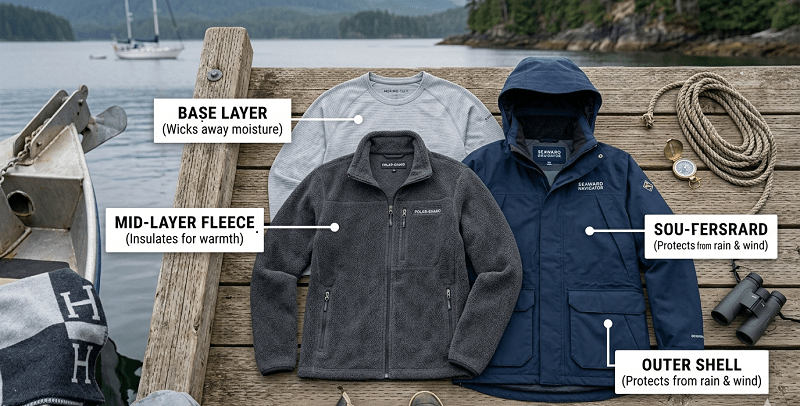
The best whale watching outfit layers moisture-wicking base layers under a windproof, waterproof jacket, paired with non-slip shoes and a warm hat even in summer. Ocean temperatures run roughly 15–20°F colder than shore. Dress for the water, not the weather app. Bright colors help if you ever go overboard, too.
Introduction
Picture this: You’re three miles offshore, a humpback just breached forty feet off the bow, and you’re so cold you can barely lift your camera. I’ve watched this happen to at least a dozen people on tours I’ve covered over the years shivering in sundresses and flip-flops while the ocean laughs at them. Your whale watching outfit is not a fashion decision. It’s a survival strategy. And getting it wrong doesn’t just mean discomfort it means missing the whole experience because you’re too miserable to enjoy it.
What to Wear When Whale Watching: The Layering System That Actually Works
Most people think one “warm enough” jacket is sufficient. It’s not. The ocean operates by different rules than the parking lot.
Start with a moisture-wicking base layer something synthetic or merino wool, never cotton. Cotton holds moisture against your skin and turns into a cold, clammy nightmare the second spray hits you. And spray will hit you.
Mid-layer next. A fleece or light insulating jacket traps body heat without bulk. Think of it like insulation in a wall it’s the layer doing the real work. Then top everything with a windproof, water-resistant outer shell.
Micro-insight: Three thin layers beat one thick layer every single time on the water.
What to Wear on a Whale Watching Tour: Footwear Nobody Talks About Enough
Here’s what most people get wrong: they obsess over jackets and completely forget their feet. I’ve seen people board in leather sandals, dress shoes, even heels once I’m not making that up.
Boat decks get wet. They get slippery. Non-slip, closed-toe shoes are non-negotiable. Something like water-resistant trail runners or rubber-soled deck shoes works perfectly. Your feet will also get cold faster than the rest of your body because you’re standing on a metal or fiberglass surface for two to four hours straight.
Wool socks inside waterproof shoes? That’s the move. Sounds like overkill until about hour two offshore.
Hot take: Crocs with thick socks are genuinely one of the better casual options for whale watching. I know how that sounds. But the grip, the waterproofing, the easy-on it checks every box. Fight me.
What to Wear Whale Watching in Maui Specifically
Maui trips confuse people the most. It’s Hawaii. It’s warm. Why would you need layers?
Because the wind chill on the Auau Channel at 6 AM when humpbacks are most active, roughly November through May can drop the feels-like temperature into the mid-50s. I’ve talked to visitors who wore tank tops and shorts for a sunrise tour and spent the entire two hours hunched behind the cabin railing, completely missing the action.
For Maui specifically: a light moisture-wicking shirt, a mid-weight fleece, and a windbreaker is your perfect trifecta. Bring a beanie. Even if you don’t use it, you’ll be glad it’s in your bag.
Light colors or bright colors are smart here too high visibility matters more than aesthetics on the water.
Micro-insight: Maui mornings and open-ocean wind are a combination that humbles even experienced travelers.
Accessories That Separate Smart Whale Watchers From Shivering Tourists
Accessories sound optional. On a whale watching trip, several of them are not.
A warm hat covers your ears and prevents significant heat loss roughly 30–40% of body heat escapes through your head in cold conditions. A buff or neck gaiter blocks wind from getting down your collar. And polarized sunglasses cut glare off the water so you can actually spot the spouts before everyone else does.
Sunscreen is also non-negotiable, even on overcast days. Water reflects UV like a mirror. I’ve come back from three-hour tours with a sunburn I didn’t feel coming.
Fingerless gloves are underrated. You still need to operate a camera or phone, and full gloves make that frustrating.
Micro-insight: Your accessories are the difference between watching whales and actually seeing them.
What NOT to Wear — And Why It Matters More Than You Think
This deserves its own section because the wrong outfit actively ruins the trip. Not just for comfort for safety.
Avoid long flowing scarves, loose ponchos, or anything with dangling drawstrings. On a moving boat, loose fabric catches wind, snags on equipment, and in worst-case scenarios, becomes a hazard near railings. I’d also skip heavy jeans they absorb water, add weight, and take forever to dry.
Leave the brand-new white sneakers at the hotel. Actually, let me rephrase that leave anything you’d be upset to ruin at the hotel. Boats are wet, salty, and occasionally messy environments.
And perfume or cologne? Skip it entirely. Strong scents on a rocking boat in close quarters with strangers is a one-way ticket to making someone nauseous possibly yourself.
Micro-insight: Dressing wrong isn’t just uncomfortable it signals to the crew that you’re unprepared, and they notice.
FAQ: Whale Watching Outfit Questions People Actually Ask
Q: What should I wear whale watching if I run cold? Layer aggressively and add hand warmers to your pockets. Start with a thermal base layer, add a heavy fleece, and top with a waterproof shell. Bring a hat, gloves, and a neck gaiter. The ocean is always colder than you expect, and wind chill on the water hits harder than on land.
Q: Can I wear jeans whale watching? Technically yes, but it’s a bad idea. Jeans absorb water and spray, get heavy, and take hours to dry. If you get wet, you’ll be cold and uncomfortable for the rest of the trip. Opt for quick-dry pants or waterproof hiking pants instead.
Q: What do you wear whale watching in summer? Even in summer, bring a windproof jacket and a light mid-layer. Ocean temperatures stay cold regardless of season, and wind chill at speed can make a 75°F day feel like 55°F on the water. A light long-sleeve base layer plus a shell jacket is usually enough for summer trips.
Q: What shoes should I wear on a whale watching boat? Non-slip, closed-toe shoes are the right call every time. Water-resistant trail runners, rubber-soled deck shoes, or waterproof hiking shoes all work well. Avoid sandals, flip-flops, or smooth-soled shoes — wet boat decks are genuinely slippery and dangerous.
Q: Is there a dress code for whale watching tours? Most tours don’t enforce one, but reputable operators will recommend layers and closed-toe shoes in their booking confirmations. A few high-end eco-tours in places like Alaska or Iceland provide outerwear — always check before you book so you’re not overpacking unnecessarily.
Here’s the Bottom Line
Your whale watching outfit is the difference between a story you’ll tell forever and a miserable few hours you just want to end. Layer up. Protect your feet. Bring a hat even if you think you won’t need it. The ocean doesn’t care about your weather app or your aesthetic. Dress for the water, not the shore and you’ll actually be present enough to appreciate one of the most extraordinary things nature has to offer. So before your next trip, ask yourself: am I dressing for the Instagram photo, or for the experience itself?
