

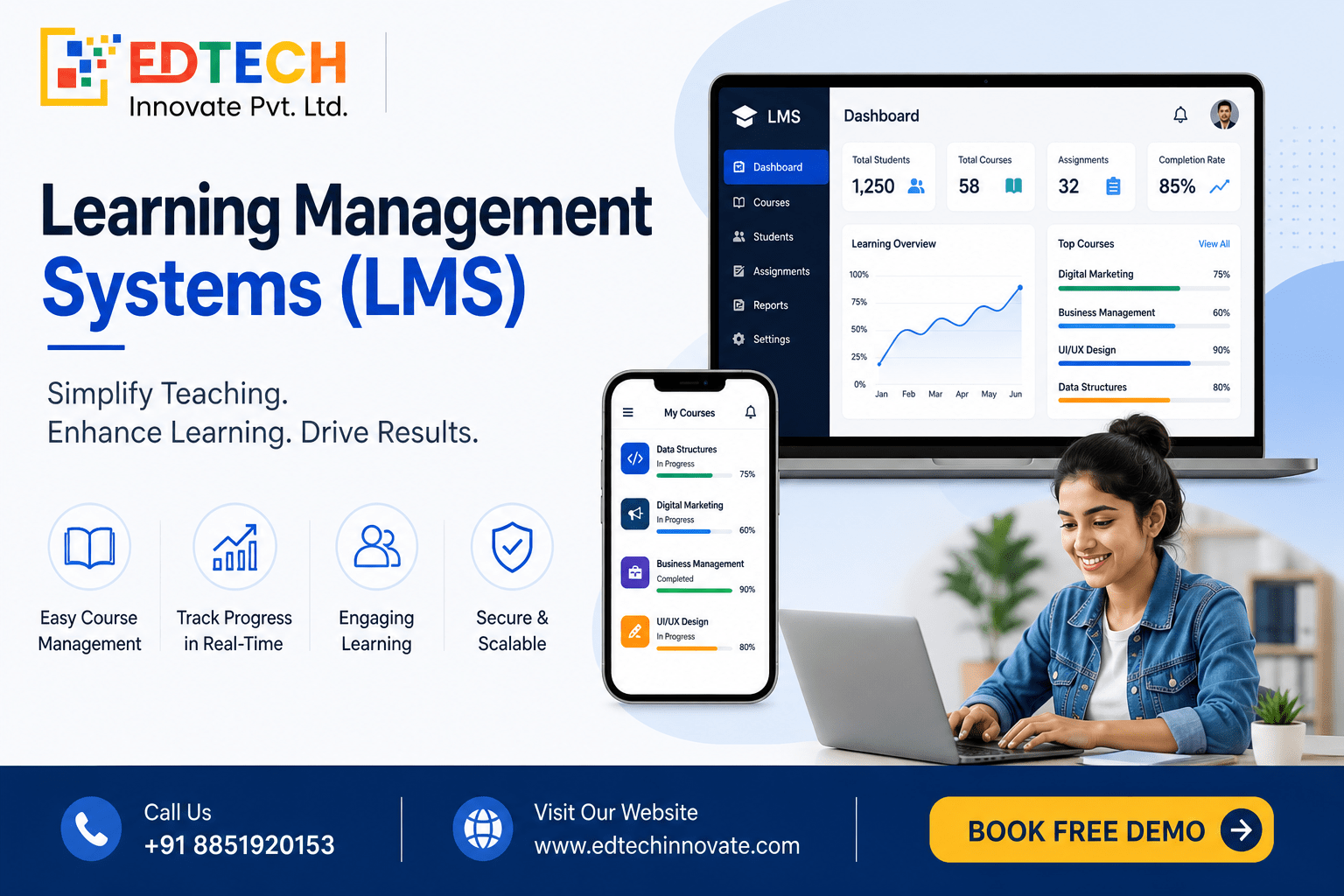
As digital transformation accelerates across India, organizations are constantly looking for smarter ways to train employees and deliver education. This is where learning management systems are making a significant impact. From schools and colleges to growing businesses, LMS platforms are helping streamline learning, improve engagement, and boost performance. But are they really worth the investment? In this blog, we’ll explore the real value of LMS platforms, their benefits, and how they can transform your organization’s learning strategy.
What Are Learning Management Systems and Why Do They Matter?
Learning management systems are software platforms designed to create, manage, and deliver training or educational content digitally. They replace traditional methods with flexible, scalable, and efficient solutions.
Whether you’re exploring LMS for educational institutions or corporate training tools, modern Learning Management Software offers features like:
- Course management
- Real-time analytics
- Mobile learning access
- Interactive content delivery
The top learning management systems are designed to simplify learning while improving outcomes.
Key Benefits of Learning Management Systems
1. Centralized and Organized Learning
LMS platforms allow you to manage all training materials, courses, and learner data in one place. This eliminates confusion and improves efficiency for both educators and administrators.
2. Cost-Effective Training Solution
Traditional training involves travel, printed materials, and instructor costs. LMS platforms reduce these expenses significantly, offering a higher return on investment over time.
3. Flexible Learning Experience
Learners can access content anytime, anywhere, making it ideal for both students and working professionals. This flexibility supports remote and hybrid learning models.
4. Better Engagement and Retention
Interactive features such as quizzes, videos, and gamification help keep learners engaged, leading to better knowledge retention.
5. Data-Driven Decision Making
With built-in analytics, organizations can track learner progress, identify gaps, and improve training strategies effectively.
Types of LMS: Choosing the Right Solution
Understanding different types of LMS is essential before making a decision. Each type serves different organizational needs:
- Cloud-Based LMS: Easy to use, scalable, and accessible from anywhere
- Open-Source LMS: Highly customizable but requires technical expertise
- Enterprise LMS: Advanced features for large organizations
Selecting the right LMS depends on your goals, budget, and technical requirements.
read more: What Makes an Online Exam Portal Essential in 2026?
Are Learning Management Systems Worth It for Businesses?
For companies, learning management systems for businesses offer significant value. They simplify employee training, onboarding, and skill development.
Real-World Example:
A growing company in India implemented an LMS to train employees. Within a few months, they improved productivity and reduced training costs by shifting to digital learning.
Business Benefits Include:
- Faster employee onboarding
- Consistent training delivery
- Improved skill development
- Better compliance tracking
These advantages make LMS platforms a smart investment for long-term growth.
Are LMS Platforms Valuable for Educational Institutions?
For schools and colleges, LMS platforms are becoming essential. LMS for educational institutions helps manage courses, track student performance, and deliver online learning seamlessly.
Key Advantages:
- Simplified course and content management
- Real-time student performance tracking
- Support for online and blended learning
- Improved communication between teachers and students
With the rise of digital education in India, LMS platforms are helping institutions stay competitive and efficient.
Challenges to Consider Before Investing
While LMS platforms offer many benefits, there are a few challenges to consider:
- Initial setup and training requirements
- Dependence on internet connectivity
- Choosing the right platform among many options
However, with the right provider and proper implementation, these challenges can be easily managed.
How to Maximize ROI from an LMS
To ensure you get the best results from your LMS investment:
- Choose from the top learning management systems based on your needs
- Train your team to use the platform effectively
- Regularly update learning content
- Use analytics to improve performance
A well-implemented LMS can deliver long-term value and measurable success.
Conclusion
So, are learning management systems worth it for your organization? Absolutely. They offer flexibility, cost savings, improved engagement, and scalability—making them a valuable tool for both education and business sectors in India.
If you’re ready to upgrade your learning experience, edtechinnovate provides advanced and user-friendly LMS solutions tailored to your needs. Explore edtechinnovate today and take your training and education to the next level!
FAQs
- What are learning management systems used for?
They are used to create, manage, and deliver online training and educational content efficiently. - Who can use an LMS?
LMS platforms are suitable for schools, colleges, training institutes, and businesses of all sizes. - What are the main types of LMS?
The main types include cloud-based LMS, open-source LMS, and enterprise LMS. - How do LMS platforms benefit businesses?
They improve employee training, onboarding, and performance tracking, leading to better productivity. - Are LMS platforms suitable for remote learning?
Yes, they support flexible, anytime-anywhere access, making them ideal for remote and hybrid learning.
