

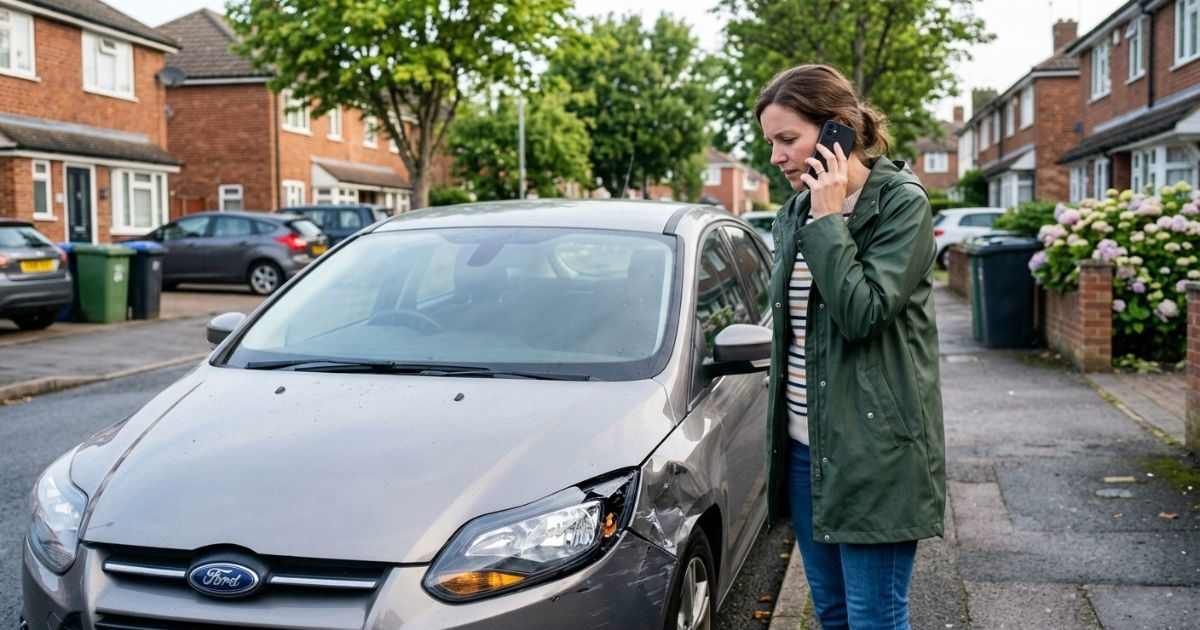
You have just had a crash. Your car is damaged. The other driver was at fault.
Now you need to get to work tomorrow. Or pick up your kids. Or drive to a hospital appointment.
This guide tells you exactly how accident car hire works in the UK for 2026. You will learn:
-
Who pays (and who does not)
-
What vehicle you are actually entitled to
-
The hidden traps that cost drivers thousands
-
A 5-step action plan after a non-fault accident
Let us cut through the confusion.
What Is Accident Car Hire?
Accident car hire gives you a temporary replacement vehicle after a crash.
But here is the important difference: You do not walk into a standard rental office and pay with a credit card.
Instead, accident management companies arrange everything. They specialise in non-fault claims. You pay nothing at the time of hire. They recover the costs from the at-fault driver’s insurance.
The key qualification: You only qualify if you were NOT responsible for the crash.
For official guidance on reporting accidents, visit the Gov.uk page on reporting a road accident.
Your Legal Rights After a Non-Fault Accident
UK law protects innocent drivers. The principle is straightforward.
You should return to the position you were in before the accident. That includes having a car to drive.
Courts consistently support this right. Judges recognise that being without a car affects your work, family life, and daily routine. You should not suffer because someone else caused a crash.
Eligibility Criteria (Quick Check)
| Requirement | What You Need |
|---|---|
| Fault status | Not at fault (or partially – but this complicates things) |
| Vehicle condition | Damaged and unsafe to drive |
| Genuine need | Work, school, medical, or childcare |
| At-fault driver | Identified and insured |
| Your insurer | Notified (required by your policy) |
One more thing: The vehicle you receive should match your own car. Same transmission. Similar size. Comparable features. This is called like-for-like replacement – and it is where most drivers go wrong.
For detailed legal advice, the Citizens Advice page on accident claims is an excellent resource.
Accident Car Hire vs Courtesy Car vs Standard Rental
These three options are not the same. Choosing the wrong one costs you.
| Feature | Accident Hire (Credit Hire) | Courtesy Car | Standard Rental |
|---|---|---|---|
| Upfront cost | £0 (non-fault) | £0 (if offered) | Full payment upfront |
| Vehicle type | Like-for-like | Basic economy | Any you choose |
| Availability | Within hours | Not guaranteed | Immediate |
| Duration | Full claim period | Limited | As long as you pay |
| Who pays? | At-fault insurer | Your insurer or garage | You |
| Best for | Longer claims | Short repairs | Urgent needs |
The bottom line: Accident car hire offers the most comprehensive cover. But you will sign a credit agreement. Read it carefully before you sign.
How Costs Work (And Who Pays)
Money worries cause the most anxiety after accidents. Here is the truth.
In non-fault claims, the at-fault driver’s insurance covers reasonable hire costs.
You do not pay at the time of hire. The accident management company provides the vehicle, then recovers the money from the other side.
What You Will Pay (2026 Estimates)
Daily rates vary by vehicle class:
-
City car (Ford Ka, VW Up, Fiat 500): £30-£50 per day
-
Compact (Ford Focus, VW Golf, Astra): £45-£70 per day
-
Family estate (Ford Mondeo, VW Passat): £60-£90 per day
-
SUV (Nissan Qashqai, Kia Sportage): £65-£100 per day
-
Premium (BMW 3 Series, Audi A4): £80-£130 per day
The Credit Hire Agreement (Do Not Skip This)
You will sign a credit hire agreement. It confirms you understand the terms. It creates a legal framework for the hire.
Important: It does NOT mean you will automatically pay. But it does mean you could be liable if the claim fails.
The Big Catch (Read This Twice)
The costs must be reasonable.
If you take a luxury SUV for six months when your own car is a ten-year-old Ford Fiesta needing two weeks of repairs, the other insurer will challenge this. They may refuse to pay. Then the hire company comes after you.
Keep things sensible and your claim stays smooth.
What Vehicle Will You Receive? (The Like-for-Like Rule)
Replacement vehicles should match your own car as closely as possible.
What “Like-for-Like” Actually Means:
-
Same transmission (automatic or manual – non-negotiable)
-
Similar size and engine class
-
Comparable comfort and features
-
Any necessary adaptations for disabilities or work requirements
Real example: If you drive a diesel estate for work (tools, equipment, motorway miles), accepting a tiny petrol city car creates real problems. A good provider understands this.
But be realistic. Asking for a brand new Mercedes when your car is a fifteen-year-old Vauxhall will not work.
How Long Does the Hire Last?
The hire period runs until one of two things happens:
-
Your car is repaired and you can collect it
-
Your car is written off and you agree on a settlement
Typical Timeline (2026 Realistic Estimates)
| Stage | Typical Duration |
|---|---|
| Accident to hire car arranged | 2-24 hours |
| Vehicle inspection | 2-7 days |
| Repair period | 5-20 days |
| Write-off negotiation | 14-30 days |
| Total claim duration | 3-10 weeks |
Realistically, delays happen. Insurers take time. Body shops wait for parts. As long as the delay is not your fault, the hire period remains recoverable.
5 Common Mistakes That Cost Drivers Money
| Mistake | Why It Hurts | How To Avoid |
|---|---|---|
| Accepting first offer | Hidden terms | Ask questions before agreeing |
| Taking unsuitable vehicle | Claim challenged | Insist on like-for-like |
| Keeping car too long | Costs disputed | Return car promptly |
| Not reading agreement | Unaware of liability | Read every page |
| Ignoring mileage limits | Extra charges | Ask about daily allowance |
One extra warning: Some providers include daily mileage limits. Always ask: “Is there a daily mileage limit? What happens if I exceed it?”
Credit Hire Explained Simply
Credit hire sounds complicated. It is not.
It simply means you are hiring the vehicle on credit. Payment is deferred until the claim resolves.
How Credit Hire Works (Step by Step)
-
You have a non-fault accident
-
You sign a credit hire agreement – no payment at the time of hire
-
The hire company gives you a vehicle immediately
-
They recover costs from the at-fault insurer
-
You pay nothing if the claim succeeds
The Important Part
If the claim fails (for example, if fault cannot be proven), you might become responsible for the hire costs.
Always ask: “What happens if the at-fault insurer disputes liability?”
For independent information on credit hire agreements, the Which? guide to credit hire is highly recommended.
2026 Updates That Matter
Three changes this year affect accident car hire.
1. Credit hire regulation tightened. New rules require providers to explain fees and risks clearly before you sign.
2. Insurer delays are more common. Repair and write-off times have extended. Hire periods now last longer on average.
3. Pre-contract information requirements increased. Providers must now give you a clear summary of costs and your potential liability. If they do not offer this, walk away.
Your 5-Step Action Plan After a Non-Fault Accident
Step 1: Exchange details. Name, address, insurer, registration. Take photos of damage and location.
Step 2: Report to your own insurer. You must notify them even if you are not claiming through them.
Step 3: Contact an accident management specialist. Explain you need a replacement vehicle.
Step 4: Read the credit hire agreement carefully. Understand the vehicle class, duration, mileage limits, and your liability.
Step 5: Return the hire car promptly. Once your car is fixed or settled, return it immediately. Delays cost money.
If the at-fault driver is uninsured, the Motor Insurers’ Bureau (MIB) website explains how to claim.
Frequently Asked Questions
Does accident car hire cost me anything at the time of hire?
No. If the accident was not your fault, the hire company recovers costs from the at-fault insurer.
Will my no-claims bonus be affected?
No. In a genuine non-fault claim, your no-claims bonus should remain protected.
What if the at-fault driver is uninsured?
The Motor Insurers’ Bureau (MIB) handles uninsured driver claims. The process differs – ask your provider specifically.
How long does the whole process take?
Simple claims: 3-6 weeks. Complex claims: 8-12 weeks.
What happens if I damage the hire car?
You pay an excess. The amount is in your credit hire agreement. Ask before you sign.
Can I choose my own repair shop?
Many accident management companies have approved networks. Some allow your choice. Ask before you agree.
The Golden Rules
-
Like-for-like, not upgrades
-
Read before you sign
-
Return the car promptly
-
Ask questions if you are unsure
If you are ever in a non-fault accident, you are entitled to stay mobile. Do not accept being stranded. Get the vehicle you need to keep work, family, and life running smoothly.
That is what accident car hire is really about. Not luxury. Keeping normal life possible when someone else’s mistake disrupted yours.
Author Bio
Henry is a former insurance claims handler with over 12 years of experience in the UK motor insurance industry. He now writes independently about driver rights, accident management, and consumer protection. His advice has been featured in Auto Express and Honest John. When he is not writing, he restores classic Minis in his garage in Bristol.
