

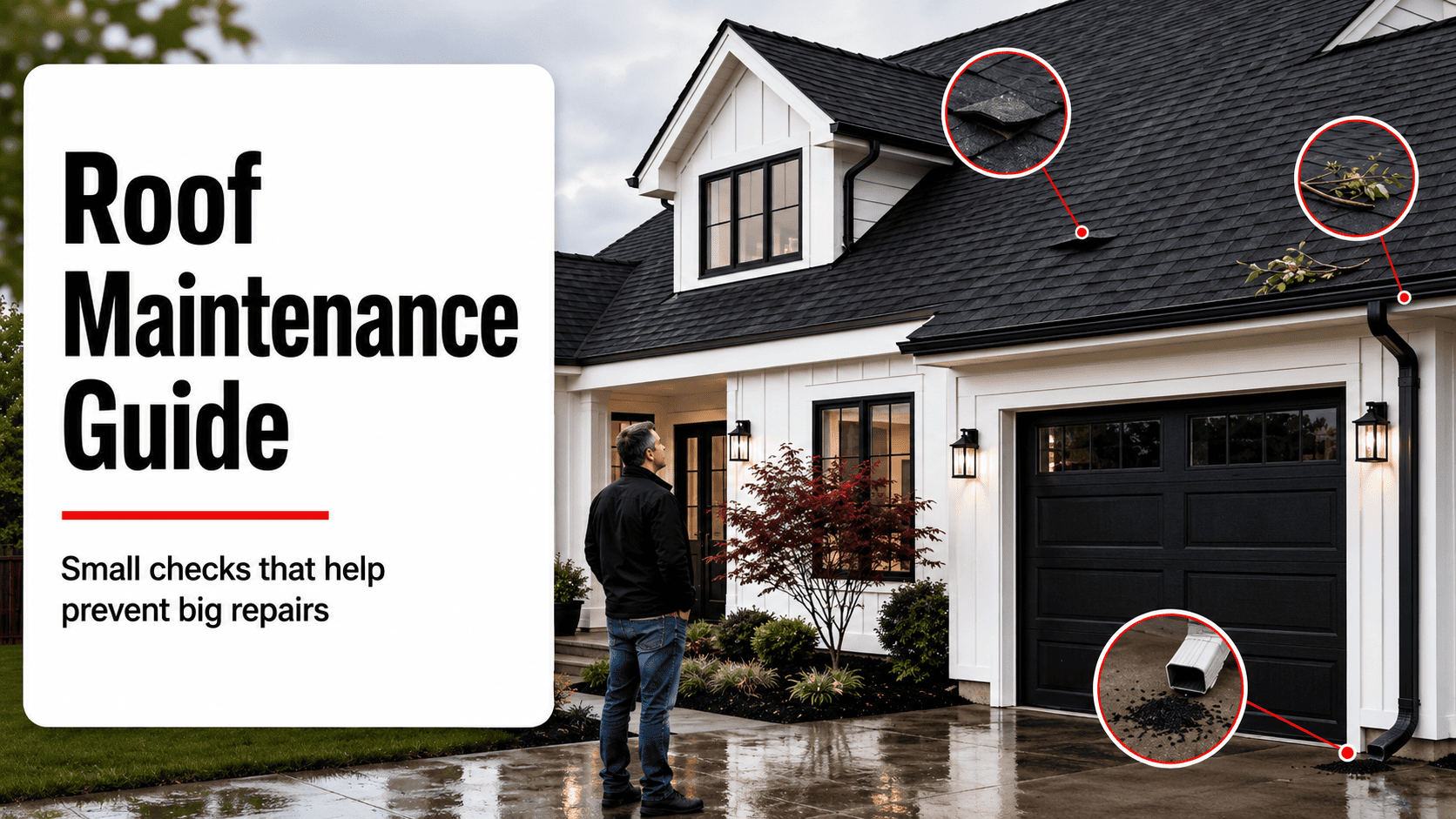
Most roof leaks do not begin with water pouring into a bucket in the living room.
They begin quietly. A gutter fills with leaves. A few shingles lift after a windy night. Flashing around a vent starts to loosen. Granules wash into the downspout. Nobody notices, because life is busy and the roof is not exactly the first thing people talk about over breakfast.
Then the next storm arrives.
That small roofing issue suddenly has help from wind, rain, and gravity. Water finds the weak spot, moves under the surface, and shows up where homeowners least want it: ceiling corners, attic insulation, drywall seams, and upper walls.
That is why roof maintenance matters. Not because homeowners need another chore on the list, but because a few practical checks can help catch small problems before they become expensive repairs.
Why Roof Maintenance Is Really Home Protection
The roof is not just the top of the house. It is the first line of defense for everything beneath it.
When the roof works well, it protects insulation, framing, ceilings, walls, electrical systems, flooring, belongings, and indoor comfort. When it fails, water can travel farther than most people expect.
The EPA says moisture control is key to mold control and recommends acting quickly when water leaks occur indoors. It notes that if wet or damp materials are dried within 24 to 48 hours after a leak or spill, mold usually will not grow. The same EPA guidance also recommends cleaning and repairing roof gutters regularly.
That is the hidden value of roof maintenance. It is not only about shingles. It is about reducing moisture risk before water reaches the inside of the home.
The Roof Areas Homeowners Forget to Check
Many homeowners look at the middle of the roof and stop there.
That is understandable. Shingles are the most visible part of the system. But many roof problems start around the edges, joints, openings, and drainage areas.
Pay attention to these areas first.
Gutters and Downspouts
Gutters move water away from the roof edge and foundation. When they clog, sag, or overflow, water can back up under the roofline, soak fascia boards, spill near the foundation, and worsen drainage problems.
Signs to watch for:
- Water spilling over the gutter during rain
- Sagging gutter sections
- Plants or debris inside the gutter
- Granules near downspouts
- Water pooling close to the foundation
Flashing Around Roof Openings
Flashing is the metal protection around chimneys, vents, skylights, and roof transitions. When flashing bends, cracks, rusts, or separates, water gets a path into the home.
Leaks around flashing can be hard to trace because water may travel before it appears inside.
Roof Valleys
Roof valleys carry large amounts of water during rain. Leaves, branches, granules, and debris often collect there.
If a valley gets blocked or damaged, water may slow down, pool, or move under nearby roofing materials.
Shingles and Roof Surface
Shingles protect the layers underneath. They should lie flat and look consistent. Missing, curled, cracked, bare, or lifted shingles deserve attention.
One damaged area may not mean the whole roof is failing, but it does mean the roof needs a closer look.
Attic and Interior Ceilings
Some roof problems show up inside before they look serious outside.
Check for:
- Musty smells
- Damp insulation
- Dark roof deck spots
- Ceiling stains
- Bubbling paint
- Light showing through roof boards
- Water marks near vents or chimneys
A quick attic check after heavy rain can save a lot of trouble later.
Simple Roof Maintenance Checklist
Homeowners do not need to climb onto the roof to take care of the basics. In fact, walking on the roof without proper training can be dangerous and may damage materials.
Use this safe ground-level checklist:
- Walk around the home after heavy rain or wind.
- Look for missing, curled, cracked, or lifted shingles.
- Check gutters for overflow, debris, sagging, or granules.
- Look for branches touching or scraping the roof.
- Scan roof valleys for leaves or buildup.
- Check ceilings and upper walls for stains.
- Look inside the attic if it is safe and accessible.
- Take photos of anything that looks different.
- Schedule professional help if you see damage, leaks, or repeated drainage issues.
This kind of checklist is simple, but it works because it builds a habit. Roof maintenance is easier when homeowners notice change early.
Seasonal Roof Maintenance: What to Do and When
Roof maintenance becomes much easier when it follows the seasons.
Here is a practical schedule.
|
Season or Situation |
What to Check |
Why It Matters |
|
Spring |
Gutters, shingles, flashing, roof valleys |
Finds winter wear before heavy rain |
|
Summer |
Ventilation, sun-worn areas, overhanging branches |
Reduces heat and debris issues |
|
Fall |
Leaves, gutters, downspouts, valleys |
Prepares roof drainage before colder weather |
|
After storms |
Missing shingles, debris, leaks, attic moisture |
Catches sudden weather damage |
|
Before selling or buying |
Full roof condition |
Helps avoid surprise repair costs |
|
After seeing stains |
Leak source and moisture path |
Prevents interior damage from spreading |
Roof maintenance does not need to be complicated. It needs to be consistent.
When Maintenance Turns Into a Repair Call
Some roof issues are too important to watch from a distance.
Call a roofing professional if you notice:
- Active leaking
- Ceiling stains
- Missing shingles
- Loose flashing
- Sagging roof areas
- Heavy granule loss
- Gutter sections pulling away
- Storm debris on the roof
- Moisture smells in the attic
- Repeated leaks in the same area
This is where a trusted roofing company can help separate small maintenance needs from real repair concerns. Campbell Roofing lists roof inspections, roof repairs, roof replacement, storm damage restoration, storm and wind damage repair, roof maintenance, gutters, siding, shingle roofing, metal roofing, and insurance claim assistance among its services.
The reason this link fits naturally is simple. At this point in the article, the reader already understands the warning signs and needs a next step when maintenance is no longer enough.
Repair Now or Wait? A Practical Rule
Every homeowner wants to know the same thing: can this wait?
Here is a helpful way to think about it.
You may be able to monitor it briefly if:
- The issue is cosmetic
- There is no leak
- The shingles still sit flat
- The gutter issue is minor and easy to clear
- You already have a professional inspection scheduled
You should act faster if:
- Water is entering the home
- Shingles are missing
- Flashing is loose
- The roof is sagging
- The attic smells damp
- Damage appeared after a storm
- The same leak keeps returning
Waiting is not always wrong. Waiting without understanding the problem is the risk.
Roof Maintenance and Cost Control
Roof replacement is one of the larger home improvement expenses a homeowner may face.
Angi’s 2026 roof replacement cost guide reports that professional roof replacement costs $9,544 on average, with the total depending on factors such as roof size, material, pitch, and location.
That does not mean every roof issue leads to replacement. Many problems can be repaired if they are found early. But it does show why preventive roof maintenance deserves attention.
A small flashing repair is easier to handle than damaged drywall, wet insulation, rotten decking, and a larger roofing project.
Common Roof Maintenance Mistakes
Roof maintenance goes wrong when homeowners focus on the wrong things or wait too long.
Avoid these mistakes.
Mistake 1: Only checking after a leak
A leak is often the result, not the beginning. Look for warning signs before water reaches the ceiling.
Mistake 2: Ignoring gutters
Gutters are part of the roof’s drainage system. If they fail, water can cause problems around roof edges, siding, and the foundation.
Mistake 3: Walking on the roof without safety training
Roof surfaces can be slippery, steep, weak, or damaged. Ground-level checks are safer for homeowners.
Mistake 4: Assuming small damage is harmless
Small openings invite water. Water does not need a large gap to create a problem.
Mistake 5: Choosing the cheapest repair without finding the cause
A patch that does not fix the source is not a real solution. It is a pause button.
What a Good Roofer Should Explain
A professional roof maintenance visit or repair inspection should give homeowners clear answers.
The contractor should explain:
- What was found
- Where the problem is
- What caused it
- Whether it is urgent
- Whether repair is enough
- Whether replacement should be considered
- What photos or documentation are available
- What maintenance can reduce future risk
Campbell Roofing’s website describes its roofing work around quality materials, skilled workmanship, safety standards, attention to detail, and clear evaluation of roof conditions.
That kind of clarity matters. Homeowners should not have to guess what is happening over their heads.
Final Thoughts
Roof maintenance is not glamorous, but it is one of the smartest ways to protect a home.
A clean gutter, a sealed flashing point, a replaced shingle, or an early leak repair may not feel exciting today. But during the next heavy rain, those small fixes can make the difference between a dry home and a stressful repair call.
The best approach is simple.
Look safely. Notice changes. Keep water moving away from the roof. Do not ignore stains, missing shingles, loose flashing, or storm debris. Call a professional when the signs move beyond basic maintenance.
A roof will usually give clues before it fails. Homeowners just need to know how to read them.
Common Questions
How often should homeowners handle roof maintenance?
Homeowners should check their roof from the ground several times a year, especially after heavy wind, rain, hail, or seasonal changes. A professional inspection is helpful when damage, leaks, or aging signs appear.
Can clogged gutters really damage a roof?
Yes. Clogged gutters can force water toward roof edges, fascia, siding, and foundation areas. Clean drainage helps protect the roofing system.
What is the most common early sign of roof trouble?
Ceiling stains, missing shingles, granules in gutters, lifted shingles, and loose flashing are common early warning signs.
Is roof maintenance a DIY job?
Basic ground-level checks are safe for most homeowners. Roof climbing, leak repair, flashing work, and storm damage repair are better handled by trained roofing professionals.
Does roof maintenance prevent replacement?
Maintenance cannot stop a roof from aging, but it can catch small problems early and may help delay larger repairs when issues are handled quickly.
