

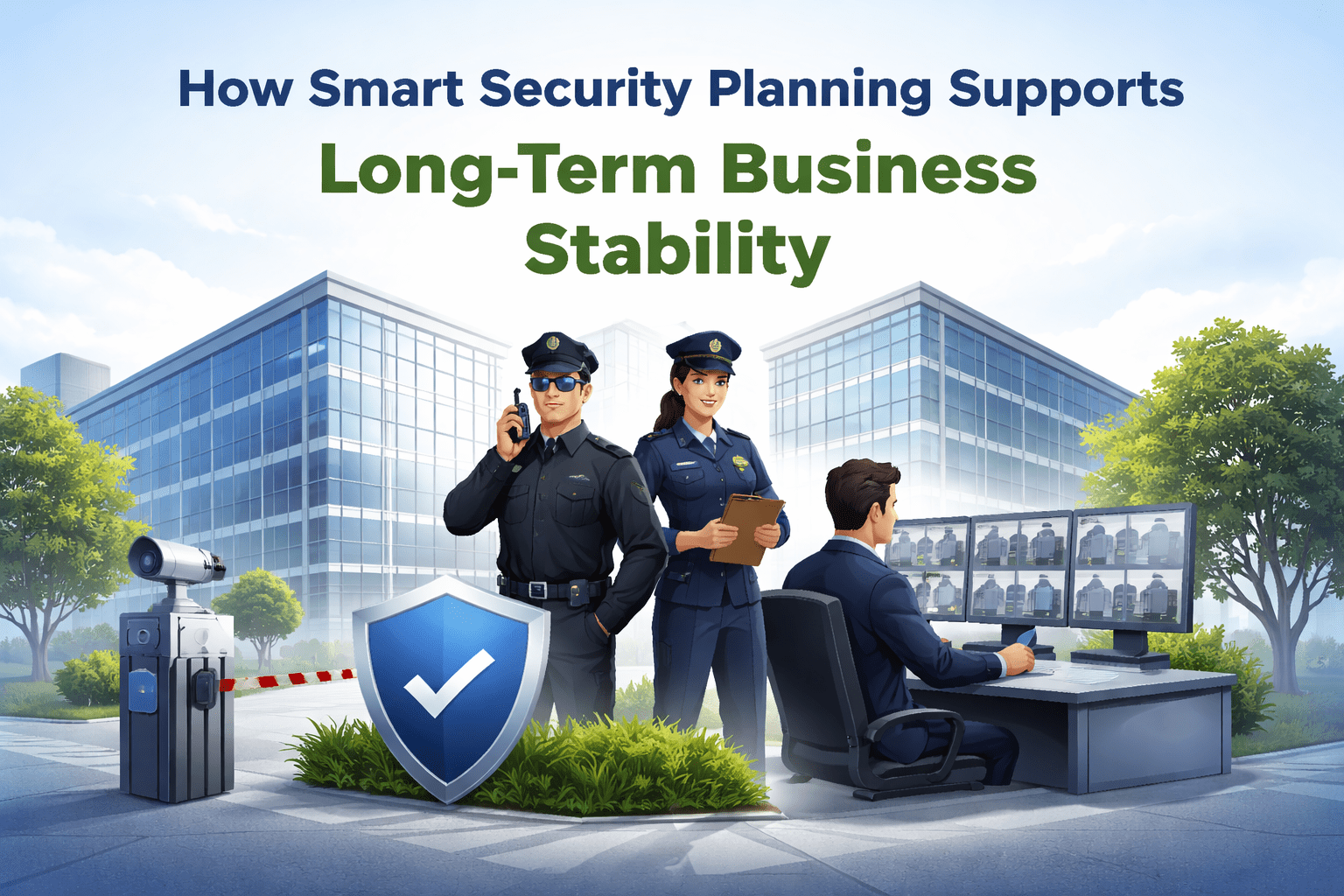
Business growth is no longer measured only by revenue, expansion, or customer acquisition. Modern businesses are increasingly recognising that workplace security also plays a major role in long-term success. A secure working environment supports operational stability, employee confidence, customer trust, and overall business reputation.
As industries become more fast-paced and commercial environments grow more complex, security concerns are rising across retail stores, warehouses, offices, construction sites, and hospitality venues. Businesses are now taking a more proactive approach to workplace protection instead of viewing security as something necessary only after incidents occur.
This shift is creating a stronger connection between workplace security and sustainable business growth.
Workplace Security Has Evolved Beyond Basic Protection
For many years, security was viewed mainly as protection against theft or vandalism. Businesses typically invest in security only when facing visible risks or after experiencing financial losses. Today, workplace security has evolved into something much broader.
Modern security strategies now support:
- Employee wellbeing
- Customer confidence
- Business continuity
- Risk management
- Operational efficiency
Employee Safety Directly Affects Workplace Performance
Employees perform better when they feel safe in their working environment. A secure workplace helps reduce stress, improve morale, and create greater confidence among staff members. Professional security personnel help create a controlled and organised environment by monitoring entrances, managing visitors, responding to incidents, and supporting emergency procedures.
Their presence also reassures employees that workplace safety is being taken seriously. Businesses are increasingly recognising that strong security measures contribute directly to productivity and long-term staff retention. This is particularly important for businesses operating:
- Late working hours
- Public-facing services
- Large commercial facilities
- Restricted operational zones
Customer Trust and Security Are Closely Connected
Customers naturally feel more comfortable in environments that appear safe and professionally managed. Whether visiting a retail store, hotel, office building, or event venue, people pay attention to how organised and secure a location feels.
Visible security presence often improves customer confidence without creating an intimidating atmosphere. Professional security officers trained in customer interaction can assist visitors, manage crowd movement, and respond calmly during difficult situations.
In competitive industries, customer experience is becoming just as important as product or service quality. Businesses that maintain safe and well-managed environments often build stronger trust and long-term loyalty.
The Financial Impact of Poor Security
Many businesses underestimate the true cost of security problems until incidents begin affecting operations directly. Even a temporary disruption can create long-term consequences for business performance and customer relationships.
Because of this, companies are shifting toward prevention-focused security strategies designed to reduce risks before incidents escalate. Investing in proactive security measures is often far more cost-effective than dealing with recovery after a major security issue occurs.
The financial impact of poor security may include:
- Property damage
- Inventory loss
- Insurance claims
- Operational downtime
- Delayed services
- Reputation management costs
Why Visible Security Presence Still Matters
One of the strongest deterrents against criminal activity remains visible security presence. People are far less likely to engage in theft, vandalism, or trespassing when trained security personnel are actively monitoring the environment.
Many businesses now invest in professional manned guarding services because on-site security officers provide both preventative protection and rapid response capabilities.
Security officers help businesses by conducting patrols, monitoring restricted areas, managing access points, and responding immediately to suspicious activity. Their presence creates stronger operational control while improving workplace confidence for both employees and visitors.
Technology Is Strengthening Modern Security Strategies
Technology has become an important part of workplace security. Businesses increasingly use CCTV systems, access control technology, alarm monitoring, and digital visitor management tools to improve security oversight.
These systems help businesses monitor activity more efficiently and identify risks faster. However, technology alone cannot fully replace trained security professionals.
Human judgement remains essential for assessing situations, responding to emergencies, and handling incidents calmly and professionally. The most effective security strategies combine advanced technology with experienced on-site support.
Many organisations now work with a professional security company London businesses trust to integrate physical security personnel with modern surveillance and monitoring systems.
This balanced approach improves protection while helping businesses maintain smoother operations.
Every Business Requires a Different Security Approach
Security needs vary significantly depending on industry type, business size, location, and operational activity. A retail store may focus heavily on theft prevention and customer safety, while a warehouse may prioritise perimeter monitoring and inventory protection.
Construction site security often requires overnight security and equipment monitoring, whereas corporate offices may focus more on visitor access management and employee safety.
Because of these differences, businesses are increasingly choosing customised security strategies instead of relying on generic solutions. Tailored security planning helps organisations identify specific vulnerabilities and manage risks more effectively.
Workplace Security Supports Long-Term Growth
Strong workplace security supports more than daily protection; it contributes directly to long-term business stability and growth. Security is becoming part of overall business resilience. Companies that invest early in workplace protection are often more capable of handling unexpected challenges without major disruption.
This is why many growing businesses now view security as an operational investment rather than simply an expense.
Businesses with proactive security strategies are often better prepared to:
- Maintain operational continuity
- Protect business reputation
- Reduce financial risks
- Improve customer confidence
- Support employee wellbeing
Conclusion
The connection between business growth and workplace security continues to become stronger across every industry. Modern businesses understand that security is not only about protecting physical assets; it also supports productivity, customer trust, operational reliability, and long-term success.
From visible manned guarding and access control to integrated technology and proactive risk management, workplace security now plays a critical role in everyday business operations.
Businesses that prioritise workplace safety today are often better positioned to maintain stability, build stronger reputations, and support sustainable growth in the future.
