

In public perception, “pharmaceutical innovation” often refers to new molecular structures, new therapeutic targets, or more advanced biotechnology. In contrast, “dosage form” seems to be only a difference in the appearance and administration method of drugs, such as tablets, capsules, oral liquids, or injections.
But in reality, in the modern medical system, dosage form is not a simple “packaging change”. In many cases, it directly determines how a drug enters the human body, how it is absorbed, whether patients are willing to use it for a long time, and ultimately whether it can truly exert its therapeutic value.
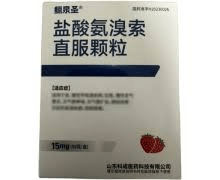
In recent years, as the global pharmaceutical industry has gradually shifted from “treating diseases” to “optimizing patient experience”, more and more traditional drugs have re-entered the market through new dosage forms. Among them, Ambroxol Hydrochloride Direct-Fast Granules is one of the more representative cases of “old drugs with new dosage forms” in China in recent years.
What it changes is not the drug component itself, but the relationship between patients and the drug.
Why Develop a New Dosage Form for a Classic Expectorant?
Ambroxol Hydrochloride is not a new drug. As a classic expectorant and mucolytic agent, it has been widely used in clinical practice worldwide for decades, mainly for:
- Acute and chronic bronchitis
- Pneumonia
- Chronic Obstructive Pulmonary Disease (COPD)
- Bronchiectasis
- Pediatric respiratory infections
- Difficulty in expectoration caused by thick sputum
and other diseases. Its main mechanism of action is to reduce sputum viscosity and improve respiratory ciliary movement, thereby promoting sputum excretion. From a pharmacological perspective, ambroxol is already a very mature component. So the question is: why do mature drugs still need to develop new dosage forms?
👉 The answer actually represents an important change taking place in the modern pharmaceutical industry. In the past, the core goal of drug research and development was:
- Is there a drug available to treat the disease?
- Can the drug exert its efficacy?
But today, more and more pharmaceutical companies have begun to realize that even if the drug itself is effective, if patients:
- Are unwilling to take it
- Cannot adhere to it for a long time
- Find the medication process troublesome
- Find it difficult to use in real-life scenarios
Then the therapeutic effect will still be significantly affected.
Therefore, modern drug research and development has gradually shifted from “efficacy-centered” to “patient-centered”. And dosage form innovation is the most direct embodiment of this trend.
What is “Direct-Fast Granule”?
Traditional granules usually need to be dissolved in warm water first before swallowing. Compared with traditional tablets or capsules, this dosage form has improved medication flexibility to a certain extent, but in actual life scenarios, there are still many inconveniences. For example, no hot water when going out, inconvenience in temporarily preparing medicine when coughing at night, children’s lack of patience to wait, or elderly patients feeling troublesome in the operation process, all of which will affect the actual medication experience of patients.
The “direct-fast granule” is a new type of oral dosage form developed in this context. It can be directly poured into the mouth without flushing with water. The granules can quickly disperse and be swallowed after contacting saliva, thereby simplifying the entire medication process.
From the perspective of dosage form classification, direct-fast granules are between traditional granules, oral dissolving preparations and instant powders, which can be understood as an important direction for the development of modern oral drugs towards “convenience” and “scenarioization”.
On the surface, it seems to only reduce the step of “preparing medicine with water”, but in fact, it changes the way drugs are used by patients. Modern preparation research and development pays more and more attention to the medication scenarios in real life, not only focusing on the pharmacological effects of drugs after entering the human body, but also starting to pay attention to whether patients can complete the medication process more easily and naturally in different environments. The emergence of direct-fast granules is essentially the embodiment of this change in research and development thinking.
Why Has “No Water Needed” Become an Important Direction in Modern Dosage Form Research and Development?
For most healthy people, “taking medicine” seems to be a simple action: pick up the medicine, take a sip of water, and swallow. Therefore, many people rarely realize that sometimes the real difficulty is not “treating the disease”, but “completing the medication” itself.
But in real clinical environments, the factors affecting the therapeutic effect of patients are often not only from the drug itself. The problem many patients face is not “no drugs available”, but the inability to complete the entire medication process in a long-term, stable and regular manner.
This situation is particularly common in respiratory diseases. For example, children may refuse to take medicine because they resist swallowing; elderly patients’ medication process will become more difficult as their swallowing function declines; some patients with severe cough may even be affected in normal drinking when symptoms occur; and when coughing or sputum increases suddenly at night, traditional drugs that need to be prepared with water will also increase the additional operational burden. In addition, in outdoor scenarios such as commuting, working, and traveling, the lack of hot water or inconvenience in preparing medicine will also affect the actual medication experience of patients.
These problems seem not serious individually, but if they exist for a long time, they may gradually affect patient adherence. Modern medical research has repeatedly proved that the unsatisfactory control effect of many diseases is not necessarily due to insufficient drug efficacy, but because patients cannot adhere to standardized treatment for a long time.
For this reason, modern preparation engineering has begun to pay more and more attention to the “medication process” itself. The goal of drug research and development is no longer only to make the drug “able to work”, but also to make it easier for patients to accept treatment, complete medication more naturally, and reduce the impact of treatment on daily life.
In this context, more and more new dosage forms have begun to appear. For example:
- Oral Dissolving Films (ODF) emphasize no need for swallowing and rapid disintegration;
- Long-acting injections aim to reduce frequent medication for patients;
- Nasal spray emergency drugs try to simplify the operation process in emergency situations;
- Microneedle patches hope to reduce the pain and fear caused by traditional injections;
- And more and more drugs that originally required infusion have begun to move towards subcutaneous injection or even home-based treatment.
These innovations seem to belong to different fields, but the research and development logic behind them is highly consistent: to make treatment closer to the actual use scenarios in patients’ real lives.
Conclusion
Ambroxol Hydrochloride Direct-Fast Granules is essentially part of this trend. It is not just a simple modification of traditional granules, but a microcosm of the gradual shift of modern drug research and development from “drug-centered” to “patient-centered”.
Although Ambroxol Hydrochloride Direct-Fast Granules is only a new dosage form of a respiratory drug, it reflects an important change in the entire pharmaceutical industry.
The competition of drugs in the future is likely to no longer be just “who has stronger efficacy”, but will gradually shift to:
- Who is more convenient to use;
- Who is more suitable for long-term management;
- Who is more in line with modern lifestyles;
- Who can reduce the treatment burden on patients.
As global medical care gradually enters an era of chronic diseases, long-term treatment and home-based care, “patient experience” is becoming an important evaluation standard for modern drug research and development.
For platforms like DengYueMed that focus on global drug trends and the development of modern preparations, new dosage forms mean not only new product forms, but also profound changes in future medical models, patient management, and cross-border drug supply systems.
