

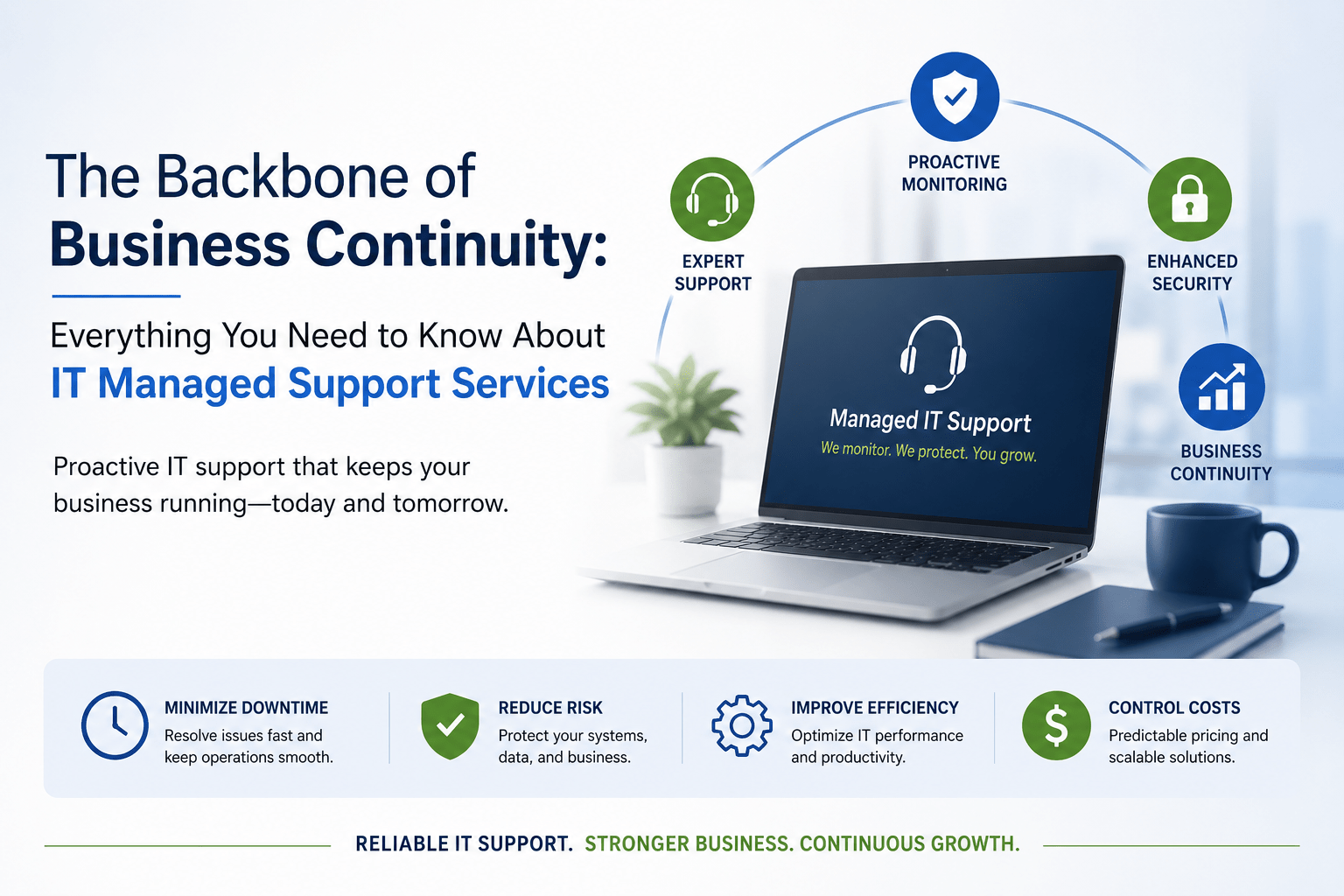
Introduction
Technology has become the foundation of modern business operations. From internal communication and customer service to cloud applications and online transactions, companies now depend on digital systems every single day. But what happens when those systems slow down, stop responding, or become difficult to manage? Productivity drops, employees lose valuable time, and customer experience can suffer almost instantly.
Many businesses struggle to maintain reliable IT operations because managing technology internally requires time, expertise, and ongoing investment. Hiring a complete in-house IT department can be costly, especially for growing businesses that need flexibility. That’s why more organisations are turning toward IT Managed Support Services to handle their day-to-day technology requirements efficiently.
Managed IT support gives businesses access to professional IT management, proactive system monitoring, technical assistance, and long-term technology guidance without the burden of building a large internal team. Instead of waiting for problems to interrupt operations, managed support providers focus on maintaining stable, secure, and high-performing systems that help businesses operate smoothly and confidently.
What Are IT Managed Support Services?
IT Managed Support Services are professional technology services delivered by an external provider known as a Managed Service Provider (MSP). These providers manage, monitor, and maintain a company’s IT environment on an ongoing basis. Their role is to ensure systems remain operational, secure, and aligned with business needs.
Unlike traditional break-fix IT support that responds only after an issue occurs, managed IT services take a proactive approach. Providers continuously monitor systems, identify potential issues early, apply updates, optimise performance, and support employees whenever technical assistance is required.
Businesses use managed support services for several reasons:
- To improve operational efficiency
- To reduce internal IT workload
- To maintain system performance
- To strengthen cybersecurity practices
- To access expert technical support
- To support remote and hybrid work environments
This service model allows companies to focus more on growth, customer experience, and daily operations while technology management is handled by experienced professionals.
How IT Managed Support Services Work
The process typically starts with a full assessment of the company’s existing technology environment. During this stage, the managed support provider evaluates networks, servers, cloud platforms, workstations, software, security configurations, and backup systems. This assessment helps identify performance gaps, outdated systems, and areas that may need improvement.
Once the review is complete, monitoring and management tools are deployed throughout the infrastructure. These tools allow the provider to observe system performance, network activity, hardware status, and security events in real time. If an issue is detected, the support team can often resolve it before it affects employees or customers.
Most managed support providers also offer help desk assistance, software maintenance, user support, patch management, cloud administration, and routine system updates. Businesses usually receive regular reports showing system performance, completed maintenance tasks, and recommendations for future improvements.
The goal is not simply fixing problems but creating a more stable and efficient technology environment that supports long-term business growth.
Core Services Included in Managed IT Support
Every provider offers slightly different service packages, but most managed support solutions include several essential IT functions that businesses rely on daily.
Network Monitoring and Management
Continuous network monitoring helps businesses maintain reliable connectivity, stable performance, and efficient communication between devices and systems. Providers track network health around the clock to identify performance issues and maintain operational continuity.
Cybersecurity Support
Cybersecurity services are one of the most important parts of managed IT support. Providers typically manage firewalls, antivirus systems, endpoint protection, email security, multi-factor authentication, and security monitoring to help strengthen overall protection.
Data Backup and Recovery
Business data is extremely valuable. Managed support providers implement backup solutions that automatically store important files and system data securely. Recovery plans help businesses restore information quickly if systems become unavailable.
Software Updates and Patch Management
Keeping software updated improves stability, compatibility, and system performance. Managed providers regularly install updates and patches to maintain system reliability across the organisation.
Cloud Services Management
Many businesses now use cloud platforms for storage, communication, collaboration, and application hosting. Managed support teams assist with cloud migration, cloud monitoring, user management, and cloud optimisation.
Help Desk and Technical Support
Employees can access technical assistance whenever issues arise. This may include password resets, software troubleshooting, device support, or connectivity assistance.
IT Consulting and Strategic Planning
Managed service providers often act as technology advisors, helping businesses plan upgrades, evaluate new solutions, and align IT decisions with business goals.
Benefits of IT Managed Support Services
Businesses of all sizes benefit from managed IT support because it improves operational efficiency while reducing the complexity of handling technology internally.
Reduced Downtime
Unexpected downtime can interrupt operations, delay projects, and impact customer service. Managed support providers monitor systems continuously to identify and resolve issues early, helping businesses maintain productivity and operational consistency.
Predictable Monthly Costs
One of the biggest advantages of managed support is cost predictability. Instead of dealing with unexpected repair expenses, businesses typically pay a fixed monthly fee for ongoing support services.
Access to Experienced Professionals
Managed service providers employ specialists in networking, cloud computing, cybersecurity, infrastructure management, and technical support. Businesses gain access to this expertise without hiring multiple full-time employees.
Scalability for Growing Businesses
As businesses grow, their technology requirements also expand. Managed support services can scale easily to support additional users, new offices, remote teams, and changing operational demands.
Improved Operational Efficiency
Employees work more effectively when systems run smoothly. Managed IT support helps maintain performance, reduce technical disruptions, and improve workflow continuity across departments.
Better Technology Planning
Managed providers help businesses make informed technology decisions. From hardware upgrades to cloud adoption strategies, expert guidance helps companies plan more effectively for future growth.
Industries That Benefit Most from Managed IT Support
Almost every industry relies on technology, but some sectors particularly benefit from professional IT management due to their operational complexity and security requirements.
Healthcare
Healthcare providers depend on secure systems to manage patient information, appointments, communication, and medical records. Managed support helps maintain system reliability and operational continuity.
Legal Services
Law firms manage large volumes of confidential information and require stable systems for communication, documentation, and collaboration. Reliable IT support helps maintain productivity and secure data management.
Retail and E-Commerce
Retail businesses rely on uninterrupted payment systems, inventory management, online stores, and customer support platforms. Managed IT services help maintain smooth customer experiences.
Education
Schools, universities, and training organisations require stable digital learning environments, communication tools, and administrative systems to support students and staff.
Financial Services
Financial organisations require reliable systems for secure transactions, reporting, customer communication, and regulatory compliance support.
How to Choose the Right Managed IT Support Provider
Selecting the right IT support partner is an important business decision. A reliable provider should offer more than technical assistance — they should support long-term business growth and operational stability.
Industry Experience
Choose a provider with experience supporting businesses in your industry. Familiarity with industry-specific systems and workflows can improve service quality significantly.
Clear Service Agreements
Review Service Level Agreements (SLAs) carefully. These agreements should clearly explain response times, support coverage, and service expectations.
Transparent Pricing
A trustworthy provider offers straightforward pricing with clearly defined services. Businesses should understand exactly what is included in their support plan.
Strong Communication
Reliable communication is essential in any technology partnership. Providers should offer regular updates, reporting, and accessible support channels.
Scalable Solutions
Your IT requirements may change over time. A good provider should be capable of adapting services as your business grows.
Security-Focused Approach
Technology security should always remain a priority. Providers should demonstrate strong security practices, ongoing monitoring, and reliable data protection measures.
Why Managed IT Support Matters More Than Ever
Business technology environments continue to evolve rapidly. Remote work, cloud computing, cybersecurity concerns, and digital collaboration tools have become part of daily operations for many organisations. As technology grows more complex, businesses need dependable support systems that help maintain stability and efficiency.
Managed IT support services provide businesses with a practical way to manage this complexity. Instead of reacting to technical issues after they interrupt operations, companies can maintain proactive support strategies that improve performance and reduce operational stress.
Reliable technology support also improves customer experience. Faster systems, stable communication tools, and reduced downtime help businesses operate more professionally and consistently in competitive markets.
Final Thoughts
Technology is no longer just a support function within modern businesses. It plays a direct role in communication, collaboration, customer service, productivity, and long-term growth. As businesses continue relying on digital systems, maintaining reliable IT operations becomes increasingly important.
IT Managed Support Services help businesses simplify technology management while improving performance, operational efficiency, and system reliability. With proactive monitoring, ongoing maintenance, expert technical support, and scalable solutions, managed support allows businesses to focus more on growth and less on technical challenges.
For organisations looking to improve efficiency, maintain stable operations, and strengthen their technology foundation, managed IT support remains one of the most practical and valuable long-term solutions available today.
