

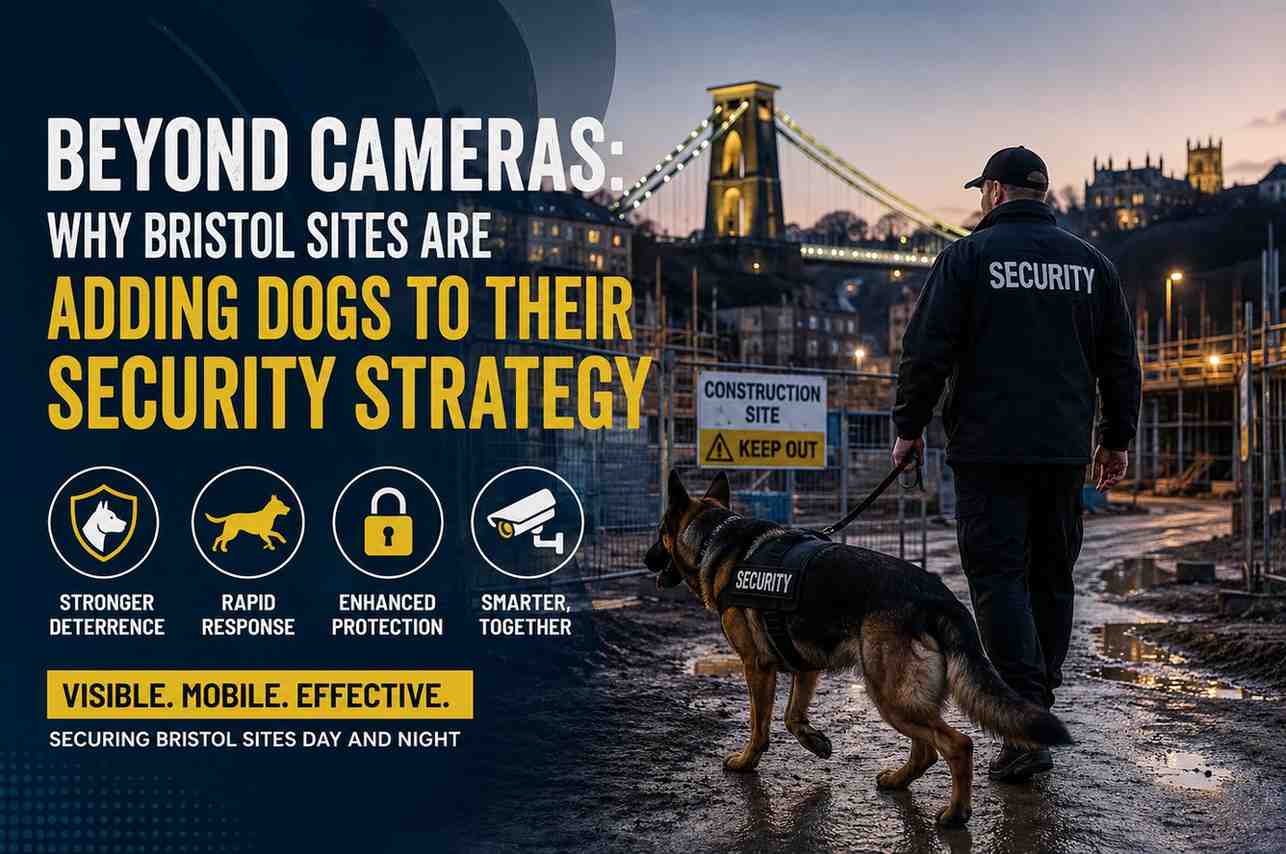
A few years ago, most site managers in Bristol were mainly focused on installing more cameras. Better angles. Better lighting. Higher image quality. That approach still matters, but the conversation has started to change.
Now, many businesses are paying closer attention to what happens after an alert appears on-screen.
A camera can capture movement near a fence line at 2am. It can record somebody crossing into a storage area. What it cannot do is physically check the site, challenge an intruder, or search a dark corner behind stacked materials.
That gap is exactly why more companies are turning towards dog patrols.
Across Bristol, security dogs are no longer limited to large public events or specialist operations. Construction firms, warehouse operators, and industrial businesses are starting to use them as part of everyday site protection. Some want stronger overnight patrols. Others simply need a more visible deterrent after repeated problems with trespassing or theft.
The shift is practical rather than dramatic. Businesses are looking for ways to reduce risk before incidents grow into expensive disruptions.
Bristol Sites Are Becoming Harder to Protect
Construction Layouts Change Constantly
Unlike office buildings, construction sites rarely stay the same for long. Access routes move. Fencing gets repositioned. Equipment is relocated from one section to another.
That creates challenges for fixed surveillance systems.
A camera that covered one area properly last month may now overlook an empty section while valuable materials sit elsewhere.
Large developments around Bristol often include:
- Temporary compounds
- Open storage areas
- Portable cabins
- Vehicle access points
- Scaffolding and perimeter fencing
Keeping every section fully monitored at all times is not always realistic.
Smaller Incidents Still Cause Big Delays
Not every security problem involves organised theft gangs. Sometimes the issue is repeated trespassing, vandalism, or minor equipment theft that slowly affects day-to-day operations.
Even relatively small incidents can lead to:
- Delayed schedules
- Additional labour costs
- Insurance paperwork
- Damaged materials
- Lost working hours
For contractors already working to tight deadlines, these interruptions quickly become expensive.
Quiet Hours Create the Biggest Risk
Many sites feel secure during the day because workers, suppliers, and supervisors are constantly moving around. The atmosphere changes completely overnight.
Late evenings and weekends often leave sites exposed, especially if the location sits away from busy public areas.
This is one reason dog security services in Bristol are becoming more common on long-term projects and industrial developments.
Why Some Businesses Are Moving Beyond Camera-Only Security
CCTV Has Limits
There is no question that CCTV remains useful. It helps document incidents and supports investigations after a break-in or intrusion.
The problem is timing.
By the time somebody reviews footage, the damage may already be done.
A person entering through a weak section of fencing can move quickly. In some cases, offenders already know where cameras are positioned and avoid the most visible areas.
That does not make CCTV ineffective. It simply means many sites now need additional protection.
Static Systems Cannot Patrol a Site
Construction environments are unpredictable. Lighting conditions change. Materials block visibility. Temporary structures appear and disappear throughout a project.
Physical patrols can adapt far more easily than fixed systems.
Handlers carrying out patrols with dogs can:
- Inspect changing access routes
- Check perimeter fencing closely
- Investigate unusual sounds
- Move through poorly lit areas
- Respond immediately to suspicious activity
This flexibility is one reason mobile dog patrol security in Bristol continues to grow across commercial sectors.
Why Security Dogs Are Being Used More Often
The Presence Alone Changes Behaviour
Most intruders are looking for easy access. A visible dog patrol changes the risk immediately.
Even before direct contact happens, trained security dogs create pressure simply through presence. Many offenders would rather avoid sites where active patrols are taking place.
That visible deterrent is valuable for:
- Construction compounds
- Vacant properties
- Industrial yards
- Storage facilities
- Perimeter-heavy locations
Dogs Cover Ground Quickly
Large sites can be difficult for individual guards to monitor alone, especially during overnight hours.
Security dogs help handlers patrol wider areas more efficiently. Uneven terrain, muddy ground, or dark perimeter sections are often easier to navigate during active patrols than through remote camera monitoring.
For sites with multiple access points, mobility becomes important.
Detection Happens Earlier
Dogs notice movement differently from people. Sound and scent awareness allow them to react to activity that may otherwise go unnoticed.
That does not mean every alert becomes a major incident. Often, patrol teams simply identify suspicious movement earlier and check the situation before problems escalate.
Businesses using K9 security services in Bristol often see value in that early response capability rather than relying entirely on recorded footage afterwards.
Where Dog Patrols Are Commonly Used
Construction Projects
Construction remains one of the biggest sectors using security dog handling services across the UK.
Typical patrol areas include:
- Machinery storage zones
- Temporary offices
- Fuel compounds
- Material storage sections
- Perimeter fencing
Overnight patrols are especially common where projects involve expensive equipment left on-site for extended periods.
Empty Buildings and Redevelopment Sites
Vacant commercial properties often attract unwanted activity surprisingly quickly. Once a building appears unused, problems such as trespassing and vandalism can increase.
Dog patrols help create a stronger physical presence around entrances, loading bays, and perimeter areas.
Warehouses and Distribution Yards
Industrial facilities often rely on wide outdoor spaces that are difficult to supervise fully with static cameras alone.
Businesses may use security k9 services to support:
- Vehicle gate checks
- Yard patrols
- Delivery monitoring
- Restricted access control
- Overnight perimeter patrols
Temporary Commercial Events
Some organisers also use patrol dogs during temporary installations or commercial events where restricted access areas require active monitoring.
Why Layered Security Is Becoming More Common
Different Risks Need Different Solutions
No single security method solves every problem. Cameras, alarm systems, patrol officers, and K9 units all serve different roles.
Many businesses now combine:
- CCTV monitoring
- Alarm response
- Access control systems
- Physical guarding
- Dog patrols
This layered approach reduces reliance on one system alone.
Faster Reactions Matter
If suspicious movement appears on a camera feed but nobody can respond immediately, opportunities still exist for theft or damage.
Active patrols reduce that delay.
Handlers can quickly investigate concerns, check vulnerable areas of the site, and report issues before they worsen.
Staff Often Feel More Secure
Visible patrols can also improve confidence among contractors and staff working during quieter shifts.
Businesses looking for broader protection sometimes work with a trusted security company Bristol that can combine patrols, monitoring, and on-site guarding within one service plan.
Choosing the Right Dog Security Provider
Not every provider operates to the same standard. Businesses should pay attention to experience, licensing, and site knowledge rather than focusing only on availability.
A professional team should offer:
- SIA-qualified handlers
- Clear incident reporting
- Experience with industrial or construction environments
- Flexible patrol scheduling
- Risk-based planning
Good communication also matters. Patrol teams should work alongside site managers rather than operating separately from wider security procedures.
Conclusion
Security planning across Bristol has become more practical in recent years. Businesses are no longer relying entirely on cameras to protect valuable sites overnight.
Instead, many are combining surveillance with physical patrols that can respond, investigate, and actively monitor changing environments.
That shift explains why dog security services in Bristol continue to grow across construction, industrial, and commercial sectors. For many businesses, the goal is simple: reduce opportunities for disruption before they become costly problems.
